🍵 15% off · TREAT15   🎁 Gifts from $100
🍵 15% off teas · TREAT15   🎁 Free tea gifts at $100 / $150 / $200

A Little Reward for You

Explore the year-end tea offer →

Make time for a little tea, just for you. Enjoy 15% off eligible teas with code TREAT15, from now through November 30, 2026 (Anywhere on Earth, UTC−12).

More tea to enjoy

  • Spend US$100: a full box of Golden Flower White Tea — 10 individually packed 3g portions, 30g total.
  • Spend US$150: the white tea box, plus one 100g Yunnan Red Glow ripe Pu-erh cake.
  • Spend US$200: both gifts above, plus one 100g The Little Brick — 2018 Golden Flower Fu Brick Tea.

Your first order also comes with a complimentary tea towel. No minimum spend or code is required for this welcome gift, and it can be enjoyed alongside the tea gifts above.

A few simple details

  • Gift thresholds are based on the amount paid for eligible merchandise after discounts, excluding shipping, taxes and gift value. Discovery Boxes and teaware count toward gift thresholds but are excluded from the 15% discount. K KOU electric kettles are excluded from both the discount and gift thresholds.
  • Gift thresholds are in US dollars. Other currencies are converted using the exchange rate applied at checkout; eligibility is based on the corresponding USD merchandise amount.
  • Qualifying gifts are cumulative, with one set per order. The offer can be used on multiple orders; orders cannot be combined to reach a threshold.
  • Standard shipping is US$9.50 per order. Orders qualifying for the existing “No Shipping Fee for Discovery Box” offer receive free shipping, including other items purchased in the same order.
  • The 15% discount combines only with “No Shipping Fee for Discovery Box”; it cannot be combined with other discounts. The gifts described here are part of this promotion.
  • If a gift is unavailable, we may substitute another gift of equal or greater retail value without separate notice.
  • The same offer continues through Singles’ Day, Black Friday and Cyber Monday.

Valuta

Il tuo carrello

Il tuo carrello è vuoto

Dianhong Wild Wilderness | Tè nero di foresta non coltivata

Alberi davvero selvatici | Cha Qi di montagna grezza | Huigan intenso | Foresta di Fengqing

Price:
Prezzo di listino $16.75
Prezzo unitario
per
(0 nel carrello)
Flat US$9.50 shipping per order — any order size.

Dispatch within 48 hours. Shipping policy

Spese di spedizione calcolate al check-out.
100% Secure payments
AliPay
American Express
Apple Pay
Bancontact
Google Pay
iDEAL Wero
Mastercard
MB WAY
PayPal
Shop Pay
Union Pay
USDC
Visa
WeChat Pay

Your transaction is protected with advanced security measures to keep your information confidential

Tea profile

  • Tea Type: Black Tea (Dianhong / Dian Hong / Yunnan Red Tea); fully oxidized, light-to-medium fermentation intentionally applied to preserve wild character
  • Harvest Season: Spring (first flush)
  • Material Source: Genuinely uncultivated wild-type tea trees (野生茶树, Yě Shēng Chá Shù); primary forest ecosystem, Fengqing County; no planting, pruning, fertilization, or agricultural management of any kind
  • Material Grade: Standard harvest of one bud and one to two leaves (一芽一叶 / 一芽两叶, Yī Yá Yī Yè / Yī Yá Liǎng Yè); leaf is thick, tough, and noticeably stiffer than cultivated large-leaf material
  • Cultivar: Wild-type Camellia sinensis var. assamica; genetically distinct from managed Yunnan Large-Leaf Cultivar stock — unselected, unimproved, naturally occurring
  • Origin: Fengqing County (凤庆县), Lincang City (临沧市), Yunnan Province (云南省), China
  • Geographic Coordinates: Approx. 24.58 degrees North, 99.93 degrees East (Fengqing County center); harvest sites in high-elevation primary forest zones
  • Elevation: High-altitude primary forest zones within Fengqing County; harvest sites typically above 1,800 m to 2,400 m above sea level
  • Processing Philosophy: Deliberately restrained oxidation depth to preserve native wild aromatic compounds and mountain character (山野气韵, Shān Yě Qì Yùn)
  • Storage: Produced in Fengqing, immediately transferred to Xi'an dry storage upon completion
  • Available Sizes: 50g (sample), 100g, 500g, 1,000g
  • Ecological Status: Fully uncultivated; trees exist within intact primary forest ecosystem; no chemical inputs, no irrigation, no soil amendment at any point
  • Positioning within Orientaleaf Dianhong Range: The most unconventional and sensorially demanding tea in the series; recommended for experienced black tea and pu-erh drinkers seeking raw, high-intensity terroir expression

About this tea

Raccolto da alberi che non sono mai stati potati, concimati o gestiti — cresciuti interamente nell'ecosistema della foresta primaria ad alta quota di Fengqing — questo è il tè nero che ha esattamente il sapore di ciò che è: completamente selvatico, senza alcun compromesso, e diverso da qualsiasi cosa abbiate mai messo in tazza.

Ogni altro tè nero della gamma Dianhong di Orientaleaf proviene da alberi coltivati — alberi piantati, gestiti e lavorati all'interno di un quadro agricolo definito, anche se quel quadro ha secoli di storia. Questo no. È il tè per chi vuole sapere che sapore hanno le foreste di Fengqing prima che qualcuno intervenisse.

Ciò che lo rende unico

  1. Materiale autenticamente selvatico — non "selvatico per stile", non "adiacente al bosco": Questi alberi crescono in una foresta primaria incolta ad alta quota, senza piantagione, senza potatura, senza concimazione e senza alcun tipo di gestione umana. La foglia è ciò che l'ecosistema ha prodotto interamente secondo le proprie regole.
  2. Un'intensità di Cha Qi che i tè coltivati non possono replicare: Il denso contenuto di glicosidi (苷类物质, Gān Lèi Wù Zhì) esclusivo degli alberi di tè selvatici non coltivati produce una sensazione corporea — forza, calore, presenza — che colpisce in modo diverso e più intenso rispetto a qualsiasi tè da giardino gestito, indipendentemente dall'età o dal grado dell'albero.
  3. Huigan esplosivo e salivazione bilaterale alla gola: La dolcezza di ritorno in questo tè non arriva gradualmente — arriva rapida, ampia e profonda, inondando contemporaneamente entrambi i lati della gola nel modo in cui i bevitori esperti descrivono come 两颊生津 (Liǎng Jiá Shēng Jīn, salivazione bilaterale alle guance) — un indicatore sensoriale di materiale autenticamente selvatico d'alta montagna.
  4. Il profilo aromatico più impegnativo della gamma Dianhong di Orientaleaf: Mentre gli altri tè di questa serie offrono dolcezza, morbidezza o profondità strutturata, questo offre crudezza, potenza e un carattere montano indomito (山野气韵, Shān Yě Qì Yùn) che nessuna pratica di coltivazione può creare artificialmente.
  5. Lavorazione contenuta per proteggere il carattere selvatico: La fermentazione (发酵, Fā Jiào) è volutamente mantenuta più leggera rispetto a un Dianhong standard per preservare i composti aromatici originari dell'albero selvatico — qualsiasi lavorazione più intensa maschererebbe proprio ciò che rende questo materiale degno di essere utilizzato.

La storia dietro questo tè

La maggior parte delle conversazioni sul "tè selvatico" nel mercato specializzato globale implica un certo grado di libertà creativa. Gli alberi descritti come selvatici sono spesso semi-selvatici — alberi da giardino abbandonati che non vengono gestiti attivamente da decenni, oppure alberi al margine del bosco che si sono riprodotti spontaneamente da piante coltivate. Quei tè sono legittimi e spesso eccellenti. Ma non sono la stessa cosa degli alberi cresciuti da seme in un ecosistema di foresta primaria, senza alcun intervento umano in nessun momento della loro esistenza, in competizione per la luce e le risorse del suolo con l'intera diversità di una foresta montana matura. Questa distinzione conta — ed è misurabile nella tazza.

Le piante da cui proviene questo tè crescono ad alta quota nelle residue zone di foresta primaria della contea di Fengqing — la stessa catena montuosa che ospita sia il più antico albero di tè coltivato conosciuto al mondo (circa 3.200 anni) sia una popolazione significativa di Camellia sinensis var. assamica autenticamente selvatica, che precede qualsiasi testimonianza di coltivazione umana. Questi alberi vivono all'interno di un ecosistema forestale chiuso, non ai suoi margini. I loro apparati radicali competono con quelli di latifoglie adulte, piante del sottobosco adattate all'ombra e muschi che si sono sviluppati sugli stessi versanti per secoli. Il suolo in cui crescono non è mai stato rivoltato, ammendato o irrigato. La foglia che producono riflette l'intero ecosistema: non solo la genetica della pianta di tè, ma la complessità minerale del suolo, la chimica dell'acqua delle piogge d'alta quota filtrate attraverso uno spesso strato di lettiera forestale e le specifiche risposte allo stress che una pianta sviluppa quando deve competere per sopravvivere invece di essere mantenuta in condizioni ottimali di produzione.

Quella chimica dello stress è la chiave per capire perché il tè selvatico ha il sapore che ha. Le piante di tè sottoposte a stress ecologico — in competizione per i nutrienti, alle prese con luce variabile, gestendo la competizione tra le radici — producono concentrazioni significativamente più elevate di metaboliti secondari, tra cui glicosidi (苷类物质, Gān Lèi Wù Zhì), profili polifenolici specifici e composti aromatici che semplicemente non sono presenti nelle stesse quantità negli alberi coltivati, indipendentemente dal fatto che siano giovani o antichi. Questi composti sono responsabili della specifica sensazione corporea — l'immediato e potente Cha Qi (茶气, Chá Qì) e l'esplosiva dolcezza di ritorno bilaterale — che i bevitori esperti di tè selvatico riconoscono al primo sorso e che nessun tè coltivato può replicare pienamente.

L'approccio produttivo di questo tè è volutamente misurato. La profondità di fermentazione (发酵, Fā Jiào) è mantenuta più leggera rispetto a quella che si applicherebbe a un Dianhong classico o di grado gemma — una scelta controllata, fatta appositamente per proteggere la firma aromatica nativa del materiale selvatico. L'ossidazione eccessiva della foglia di albero selvatico è uno degli errori più comuni nella sua lavorazione: appiattisce il carattere grezzo di montagna (山野气韵, Shān Yě Qì Yùn) che rende un tè selvatico degno di essere bevuto e lo sostituisce con una generica dolcezza da tè nero. La misura nella lavorazione, qui, non è un limite — è il punto. Dopo la produzione, il tè passa direttamente allo stoccaggio a secco di Xi'an, dove l'umidità bassa e condizioni stabili preservano la limpidezza del carattere selvatico da Fengqing fino al vostro gaiwan.

Il risultato è un tè che divide nettamente i bevitori esperti in due gruppi: chi lo trova impegnativo e torna a qualcosa di più accomodante, e chi riconosce subito di aver trovato esattamente ciò che non sapeva di cercare.

Pronti a scoprire che sapore hanno davvero le foreste di Fengqing?

  • Ottenuto da alberi di foresta primaria genuinamente non coltivati nella contea di Fengqing, nello Yunnan — non semi-selvatici, non alberi di giardini abbandonati, non piantagioni «coltivate in foresta». La distinzione è verificabile nella foglia, nel comportamento dell'infusione e nella sensazione corporea.
  • Stoccaggio a secco a Xi'an fin dalla produzione: Ogni lotto viene trasferito direttamente da Fengqing alla struttura di stoccaggio a secco di Orientaleaf a Xi'an subito dopo il completamento — preservando la limpidezza aromatica del carattere selvatico in condizioni interne settentrionali stabili e a bassa umidità, dalla produzione alla consegna.
  • Formato campione da 50 g disponibile: Dato che questo è il tè più anticonvenzionale ed esigente della gamma Dianhong, il campione da 50 g è il punto di ingresso giusto per chi lo acquista per la prima volta. La maggior parte di chi lo apprezza torna ad acquistare 100 g o 500 g già nella stessa sessione.

Il tè nero da alberi selvatici proveniente da un autentico ecosistema di foresta primaria è una delle categorie più rare del tè cinese. La finestra di raccolta è breve, gli alberi sono inaccessibili e la resa annua totale è davvero limitata. Se stavi cercando il tè che si colloca all'estremo opposto dello spettro gustativo rispetto a qualsiasi prodotto commerciale — quello che ha il sapore di provenire da un luogo che non ha mai sentito parlare di una piantagione di tè — è questo.

Aggiungi al carrello e assapora ciò che produce una foresta selvatica non gestita e senza compromessi.

Wild Wilderness Dianhong è il tè più impegnativo e più caratteristico della Serie Dianhong di Orientaleaf. Proviene da alberi di foresta primaria realmente non coltivati nelle zone ad alta quota della contea di Fengqing, Lincang, Yunnan, e viene trasferito immediatamente in condizioni di conservazione a secco di Xi'an al termine della produzione. Per i dettagli sulla filosofia di conservazione e sugli standard della struttura, visita La nostra conservazione del tè.

Per chi desidera farsi un quadro completo di ciò che la tradizione Dianhong di Fengqing può esprimere, consigliamo di assaggiare questo tè di foresta selvatica insieme al Golden Buds Classic Dianhong e all'Ancient Tree Dianhong — tre diversi rapporti tra pianta, luogo e lavorazione, tutti dalla stessa contea, tutti nello stesso formato di tazza, ognuno con una storia completamente diversa.

Explore Tè nero →

Tasting notes

Dry Leaf: Appearance & Aroma

The dry leaf communicates its character before the first steeping. The individual strips are noticeably stiffer and harder than the leaf from any cultivated Dianhong in the Orientaleaf range — a direct consequence of the higher cell-wall density and structural resilience that wild trees develop through ecological competition. The color is a deep, uneven mix of dark green-black, dark brown, and occasional warm amber where younger leaf and tip material is present — without the uniform golden or red-gold surface coating of a processed bud-grade Dianhong. There is visible irregularity in shape and size that reflects hand-picking from trees of varying age and canopy exposure rather than a standardized agricultural harvest. As visible in the product images, the dry leaf in the bowl has a distinctly wilder, less groomed appearance than any other tea in this series — and that is accurate to the material, not a presentation choice.

The dry aroma is in a different register entirely from cultivated Dianhong. The primary note is green-forest and mineral — closer to the smell of wet stone, deep forest floor, and fresh mountain air than to the honey, caramel, or dried fruit notes of a processed bud tea. There is a secondary note of something faintly resinous, like the dry bark of a mature hardwood or the interior of a cedar box. The aroma is not sweet, not floral, and not immediately inviting in the conventional black tea sense. It is austere, wild, and direct — and that is exactly what it is supposed to be.

Wet Leaf: Post-Brew Appearance & Aroma

After brewing, the leaves rehydrate fully and reveal their true scale: large, substantial, mixed-age leaf material with a deep reddish-brown color on the processed surface and occasional green-to-olive undertones where the leaf body retains residual chlorophyll from lighter fermentation. The leaf is tough and elastic — not the soft, uniform rehydration of a bud-grade tea, but something that pushes back when compressed. This structural toughness is a consistent marker of genuine wild tree material and directly correlates with the higher glycoside and polyphenol density in the leaf.

The wet leaf aroma intensifies and opens in a direction entirely unlike cultivated Dianhong. Forest floor, wet mineral stone, deep moss, and a secondary note of dried wild herbs — something between dried bay leaf and mountain thyme — combine with a very restrained sweetness that sits far beneath the aromatic surface rather than leading it. For anyone familiar with the wet nose of a natural-wine orange wine or an unfiltered high-altitude Grenache, the register will be immediately recognizable: this is the smell of terroir as a primary fact rather than a secondary quality.

Liquor Color

  • First and second steepings: Clear, bright orange-red with high translucency and refractive quality — the liquor catches and bends light in a way that appears almost luminous in a glass pitcher or clear cup. The color sits between a vivid tangerine-amber and a light garnet, depending on the angle. Noticeably more orange-forward and less deep-red than the Crimson Dianhong, consistent with the lighter fermentation applied to preserve wild character.
  • Third through sixth steepings: Maintains the bright orange-amber character with gradual lightening. Still exceptionally clear and refractive throughout.
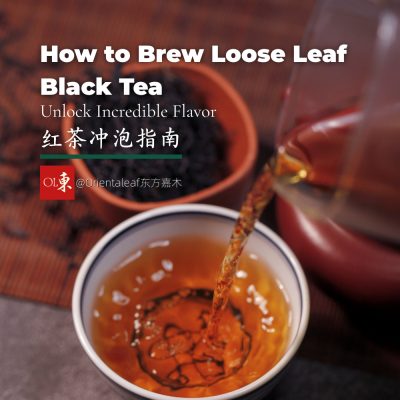
  • Later steepings: Fades to a clean, pale golden-amber while retaining the structural clarity that distinguishes this tea from any murkier or earthier category. As visible in the product images, the liquor in the glass pitcher glows with a vivid, backlit quality that reflects the high refractive index of the wild tree extract.

Mouthfeel

  • Texture: Medium body with notable structural presence. This is not a smooth, velvety tea — it has edges and grip. There is a clear tactile sensation on entry: not harshness, but presence — the kind of structured contact with the palate that wine drinkers would associate with a young, unmanaged natural wine from a cool-climate hillside site. The texture does not linger as astringency; it resolves quickly into the huigan response.
  • Entry: Forward and assertive. The first contact with the palate is immediate and high-impact — a quality that Chinese tasters describe as 爆发力 (Bào Fā Lì, explosive force), distinct from the soft, gradual entry of a smooth bud-grade Dianhong.
  • Huigan (回甘, Huí Gān — returning sweetness): Fast, strong, and bilateral. The return sweetness arrives within 3 to 5 seconds of swallowing — significantly faster than in any cultivated Dianhong — and spreads simultaneously across both sides of the throat and into the cheeks in the pattern known as 两颊生津 (Liǎng Jiá Shēng Jīn, bilateral cheek and throat salivation). This is the single most distinctive sensory marker of genuine wild high-altitude tea material, and it is immediately recognizable to anyone who has experienced it before.
  • Shengjin (生津, Shēng Jīn — salivation): Intense and sustained. The salivation response in this tea is the strongest in the Orientaleaf Dianhong range — active, flooding, and persistent for 3 to 5 minutes per sip across a full gongfu session.
  • Tannins: Present and structured. Unlike the deep-fermented Crimson Dianhong where tannins have been converted to near-invisibility, the wild tea's lighter fermentation retains a clear tannin structure that contributes to the tea's power and grip. These tannins are not harsh or drying — they are the structural backbone of the flavor — but they are perceptible and are a central part of the drinking experience.

Core Flavor Notes

Primary: Mineral stone, forest floor, wild herbs, deep green
Secondary: Dark honey (distant, not leading), dried wild fruit, cedar resin, mountain moss
Tertiary (on cooling and later steepings): Clean wet earth, dried flowers, a restrained sweetness that emerges only after the mineral and herbal layers settle

For wine comparison: the closest profile is a low-intervention, zero-sulfur natural wine from a cool-climate hillside — a Jura Savagnin or an unfiltered Auvergne Gamay — mineral-forward, herbal, structurally present, with sweetness that is suggested rather than declared.

For specialty coffee comparison: the closest reference is a wild-fermented anaerobic natural Ethiopian coffee (Bench Maji or Kaffa forest origin) — complex, slightly funky in the most positive sense, with a mineral backbone and fruit character that reads as wild rather than cultivated, and a finish that continues working in the mouth long after the cup is empty.

Empty Cup & Finish

The 杯底香 (Bēi Dǐ Xiāng, base-of-cup aroma) of a wild tree Dianhong is one of the most distinctive in Chinese black tea. The empty cup retains a dry, mineral-herb fragrance — close to crushed dried stone, forest air, and a distant sweetness — for 6 to 10 minutes after the last sip. This duration is the longest of any tea in the Orientaleaf Dianhong range and is a direct consequence of the higher concentration and diversity of aromatic compounds in wild tree material. The in-mouth finish is long, clean, and mineral — the bilateral salivation and throat sweetness continue to develop for 3 to 5 minutes per steeping, accumulating across a full gongfu session into a sustained, warming resonance in the chest and throat that experienced pu-erh and high-mountain oolong drinkers will recognize immediately. There is no flat aftertaste, no dry residue, and no bitterness on the finish — only the clean, sustained mineral-sweet echo of the mountain.

Body Sensation / Cha Qi

The Cha Qi (茶气, Chá Qì) of this wild forest Dianhong is the defining reason this tea exists in the Orientaleaf range, and it is qualitatively unlike anything produced by cultivated material regardless of tree age or processing method. The sensation begins quickly — within 5 to 10 minutes of the first two steepings — and builds across the session rather than peaking and fading. The primary quality is heat and presence: a clear, strong warmth that moves from the stomach upward through the chest, often accompanied by a mild perspiration response in the upper back and scalp after 4 to 5 steepings. Some experienced drinkers describe a tingling or mild pressure sensation in the temples or forehead — a response associated with the high glycoside (苷类物质, Gān Lèi Wù Zhì) content of genuine wild tree material interacting with the circulatory system.

This is not an uncomfortable experience for anyone who is accustomed to strong raw pu-erh (生普洱, Shēng Pǔ'ěr) or high-mountain oolong Cha Qi — it is the same register, expressed through a black tea vehicle. For drinkers who are new to high-intensity Cha Qi teas, we recommend starting with a smaller leaf quantity (4 to 5 grams per 100 ml rather than the maximum) and fewer steepings in the first session, to calibrate the experience before committing to a full gongfu session.

  • Cha Qi Intensity: 4.5 / 5 — the highest in the Orientaleaf Dianhong range by a significant margin
  • Warmth Profile: Very high — rapid onset, strong chest and stomach heat, radiates to the upper back and scalp in sustained sessions
  • Stimulation Profile: High and immediate — this tea produces a clear, forceful alertness that is distinct from caffeine-only stimulation; the glycoside and polyphenol load of wild tree material produces a full-body activation that is closer to the experience of a strong raw pu-erh session than to a morning coffee
  • Best drunk: Morning through early afternoon; not recommended for evening or late-night sessions for most drinkers; approach with respect if you are new to high-Cha Qi teas


Brewing guide

How to Brew Wild Wilderness Dianhong

A critical note before brewing: This is the most technically demanding tea in the Orientaleaf Dianhong range to brew well. The wild tree leaf extracts faster and more forcefully than any cultivated material at the same parameters. The brewing approach below is calibrated specifically for this tea's character — do not apply parameters from the other Dianhong teas in this range without adjustment.

Method 1: Gongfu Style (Strongly Recommended — the only method that fully reveals this tea)

Gongfu brewing (功夫泡法, Gōng Fū Pào Fǎ) is not just recommended for this tea — it is the only format that allows you to experience its full dimension: the progressive build of mineral complexity across steepings, the evolving Cha Qi (茶气, Chá Qì) across a 60 to 90 minute session, and the remarkable staying power of genuine wild tree material across 10 or more infusions.

  • Vessel: Porcelain gaiwan (盖碗, Gài Wǎn) of 80 to 110 ml capacity. White porcelain is strongly preferred for this tea — it is thermally neutral and will not add any clay-derived warmth or earthiness to an already complex and mineral-forward flavor profile. A clay teapot (紫砂壶, Zǐ Shā Hú) is not recommended for a first session with this material, as the added thermal mass and clay interaction can push the wild character in an unpredictable direction before you have calibrated your approach to the leaf.
  • Leaf quantity: 4 to 6 grams per 100 ml of water. Begin your first session at the lower end — 4 grams — and increase in subsequent sessions as you develop a feel for the extraction speed and intensity of this specific material. Experienced drinkers who are comfortable with strong raw pu-erh may move to 5 to 6 grams from the second session onward.
  • Water temperature: 90 to 95 degrees Celsius for the first four to five steepings. This is lower than the temperature used for the Ancient Tree Dianhong and significantly lower than a full boil, and the difference matters: 90 to 95 degrees Celsius extracts the mineral and herbal aromatic compounds at a controlled rate while keeping the structural tannin extraction in check. Move to 95 to 100 degrees Celsius from steeping 6 onward to maintain extraction depth in the later infusions when the leaf has already been partially opened.
  • Rinse: A rinse (润茶, Rùn Chá) of 5 to 8 seconds at 90 degrees Celsius is recommended before the first steeping. Wild tree leaf is dense and benefits from a full hydration before extraction begins. Pour off the rinse completely and allow the gaiwan to cool for 10 to 15 seconds before beginning the first steeping.
  • Steeping times:Steeping 1: 8 to 10 secondsSteeping 2: 10 to 15 secondsSteeping 3: 15 to 20 secondsSteeping 4: 20 to 28 secondsSteeping 5: 28 to 40 secondsSteeping 6: 40 to 55 secondsSteepings 7 through 10: add 20 to 30 seconds per steeping; raise water temperature to 95 to 100 degrees CelsiusSteepings 11 and beyond: extended steepings of 90 seconds to 2 minutes at full boil; the late steepings of a genuine wild tree tea are often the most quietly beautiful — the explosive force has settled and what remains is a clean, mineral sweetness that is completely different in character from the first few rounds
  • Expected steepings: 10 to 14 steepings of meaningful, evolving flavor from a single dose; the flavor arc moves from forceful and mineral in the early steepings to calm and sweet in the later ones, which is the reverse of many cultivated teas
  • Note on pacing: Do not rush a gongfu session with this tea. Allow 30 to 60 seconds between steepings to register the Cha Qi response and the huigan development fully before pouring the next infusion. This tea is meant to be sat with, not hurried through.

Method 2: Western Style (Acceptable, but significantly limits the experience)

  • Vessel: Teapot or infuser mug
  • Leaf quantity: 2.5 to 3.5 grams per 250 ml of water — use a lower leaf ratio than for any other tea in the Orientaleaf Dianhong range
  • Water temperature: 88 to 92 degrees Celsius — deliberately lower than standard to control the extraction speed of the wild polyphenol content
  • Steeping time: 1.5 to 2 minutes for the first steeping; 2 to 2.5 minutes for a second steeping; do not attempt a third steeping at Western parameters — the result will be flat and over-extracted
  • This method will deliver a drinkable and interesting cup, but it will communicate only a fraction of this tea's character. The mineral complexity, the evolving Cha Qi, and the full bilateral huigan response are gongfu-format experiences. Western brewing is acceptable for everyday convenience after you have already understood the tea through a proper gongfu session.

Method 3: Cold Brew (Not Recommended as a Primary Introduction)

Cold brew is technically feasible with this material but is not recommended as an introduction to the tea. The cold extraction selectively pulls certain aromatic compounds while leaving the tea's most distinctive qualities — the Cha Qi body sensation and the explosive huigan — largely unexpressed. If you want to cold brew after having already experienced the tea in gongfu format: use 4 to 5 grams per 500 ml of cold filtered water, steep for 10 to 12 hours in the refrigerator, and expect a clean, mineral-forward cold brew with notable structural presence and a restrained sweetness on the finish. The result is interesting and worth trying once you know the tea well — the mineral and wild herb character comes through clearly in cold extraction — but it does not represent the tea at its best or most complete.

Water Quality Note

Water quality matters more for this tea than for any other in the Orientaleaf Dianhong range. The wild tree's mineral character is subtle and specific — it reflects the precise soil and water chemistry of a high-altitude primary forest ecosystem in Fengqing. Hard water with high calcium or magnesium content does not neutralize this character so much as overwrite it: the competing minerals in hard water dominate the tea's own mineral profile and flatten the complexity into a generically heavy, dull sensation. Use the softest, cleanest filtered water available to you. Mountain spring water with low total dissolved solids (below 50 mg per liter) is the ideal brewing water for this tea. If your only option is tap water, pass it through a carbon filter at minimum before brewing. The difference in cup quality between hard tap water and soft filtered water is more pronounced in this tea than in any sweet, honey-forward Dianhong — because there is no wall of caramel sweetness to compensate for mineral interference.

Storage

Storage Recommendations

Core Storage Requirements

The Wild Wilderness Dianhong requires the same core storage conditions as any premium loose-leaf black tea, with one specific additional consideration: the wild aromatic compounds — the mineral, herbal, and resinous notes that define this tea's character — are more volatile and more easily disrupted by environmental interference than the heavier, more stable aromatic compounds of a bud-grade or deep-fermented Dianhong. This means that storage quality has a proportionally larger impact on this tea's long-term character than on any other tea in the Orientaleaf Dianhong range.

The four non-negotiable storage conditions are:

  • Airtight: The glycoside-derived aromatic compounds and the lighter fermentation profile of this tea mean that open-air oxidation will degrade the wild character faster than it would degrade the flavor of a more heavily processed black tea. The mineral and herbal top notes are the first to fade under air exposure — within two to three weeks of unsealed storage, the tea will begin to smell and taste flatter and more generic. Reseal completely and immediately after every use without exception.
  • Dark: The specific polyphenol and glycoside compounds that produce this tea's distinctive flavor and Cha Qi are sensitive to UV degradation. A transparent storage vessel on a lit counter or shelf will show measurable aromatic loss within 10 to 14 days. Use an opaque container or store inside a closed cabinet at all times.
  • Odor-isolation: Because this tea's aromatic profile is mineral, herbal, and forest-forward rather than sweet and high-volume, it has less aromatic mass to resist odor intrusion. A strongly scented storage environment — near coffee, spices, scented candles, or cleaning products — will contaminate this tea faster and more completely than it would contaminate a honey-rich golden-bud Dianhong. Dedicate a storage container exclusively to this tea and keep it well away from all aromatic interference sources.
  • Low humidity, stable temperature: Target below 60 percent relative humidity and a stable temperature between 10 and 25 degrees Celsius. The lighter fermentation of this tea — intentionally applied to preserve the wild character — means there is slightly more residual biochemical activity in the leaf than in a fully standardized deep-fermented product. Humidity above 70 percent can trigger slow secondary changes in the leaf chemistry that gradually shift the character toward something heavier and less precisely wild.

Recommended Containers

A food-grade, double-sealed tin with an inner foil lining is the most reliable home storage option. For a tea whose defining character is this specific and this fragile relative to environmental interference, we do not recommend casual storage in the original bag unless the bag itself is vacuum-sealed or mylar-lined with a full zip-lock closure. Transfer to a proper storage tin within the first week of opening the original packaging. For 500g or 1,000g quantities, divide immediately into 80g to 120g portions and seal each portion separately — this limits the number of air-exposure events experienced by the bulk of your stock.

Shelf Life

Under correct storage conditions, the Wild Wilderness Dianhong will hold its primary wild character for 12 to 18 months from the production date. The best-drinking window is within the first 12 months, when the mineral, forest, and glycoside-driven aromatic compounds are at their most vivid and the Cha Qi intensity is at its peak. Between 12 and 24 months of correct storage, the wilder, more volatile top notes will gradually soften while the base sweetness and structural tannins become slightly more prominent — the tea becomes less confrontational but also less distinctive. Beyond 24 months, the defining wild character will have faded to a point where the tea is no longer representative of what makes it unique.

This is an important difference from aged raw pu-erh: while both wild tea and raw pu-erh benefit from high-quality material and clean storage, raw pu-erh is specifically designed for multi-year or multi-decade aging because its microbial and enzymatic transformation processes are ongoing. A wild black tea's character is fixed at production and protected rather than developed by storage — the goal of good storage for this tea is preservation, not transformation. Drink it fresh, within its window.

Common Storage Mistakes and Their Consequences

  • Storing in any container that is not genuinely airtight: This is the most common and most damaging mistake for this specific tea. Because the wild aromatic compounds are more volatile than those in heavily processed teas, the degradation under imperfect sealing is noticeably faster. Within three to four weeks of loosely sealed storage at room temperature, the mineral and herbal notes will have faded significantly, and what remains will be a flat, malt-dominant profile that communicates none of the tea's wild origin. Test your storage container: press a folded piece of paper between the lid and the container body — if it can be removed with minimal resistance, the seal is not tight enough for this tea.
  • Storing near or alongside strongly aromatic teas: Tea absorbs ambient aromatics regardless of the source, and the wild tea's quieter, more mineral aromatic profile makes it more vulnerable to aromatic contamination from neighbor teas than a bold, honey-forward Dianhong would be. A heavily roasted oolong, a smoked Lapsang Souchong, or even a strongly camphor-scented aged pu-erh stored in the same cabinet without individual sealing can cross-contaminate the wild tea's character within weeks. The result is a confused aromatic profile that smells neither cleanly wild nor cleanly like whatever the contaminating tea was — just indistinct and unsatisfying. Store this tea in its own sealed container, physically separated from other teas.

  • Exposing the storage container to direct sunlight or strong artificial light: Placing a tea tin on a kitchen counter, windowsill, or open shelf where it receives regular light exposure will degrade the polyphenol and glycoside compounds responsible for both the flavor and the Cha Qi of this tea. The Cha Qi response in particular — which depends on specific molecular structures in the wild tree material — is sensitive to photo-oxidation in ways that the simpler aromatic compounds of a cultivated tea are not. Store in a closed cabinet, a dedicated drawer, or any location where the container is not exposed to regular light cycles.
  • Failing to divide large quantities into smaller portions: Opening a 500g or 1,000g bag repeatedly over the course of months means that the bulk of your stock experiences an air-exposure event every time you brew. Even with prompt resealing, the accumulated exposure across 30 to 50 opening events over six months will measurably degrade the aromatic quality of the remaining stock. Divide into small portions — 80g to 120g — immediately upon receipt, seal each portion individually, and open only one portion at a time. This single practice extends the effective shelf life of a large-quantity purchase by several months.
  • Assuming refrigerator storage automatically solves the preservation problem: Cold storage slows aromatic degradation, but only if the sealing conditions are perfect. A wild tea stored in an imperfectly sealed container in a refrigerator is exposed to two simultaneous threats: the ambient food odors of the refrigerator interior, and the condensation cycle that occurs every time the container temperature changes. The result — a tea that smells faintly of last week's leftovers and has absorbed moisture unevenly — is worse than the result of correct room-temperature storage in a proper airtight container. If you choose to refrigerate this tea for long-term storage beyond 12 months, use a vacuum-sealed, odor-proof container and follow the full bring-to-room-temperature protocol before opening.

Packaging & use

Scan the QR code on the label for tea details and brewing instructions.

Session estimates use a fresh portion of dry tea each time. Each portion can be infused repeatedly.

Customer reviews

Tracked shipping

Tracking after dispatch. Rates & delivery estimates

14-day returns

Request within 14 days; tea must remain sealed. Conditions apply

Here to help

Order or delivery issue? Contact our support team.