🍵 15% off · TREAT15   🎁 Gifts from $100
🍵 15% off teas · TREAT15   🎁 Free tea gifts at $100 / $150 / $200

A Little Reward for You

Explore the year-end tea offer →

Make time for a little tea, just for you. Enjoy 15% off eligible teas with code TREAT15, from now through November 30, 2026 (Anywhere on Earth, UTC−12).

More tea to enjoy

  • Spend US$100: a full box of Golden Flower White Tea — 10 individually packed 3g portions, 30g total.
  • Spend US$150: the white tea box, plus one 100g Yunnan Red Glow ripe Pu-erh cake.
  • Spend US$200: both gifts above, plus one 100g The Little Brick — 2018 Golden Flower Fu Brick Tea.

Your first order also comes with a complimentary tea towel. No minimum spend or code is required for this welcome gift, and it can be enjoyed alongside the tea gifts above.

A few simple details

  • Gift thresholds are based on the amount paid for eligible merchandise after discounts, excluding shipping, taxes and gift value. Discovery Boxes and teaware count toward gift thresholds but are excluded from the 15% discount. K KOU electric kettles are excluded from both the discount and gift thresholds.
  • Gift thresholds are in US dollars. Other currencies are converted using the exchange rate applied at checkout; eligibility is based on the corresponding USD merchandise amount.
  • Qualifying gifts are cumulative, with one set per order. The offer can be used on multiple orders; orders cannot be combined to reach a threshold.
  • Standard shipping is US$9.50 per order. Orders qualifying for the existing “No Shipping Fee for Discovery Box” offer receive free shipping, including other items purchased in the same order.
  • The 15% discount combines only with “No Shipping Fee for Discovery Box”; it cannot be combined with other discounts. The gifts described here are part of this promotion.
  • If a gift is unavailable, we may substitute another gift of equal or greater retail value without separate notice.
  • The same offer continues through Singles’ Day, Black Friday and Cyber Monday.

Valuta

Il tuo carrello

Il tuo carrello è vuoto

Tè nero Dianhong da alberi antichi | Albero di oltre 100 anni, Fengqing

Alberi secolari oltre 100 anni | Corpo minerale profondo | Oltre 10 infusioni | Fengqing, Yunnan

Price:
Prezzo di listino $17.50
Prezzo unitario
per
(0 nel carrello)
Flat US$9.50 shipping per order — any order size.

Dispatch within 48 hours. Shipping policy

Spese di spedizione calcolate al check-out.
100% Secure payments
AliPay
American Express
Apple Pay
Bancontact
Google Pay
iDEAL Wero
Mastercard
MB WAY
PayPal
Shop Pay
Union Pay
USDC
Visa
WeChat Pay

Your transaction is protected with advanced security measures to keep your information confidential

Tea profile

  • Tea Type: Black Tea (Dianhong / Dian Hong / Yunnan Red Tea); fully oxidized
  • Harvest Season: Spring (first flush)
  • Material Grade: One bud, one to two leaves (一芽一叶 / 一芽两叶, Yī Yá Yī Yè / Yī Yá Liǎng Yè); thick, full-bodied leaf from arbor-form trees
  • Tree Age: 100 years and above (fully arborized / 乔木, Qiáo Mù; unmanaged, no chemical inputs)
  • Cultivar: Yunnan Large-Leaf Cultivar (Camellia sinensis var. assamica, 云南大叶种)
  • Origin: Fengqing County (凤庆县), Lincang City (临沧市), Yunnan Province (云南省), China
  • Geographic Coordinates: Approx. 24.58 degrees North, 99.93 degrees East (Fengqing County)
  • Elevation Range: 919 m to 3,098 m above sea level (Fengqing County); arbor garden sites typically situated between 1,600 m and 2,400 m
  • Production Method: Medium oxidation (中度发酵, Zhōng Dù Fā Jiào); controlled rolling (揉捻, Róu Niǎn); low-temperature drying to preserve aromatic integrity
  • Storage: Produced in Fengqing, immediately transferred to Xi'an dry storage upon completion; stored in a naturally low-humidity northern Chinese inland environment
  • Available Sizes: 50g (sample), 100g, 500g, 1,000g
  • Heritage Status: Fengqing Dianhong production technique listed on China's National Intangible Cultural Heritage List (2014) and UNESCO World Intangible Cultural Heritage List (2022)
  • Ecological Status: Arbor trees grown without chemical fertilizers or pesticide inputs; root systems fully developed in natural mixed-forest soil

About this tea

Un tè nero coltivato su alberi da tè secolari le cui radici penetrano per metri nel terreno ricco di minerali di Fengqing offre ciò che nessun tè di piantagione può mai dare: una profondità di sapore e un finale in gola che continua a rivelarsi infusione dopo infusione.

La maggior parte dei tè neri è pensata per una singola tazza intensa. Questo è pensato per il tipo di bevitore che vuole sapere cosa sta ancora facendo un tè alla settima infusione — e la risposta, con un Dianhong da alberi secolari, è sempre più di quanto ci si aspetti.

Ciò che lo rende unico

  1. Vero materiale da alberi, non riempitivo da piantagione: Ogni grammo proviene da alberi di oltre 100 anni — completamente arborizzati, non gestiti, non potati — che producono foglie con una densità di composti interni che i cespugli gestiti delle piantagioni non possono replicare.
  2. Corpo minerale che si sente, non solo si assapora: Radici che scendono per diversi metri nel terreno minerale stratificato di Fengqing si traducono direttamente in una struttura portante, quasi scheletrica, nella tazza — quel tipo di peso che gli appassionati di caffè specialty e vino naturale riconosceranno immediatamente come terroir.
  3. Oltre 10 infusioni di sapore costante e sempre più profondo: La crescita lenta e densa di composti di un albero secolare significa che questo tè non raggiunge il picco e poi crolla dopo due o tre infusioni — si costruisce, strato dopo strato, lungo un'intera sessione gongfu.
  4. Huigan (回甘) che resta: Il finale dolce e persistente che emerge in gola minuti dopo la deglutizione — ciò che la cultura del tè cinese chiama 喉韵 (Hóu Yùn, ritmo della gola) — è misurabilmente più persistente nel materiale di alberi antichi rispetto a qualsiasi grado standard di Dianhong.
  5. Origine Fengqing, il luogo di nascita del Dianhong: Proveniente dalla stessa contea che dal 1938 produce il tè nero più celebre al mondo, dimora dell'albero da tè coltivato più antico del mondo con 3.200 anni — un luogo in cui la coltivazione del tè non è un'industria, è un paesaggio.

La storia dietro questo tè

Ci sono due modi per coltivare un albero da tè. Puoi piantarlo in filari, potarlo in un cespuglio gestibile e concimarlo per ottenere il maggior numero possibile di raccolte all'anno. Oppure puoi lasciarlo in pace per cento anni.

Gli alberi da tè da cui proviene questo Dianhong hanno scelto la seconda strada — o più precisamente, gli abitanti della contea di Fengqing l'hanno scelta per loro, generazioni fa. Si tratta di alberi cresciuti in forma arborea (乔木, Qiáo Mù), il che significa che è stato permesso loro di svilupparsi nella loro forma naturale: tronchi eretti, chioma ampia e apparati radicali che scendono per diversi metri nel terreno sotto i giardini di tè di Fengqing, Lincang. Con 100 anni e più, non sono gli alberi più antichi della regione — Fengqing ospita anche il più antico albero da tè coltivato conosciuto al mondo, stimato in 3.200 anni — ma sono abbastanza vecchi da avere una chimica interna fondamentalmente diversa da qualsiasi cosa coltivata in una piantagione gestita.

La differenza comincia sottoterra. Un cespuglio da piantagione ha un apparato radicale superficiale e laterale, progettato per assorbire rapidamente i fertilizzanti distribuiti in superficie. Un albero secolare ha una struttura radicale profonda e ramificata che preleva acqua e minerali da strati di suolo che le radici della piantagione non raggiungono mai. Questo assorbimento di minerali non è invisibile nella tazza: produce quello che i degustatori esperti descrivono come uno "scheletro minerale" o un "corpo minerale" nel liquore, un peso strutturale e una texture sotto la dolcezza che conferiscono al tè la sua spina dorsale e la sua persistenza attraverso le infusioni.

La foglia stessa riflette questo lento accumulo. La raccolta standard per questo tè è un germoglio e una foglia (一芽一叶, Yī Yá Yī Yè) oppure un germoglio e due foglie (一芽两叶, Yī Yá Liǎng Yè). Le foglie degli alberi secolari sono visibilmente più spesse e più elastiche di quelle di materiale più giovane: un indicatore fisico di una maggiore densità di polifenoli e amminoacidi, accumulata attraverso decenni di crescita lenta anziché stagioni di produttività forzata.

Il metodo di produzione è volutamente sobrio: ossidazione media standard (Zhōng Dù Fā Jiào), arrotolamento preciso (Róu Niǎn) e un'asciugatura accurata per fissare la struttura naturale della foglia senza introdurre note sgradevoli di tostato o affumicato. L'obiettivo è lasciare che la materia parli, non abbellirla. Dopo la produzione, il tè viene immediatamente trasferito a Xi'an per lo stoccaggio a secco — una città del nord con umidità naturalmente bassa — dove riposa in condizioni stabili e pulite che ne preservano la limpidezza e non consentono fermentazioni secondarie indesiderate.

Quello che trovi nella tazza non è un tè che si annuncia con forza al primo sorso. È un tè che conquista la tua attenzione nel corso di un'intera sessione.

Pronto a scoprire che sapore ha il Dianhong degli antichi alberi?

  • Origine del patrimonio riconosciuta dall'UNESCO: La tradizione di produzione del Dianhong della contea di Fengqing è iscritta nella Lista del Patrimonio Culturale Immateriale dell'UNESCO (2022) — non è un tè nero dello Yunnan generico; è la regione d'origine, con una delle più dense concentrazioni di antichi alberi da tè in Cina.
  • Stoccaggio a secco a Xi'an fin dalla produzione: Ogni lotto viene trasferito direttamente da Fengqing allo stoccaggio a secco di Xi'an al termine della produzione — un ambiente interno settentrionale che mantiene condizioni pulite e a bassa umidità e protegge la limpidezza del sapore del tè dal suo arrivo fino alla tua porta.
  • Disponibili più formati: Inizia con un campione da 50 g per scoprire la profondità del materiale di alberi secolari prima di passare a una quantità maggiore — oppure scegli direttamente 500 g o 1.000 g per l'infusione gongfu quotidiana.

Se hai bevuto caffè specialty monorigine per la profondità, o vino naturale invecchiato per il terroir, questo è il tè pensato per quel tipo di conversazione. L'antico Dianhong da alberi secolari di Fengqing è ora disponibile in quattro formati, con spedizione mondiale a tariffa fissa di 9,50 USD.

Aggiungi al carrello e assapora ciò che un secolo di crescita paziente può produrre.

L'Ancient Tree Dianhong fa parte della Serie Dianhong di Orientaleaf — proveniente direttamente dai giardini di tè da alberi secolari della Contea di Fengqing e conservato, dal momento dell'arrivo, nelle condizioni di stagionatura a secco di Xi'an. Per tutti i dettagli sulla nostra filosofia di conservazione e sulla struttura, visita la pagina Stagionatura a secco di Xi'an.

Explore Tè nero →

Tasting notes

Dry Leaf: Appearance & Aroma

The dry leaf is immediately distinguishable from bud-grade or plantation Dianhong. The individual strips are full, thick, and slightly irregular in shape — this is a natural consequence of brewing from genuine arbor leaf, which is denser and less uniform than machine-processed plantation material. The color of the dry leaf ranges from dark charcoal-black on the primary leaf body to warm brown and occasional silver-gray where the finer tips and trichomes are present. There is no all-gold surface coating as found in a single-bud grade — the character here is in substance, not visual spectacle.

The dry fragrance is quieter and deeper than a bud-grade Dianhong. The opening note is warm dried longan and malt, with a secondary layer of dry forest floor — wood, mineral dust, and a distant sweetness that sits beneath rather than on top of the aroma. For anyone familiar with aged natural wines or single-origin dark chocolate, the dry-leaf aroma of an ancient tree Dianhong will feel instinctively familiar: it is the smell of something that has been growing slowly for a very long time.

Wet Leaf: Post-Brew Appearance & Aroma

After brewing, the leaves open fully and reveal their full scale — these are noticeably larger and thicker than leaves from plantation or young tree material. The rehydrated leaf is a rich, uniform reddish-brown with strong elasticity; when pressed between fingers, the leaf surface has visible structural integrity rather than the papery fragility of lower-grade processed leaf. Under good light, the leaf veins are clearly visible — another marker of genuine large-leaf arbor material.

The wet leaf aroma is where the ancient tree character becomes most obvious. The forest floor note intensifies into something that wine drinkers would describe as sous bois — an earthy, mineral woodland quality overlaid with deep honey and dried red fruit. There is no sharpness, no green vegetal note, and no smoke. The aroma is quiet, composed, and complex.

Liquor Color

  • First and second steepings: Deep, clear amber-red with excellent translucency — a warm copper-orange when held to light, sometimes described in Chinese tasting as 红艳 (Hóng Yàn, vivid red). The liquor is clean and bright, not cloudy.
  • Third through sixth steepings: Shifts gradually toward a slightly lighter, more golden-amber. Remains transparent and consistent.
  • Later steepings (7 through 10+): Lightens to a warm honey-gold while retaining clarity and sweetness — a clear visual indicator of the tea's exceptional endurance and internal compound density.

The overall color profile is comparable to a well-aged Bordeaux blanc or a medium-roast Ethiopian coffee brewed as a pour-over: deep, warm, and glowing rather than opaque or muddy.

Mouthfeel

  • Texture: Full-bodied and substantial. The Chinese tasting term 汤感厚重 (Tāng Gǎn Hòu Zhòng, thick and weighty liquor sensation) applies precisely here. The texture has a quiet viscosity — not oily in the way of a high-fat beverage, but carrying a clear weight on the palate that distinguishes it immediately from lighter Dianhong grades. The closest single-origin coffee analogy is a naturally processed Sumatra brewed at a moderate ratio: dense, mineral, and grounding.
  • Tannin structure: Present and structured, but entirely non-gripping. There is no astringency in the mouth after swallowing. The tannins act as a scaffold for the other flavor compounds rather than as a drying agent — what Bordeaux critics would call fine-grained or integrated.
  • Huigan (回甘, Huí Gān — returning sweetness): Strong and persistent. After swallowing, a clean, mineral-tinged sweetness returns in the mid-throat within 5 to 10 seconds and holds for 2 to 4 minutes per sip. This is measurably longer than the huigan of plantation or bud-grade black teas.
  • Houyan (喉韵, Hóu Yùn — throat rhythm/resonance): The defining quality of this tea and the clearest marker of genuine ancient tree material. After each sip, there is a sustained cool-sweet sensation in the throat — not a flavor note, but a physical resonance — that continues for several minutes and accumulates across steepings. For drinkers who have experienced this quality in aged raw pu-erh or high-mountain oolong, the parallel is immediate.
  • Shengjin (生津, Shēng Jīn — salivation): Moderate to strong. The liquor produces active salivation in the lower jaw and throat, contributing to the perception of juiciness and prolonging the finish.

Core Flavor Notes

Primary: Dried longan, malt, dark honey, mineral stone
Secondary: Red dates (jujube), roasted grain, gentle cocoa powder
Tertiary (on cooling and later steepings): Dried fig, subtle forest floor, clean wood, lingering vanilla

For wine comparison: the flavor profile most closely parallels a mature Rhone Valley red (Chateauneuf-du-Pape or Crozes-Hermitage) — deep, mineral, fruit-forward in a dried-fruit register, with structural weight and a long, clean finish.

For specialty coffee comparison: the closest reference is a naturally processed Yemeni coffee (Haraaz or Bani Ismail origin) — complex, fruit-dried, mineral, with a finish that outlasts the cup.

Empty Cup & Finish

The 杯底香 (Bēi Dǐ Xiāng, base-of-cup aroma) in an ancient tree Dianhong is one of the most telling quality markers, and this tea performs well by that measure. The empty cup retains a warm, dry-honey and faint mineral fragrance for 5 to 8 minutes — significantly longer than standard Dianhong grades. The in-mouth finish is clean, sweet, and slightly cooling in the throat, with no tannin residue and no flat or stale aftertaste.

Body Sensation / Cha Qi

The Cha Qi (茶气, Chá Qì — the physical sensation generated by the tea after drinking) of an ancient tree black tea is distinct from that of younger plantation material, and distinct again from the sharp stimulation of a bud-only grade. The sensation is grounding and warming, centered in the chest and stomach, with a secondary warmth that moves outward to the limbs over the course of a 45 to 60 minute gongfu session.

Some experienced drinkers report a gentle tingling sensation in the scalp or upper back during longer sessions — a response associated with the higher polyphenol and mineral compound load of genuine ancient tree material. The overall effect is calm, sustaining, and present without being intrusive.

  • Cha Qi Intensity: 3.5 / 5
  • Warmth Profile: High — centers in the chest and stomach, radiates outward over a full session
  • Stimulation Profile: Moderate and clean — caffeine effect is smooth and sustained, moderated by high L-theanine content in ancient tree leaf, without a sharp onset or subsequent crash
  • Best drunk: Morning through mid-afternoon; not recommended late evening for caffeine-sensitive drinkers

Brewing guide

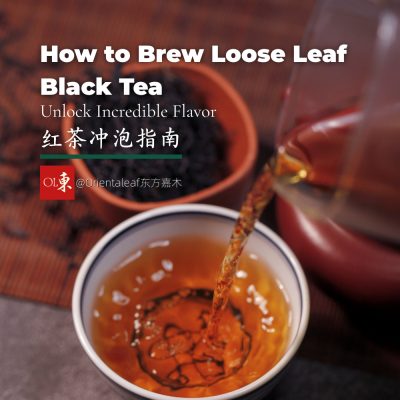
How to Brew Ancient Tree Dianhong

Method 1: Gongfu Style (Strongly Recommended)

Gongfu brewing (功夫泡法, Gōng Fū Pào Fǎ) is the method that allows this tea's defining qualities — its depth across steepings, its evolving mineral character, and its sustained houyan (喉韵, Hóu Yùn, throat resonance) — to be fully expressed. Any other method will deliver a good cup, but it will not tell you what this tea is fully capable of.

  • Vessel: A small clay teapot (紫砂壶, Zǐ Shā Hú) or porcelain gaiwan (盖碗, Gài Wǎn), 80 to 120 ml capacity. A clay teapot with good heat retention will slightly amplify the mineral and malt notes. A porcelain gaiwan will give a cleaner, more precise expression of the leaf. Either is correct — the choice depends on your preference.
  • Leaf quantity: 6 to 8 grams per 100 ml of water. A slightly higher ratio (7 to 8 grams) is recommended if you plan to brew 8 or more steepings, as the additional leaf mass ensures the later steepings remain full-flavored.
  • Water temperature: 95 to 100 degrees Celsius. Unlike a bud-grade Dianhong, the thicker, more robust leaf of an ancient tree tea can handle and benefits from higher water temperature — it drives extraction of the deeper mineral and base-note compounds that define this tea. Do not use water below 90 degrees Celsius for gongfu brewing of this material.
  • Rinse: A brief rinse (润茶, Rùn Chá) of 5 to 8 seconds is recommended. This is particularly important for the first session, as it hydrates the dense leaf structure and brings the gaiwan or teapot to temperature, ensuring the first steeping extracts evenly.
  • Steeping times:Steeping 1: 10 to 15 secondsSteeping 2: 15 to 20 secondsSteeping 3: 20 to 30 secondsSteeping 4: 30 to 40 secondsSteeping 5: 40 to 55 secondsSteeping 6: 55 to 75 secondsSteepings 7 through 10+: add 20 to 30 seconds per steeping; increase water temperature to a full rolling boil for steepings 8 and beyond to maintain extraction depth
  • Expected steepings: 10 to 12 steepings of consistent, evolving flavor from a single dose; many experienced brewers extend this to 14 or 15 steepings with longer infusion times in the later rounds
  • Note on flavor progression: The first two steepings will lead with honey, dried longan, and malt. Steepings 3 through 6 bring the mineral body and dried fruit character forward. Steepings 7 and beyond reveal the tea's deepest register — a quiet, sweet, mineral-woody quality that is unique to aged-root arbor material and cannot be replicated by any younger tea.

Method 2: Western Style (For Everyday Convenience)

  • Vessel: Teapot, infuser mug, or French press
  • Leaf quantity: 4 to 5 grams per 250 ml of water
  • Water temperature: 95 degrees Celsius
  • Steeping time: 2.5 to 3.5 minutes for the first steeping; 3 to 4 minutes for a second steeping
  • This method delivers a full, satisfying cup with the honey and malt notes clearly present, though the mineral depth and steeping endurance of the tea will not be as apparent as in gongfu format. If using a French press, press slowly and pour immediately to avoid over-extraction.

Method 3: Cold Brew

  • Vessel: Glass jar or pitcher with a lid
  • Leaf quantity: 6 to 7 grams per 500 ml of cold, filtered water
  • Steeping time: 10 to 14 hours in the refrigerator
  • Result: A smooth, mineral-sweet cold brew with prominent dried fruit and honey notes and no bitterness. The mineral body of the ancient tree leaf comes through particularly cleanly in cold brew — the lower extraction temperature suppresses tannin release while allowing the amino acid sweetness to dominate. This is an excellent introduction to the tea for anyone who finds hot gongfu brewing unfamiliar.

Water Quality Note

Use filtered, soft, or low-mineral bottled water. Hard water with high calcium or magnesium content will compete with and flatten the tea's own mineral character rather than complement it — the effect is similar to tasting a fine mineral water alongside a very different mineral water simultaneously, where neither comes through clearly. If your tap water tastes clean and neutral, it will brew a good cup. If it has a noticeable taste of its own, use a filtered alternative.

Storage

Core Storage Requirements

The four non-negotiable conditions for storing this tea correctly are:

  • Airtight: The aromatic compounds responsible for this tea's honey, dried fruit, and mineral top notes are volatile and will oxidize when exposed to open air. Reseal completely after every use. Do not leave the bag folded but unsealed on a shelf — this counts as open-air storage.
  • Dark: UV light degrades polyphenols and aromatic esters rapidly. A tea stored in a transparent glass jar on a sunlit counter will lose measurable flavor complexity within two to four weeks.
  • Odor-free environment: Dry tea leaf is highly absorbent. It will take on ambient smells — coffee, spices, cleaning products, other teas — within days of exposure. Once an off-odor is absorbed into the leaf, it cannot be removed. Store in a dedicated airtight tin or container, away from all aromatic sources.
  • Low humidity: Target below 60 percent relative humidity. High-humidity environments (coastal climates, kitchens, bathrooms) accelerate secondary oxidation and can trigger low-level microbial activity that introduces earthy or musty notes over time.

Recommended Containers

A double-sealed tin (inner foil or paper lining with an outer press-fit or screw lid) is the most reliable home storage option. Mylar or vacuum-sealed foil bags — the same format used in specialty coffee storage — are equally effective and take up less space. For larger quantities (500g or 1,000g), divide the tea into 100g to 150g portions and only open one portion at a time, keeping the remainder sealed.

Refrigerator Storage

For long-term storage beyond 12 months, refrigerator storage is viable but requires strict protocol. The tea must be packaged in a completely airtight, moisture-proof container before entering the refrigerator — any air gap will result in condensation on the leaf when the container temperature fluctuates. Before opening a refrigerator-stored container, allow it to return to full room temperature — at least 45 to 60 minutes on the counter — before breaking the seal. Opening a cold container in a warm room will cause immediate condensation on both the container interior and the leaf surface.

Shelf Life

Under correct dry storage conditions, this ancient tree Dianhong will hold its primary flavor characteristics for 18 to 24 months from the production date. The peak drinking window for this tea is within the first 12 to 18 months of production, when the honey, fruit, and mineral notes are most vivid and in balance. After 24 months, the bright volatile aromatics will gradually recede, leaving a progressively flatter profile. This is a different trajectory from raw pu-erh, which undergoes active, positive transformation over years and decades — this tea is designed to be enjoyed fresh, not stored as an investment.

Common Storage Mistakes and Their Consequences

  • Using a loosely lidded ceramic jar or traditional tea caddy without an inner seal: Many attractive ceramic tea storage jars are not genuinely airtight. The tea will lose its honey and floral top notes within four to six weeks and taste increasingly flat and papery. Test your container: seal a piece of tissue paper inside with the lid closed — if you can pull the tissue out without resistance, the seal is not adequate.
  • Storing in a kitchen cabinet above or near the stove: Heat and moisture from cooking will cycle in and out of any cabinet near active cooking surfaces. The humidity spikes, even brief ones, are enough to begin degrading the leaf. Within a month, the tea will show signs of moisture absorption — the dry leaf will lose its crispness and the aroma will shift toward damp wood or muted malt.
  • Storing multiple teas in the same container or in the same small space: Even with individual packaging, different teas stored in very close proximity in a small cabinet will cross-contaminate aromatically over time. A strongly aromatic tea stored next to a subtly flavored one — such as this ancient tree Dianhong next to a heavily roasted oolong — will absorb the neighbor's character within weeks. Use separate compartments or cabinets for teas with different aromatic profiles.
  • Putting the tea in the freezer without a vacuum seal: Freezer temperatures cause dramatic moisture behavior inside any imperfectly sealed container. Ice crystals will form on the leaf surface and, upon thawing, introduce localized moisture damage — altering the leaf structure and accelerating flavor degradation in the affected areas. Unless you have access to a vacuum-sealer and food-grade freezer bags, freezer storage is not recommended for this tea.

Packaging & use

Scan the QR code on the label for tea details and brewing instructions.

Session estimates use a fresh portion of dry tea each time. Each portion can be infused repeatedly.

Customer reviews

Tracked shipping

Tracking after dispatch. Rates & delivery estimates

14-day returns

Request within 14 days; tea must remain sealed. Conditions apply

Here to help

Order or delivery issue? Contact our support team.