





The collection, in depth
Everyday Shou/Ripe Pu-erh — Teas You'll Actually Finish
Compare the teas by flavor, format and their stated production and storage history. We keep tea in Xi’an under natural ambient humidity, without artificial humidity control; choose the cup and quantity that suit the way you drink.
Read the full guide Close the guide
Teas You'll Actually Finish
Teas You'll Actually Finish
Every tea on this page clears one rule before it earns a place here: it has to be something we drink ourselves — at the desk, out of a thermos, on a normal Tuesday. Not saved for guests. Not sitting in a drawer waiting for the right moment.
Everyday shou pu-erh should cost about a dollar a day to drink, and it should taste clean enough that you reach for it again the next morning without thinking about it. Here is what "around a dollar a day" actually looks like:
| How you brew | Leaf | What you get |
|---|---|---|
| Gongfu — gaiwan or small pot | 5 g | 8–12 infusions, one afternoon |
| Thermos, leaves left in all day | 5 g | 1–1.5 L, a full workday |
| Cold brew, fridge overnight | 5 g per 500 ml | Next-day iced pu-erh |
| Pu-erh latte | 8 g | Two large cups, no sugar needed |
Not sure where to start? The Everyday Shou Discovery Box puts six teas in six different formats together — 250 g total, free worldwide shipping — so you can find your direction before committing to a larger quantity.
Storage
Natural Dry Storage in Xi’an
We store our teas in Xi’an under naturally occurring ambient humidity. We do not artificially control humidity. Conditions follow the seasons rather than a fixed humidity target; we keep the tea protected from moisture, direct sunlight and strong odors.
We select these teas for a clean, enjoyable cup. That preference should not be confused with a guarantee that any storage location or climate makes spoilage impossible. Damp, fishy or sour notes can relate to fermentation, material, handling or storage; a city name cannot diagnose the cause.
Dry and more humid storage can lead to different styles. Our choice is natural dry storage, with no artificial humidity control. For a particular tea, use its own production and storage information rather than treating all previous years as time in one warehouse.
Why These Teas Are Priced the Way They Are
We'd rather explain than let you guess.
This collection is selected for daily drinking and practical value. It includes different production years, origins and leaf grades; those details belong to each tea rather than defining the range as uniformly young or blended.
What we did not cut: storage conditions, and our own palates. Every tea listed here is one that someone on our team is drinking right now. If a lot turns cloudy, thin, or stuffy in the cup, it doesn't get listed. There is no certification ceremony — the standard is simply that bad tea doesn't stay in our thermos very long.
Our tea selection and storage are based in Xi’an. We distinguish the history of a particular tea from the history of the business or its storage partners.
Choosing
Find Your Tea: What Each Style Actually Tastes Like
Ripe pu-erh is not one flavor. Here is how the teas in this collection land, and who tends to reach for each one:
| If you usually drink… | Look for | Start with |
|---|---|---|
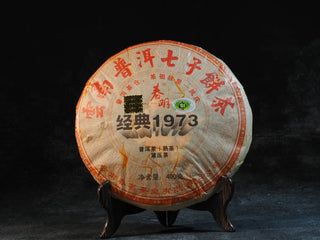
| Espresso, dark chocolate, malt | Cocoa, roasted grain, thick body | Bulang Mountain Bold Loose; Classic 1973 Menghai Cake |
| Dried fruit, caramel, brown sugar | Red date, jujube, honeyed finish | Spring Ming Menghai Ripe Cake; Spring Ming 2008 Anniversary Cake; Menghai Wei Cake |
| Smooth, mild, forgiving teas | Soft sweetness, low bitterness, silky texture | Spring Lincang Tuo; Mang Fei Loose |
| Honey, caramel, a very clean cup | Golden sweetness, no storage taste at all | Golden Treasure Cake; Yunnan Red Glow Mini Cake |
| Floral tea, but with depth | Rose over old wood and caramel | Rose Scented Yiwu Loose |
| Warmth and comfort, something mellow | Glutinous rice aroma, creamy, herbal sweetness | Sticky Rice Scent Cake |
| Curious what "high-end shou" means | Aged aroma, medicinal depth, jujube sweetness, silky texture | Imperial Gongting Loose |
| No commitment yet | Six teas, six formats, one box | Everyday Shou Discovery Box |
The rose-scented and sticky-rice-scented teas are aromatic styles, so read their own ingredient and process descriptions. Traditional scenting or the addition of an aromatic herb is different from artificial flavoring, but it is not the same as having no added aromatic material.
Formats
Which Format Should You Buy?
Which Format Should You Buy?
Loose leaf
The easiest entry point. No tools, no breaking, no precise weighing. Best for a first order or for daily thermos use.
Mini tuo and 4 g mini brick
Already portioned for a single session. The mini brick is individually wrapped with no mess, no tools — and one of the cleanest introductions to shou in this collection. Good for an office, travel, or anyone who doesn't want to think about dosing.
Cakes and bricks (100 g–400 g)
Best value per gram and the best long-term keeper. You'll want a pu-erh needle to break them. Pry from the edge in layers, working inward — never from the center. The 100 g mini cake is the easier middle ground: small enough to finish comfortably, firm enough to age.
Check the quantities and any current multi-cake offers on the specific product page. Package sizes and promotions vary.
Brewing
How to Brew Everyday Shou Pu-erh
Ripe pu-erh is the most forgiving tea in the Chinese canon. Boiling water won't punish it, and over-steeping gives you a thicker cup rather than a bitter one.
Gongfu — most flavor, fifteen minutes of attention
5 g / 100–120 ml · 100°C5 g per 100–120 ml, water at a full boil (100 °C / 212 °F). Quick rinse first: pour water on, five seconds, pour it off — wakes the leaf and clears any compression dust. Then steep in rounds: 10 s, 15 s, 20 s, 30 s, 45 s, 60 s, extending from there. Expect 8 to 12 infusions. Stop when the cup turns noticeably thin.
Thermos or grandpa style — the reason this collection exists
5 g / 500–1000 ml · BoilingStart with 5g per 500–1000ml boiling water. Taste after about ten minutes and adjust the portion or time to your preference; top up as desired. A thermos emphasizes strength, so its results are not a stand-alone test of storage quality.
Cold brew
5 g / 500 ml · 8–12 hours5 g per 500 ml cold water, covered, in the fridge for 8 to 12 hours, then strain. Clean, dark, naturally sweet — none of the astringency from hot brewing. A splash of milk or citrus both work.
Pu-erh latte
8 g / 150–200 ml · 5 minutesBrew 8 g strong in 150–200 ml for five minutes, then add 150–200 ml of hot or cold milk. The date-sweet and cocoa styles need no added sugar.
At Home
Storing Ripe Pu-erh at Home
You don't need a humidity-controlled cabinet. You need three things: dry, dark, and away from smells.
Room temperature, out of sunlight, away from the kitchen, coffee, and anything strongly scented. Loose leaf stays in its resealable bag or a clean tin. Cakes and bricks stay in their original wrapper inside a cardboard box or paper bag — not sealed airtight, not refrigerated.
Keep the tea dry, protected from strong odors and light, and follow the storage conditions and date information on its packaging. Check periodically for moisture damage or unusual odors. Suitable storage can support continued flavor development, but it does not guarantee an unlimited life.
What This Collection Is Not
This is a daily-drinking selection, not a fixed age grade. For different selections by age or processing, compare Xi’an Dry-Stored Shou and Collector’s Shou.
Selected for regular drinking and value, with the stated origin and material read from each product page.
Not a health supplement. Many people find shou easy on the stomach after meals. We are not making medical claims, and you should be wary of anyone who does.
Orders