"If you've been curious about shou pu-erh but haven't found a starting point you trust, this is for you."
Key Takeaways
- Shou (ripe) pu-erh is one of the most drinkable teas in the world — smooth, naturally sweet, low in bitterness, and forgiving to brew.
- The biggest quality variable is storage, not the leaf. Dry storage (干仓 gān cāng) avoids the damp-basement smell that humid/wet storage can introduce.
- Every tea in this collection is dry-stored — in Xi'an (40–55% humidity) or Kunming — so the liquor stays clean and the flavor stays true.
- Good everyday shou costs $0.08–$0.22 per gram (roughly $0.35–$1.00 per session); large 400g cakes offer the best per-gram value.
- Every product offers a 30g sample — enough for 5–8 gongfu sessions to form a real opinion before you commit to a full cake.
- "Musty" comes from wet storage, not from ripe pu-erh itself. Dry-stored shou has none of it to wait out.
- Start with the 2024 Lincang Tuo or Mini Bricks if you're new; the Spring Ming 400g cake is the best daily-drinking value.

What Makes a Good Everyday Shou Pu-erh
Shou pu-erh — also written as ripe pu-erh or cooked pu-erh — is one of the most drinkable teas in the world. It's smooth, naturally sweet, low in bitterness, and forgiving to brew. Once you find a good one, it becomes the tea you reach for without thinking.
The problem is that "good" is doing a lot of work in that sentence. There's a wide range of quality in the market, and the biggest variable isn't the tea itself — it's how it was stored after production.
Ripe pu-erh is post-fermented tea. That process doesn't stop at the factory. After pressing, the tea continues to slowly transform in whatever environment it lives in. In humid conditions, that transformation can be fast and unpredictable — and it often introduces the musty, damp-basement smell that gives pu-erh a bad reputation among first-time buyers. In dry conditions, the change is slower, cleaner, and more controlled. What you get is tea that tastes like itself.
That's the short version of why storage conditions matter, and why we're specific about them.
Dry Storage: What It Means and Why We're Upfront About It
Every tea in this collection has been stored in dry conditions — primarily in Xi'an (Shaanxi Province) or Kunming (Yunnan Province), two regions with naturally low humidity and stable climates. We use the Chinese term 干仓 (gān cāng) — literally "dry warehouse."
In Xi'an, the semi-arid inland climate keeps humidity in the 40–55% range year-round. In Kunming, the high elevation does similar work. Both environments allow pu-erh to age gradually without accumulating any off-notes. The liquor stays clear and bright. The flavor stays clean.
A lot of vendors don't tell you how their pu-erh was stored. We think that's worth noticing. If storage isn't mentioned, you're making an informed guess about something that significantly affects what ends up in your cup. You can see exactly how we do it on our Xi'an dry storage page, and for a deeper look at why storage matters so much, see our guide to wet vs. dry storage aging.
How Much Does Good Shou Pu-erh Actually Cost?
Short answer: less than you might think — especially when you look at price per gram.
Here's a quick breakdown across the everyday end of this collection:
 |
EXPLORE & COMPARE Everyday Shou Discovery Box — 6 Ripe Pu-erh, 250g, Free Ship Six Xi'an dry-stored ripe pu-erhs in one box: Gongting, sticky rice, Menghai, Lincang tuo & Bulang. 250g, 35-50 sessions, free worldwide shipping. |
 |
SMOOTH & GENTLE Yunnan Red Glow Ripe Pu-erh Tea Mini Cake – 100g, High-Mountain Spring 2018 Discover Yunnan Red Glow Ripe Pu-erh Tea Mini Cake – 100g, with bright red liquor, smooth body, and sweet finish. Perfect for daily sipping and gifting. |
At the everyday end, you're typically looking at $0.08–$0.22 per gram, which works out to roughly $0.35–$1.00 per session depending on how much leaf you use. The large 400g cakes are particularly good value — their size keeps the per-gram cost down while giving you enough tea to drink daily for months.
The premium end of the collection — the Imperial Gongting loose leaf — runs from $0.25/g (2021 vintage) up to $1.40/g for the 2002, which reflects the weight of genuine long-term dry aging.
Want to taste a properly dry-stored ripe pu-erh?
Every tea in our everyday shou collection is Xi'an or Kunming dry-stored from production — clean, sweet, and free of the damp-basement note that puts people off pu-erh. We drink these ourselves, daily.
Browse the Everyday Shou Collection →The Collection, Organized by What You're Looking For
Just Getting Started with Shou Pu-erh

2024 Spring Lincang Ripe Pu-erh Tuo — $7.95 for 100g
A 100g compressed bowl (tuo cha) from Lincang, pressed in 2024. This is as approachable as shou pu-erh gets: honey sweetness, clean red liquor, no rough edges. The tuo format makes brewing easy — break off what you need, and that's it. At $7.95 for a single tuo, it's the lowest-risk way to decide if shou pu-erh is for you.

Yunnan Mini Ripe Pu-erh Tea Bricks — from $8.95
Four grams per individually wrapped brick — exactly one session's worth of tea. No weighing, no breaking, no guesswork. The 10-brick box at $8.95 is genuinely the easiest way to try shou pu-erh at home or at work. Clean fermentation from an established factory, stored dry in Xi'an since production.

2023 Xiaguan Tuocha Ripe Pu-erh — $8.50 for 100g
Xiaguan is one of the oldest and most recognized pu-erh factories in China, in operation since 1902. This 2023 ripe tuo is a reliable, no-surprises daily drinker with a smooth, thick finish. If you want a reference-point shou from a storied producer, this is it.
Everyday Cakes with Strong Value

Spring Ming Large 400g Menghai Ripe Pu-erh – 2020 — $52.85 for 400g (~$0.13/g)
A large-format cake is the best value format in pu-erh, and this one is the clearest example in this collection. Menghai material, Bulang Mountain origin, cocoa-and-walnut depth, dry-stored in Xi'an. At 400g, this cake will last a serious daily drinker six months to a year. The seven-cake stack option brings the per-gram cost down further if you want to stock up.

Spring Ming 2008 Brand Commemoration Cake — $46.50 for 357g (~$0.13/g)
The same Spring Ming factory's tribute to their 2008 recognition among China's top ten pu-erh brands. Spring 2022 harvest pressed into a standard 357g cake, with a chocolate-and-dried-fruit profile and a naturally sweet finish. Good daily drinker at a price that doesn't hurt to open.

Menghai Wei Ripe Pu-erh Cake — $54.50 for 357g (~$0.15/g)
A 2023 Menghai cake with good body and a clean, sweet liquor. Simple, consistent, well-made.
For Those Who Prefer Loose Leaf

2024 Bulang Mountain Bold Ripe Pu-erh Loose Leaf — from $7.15 for 30g sample
Bulang Mountain produces some of the most assertive pu-erh material in Yunnan — full body, initial bitterness that flips fast into a strong sweet rebound (huigan). If you want something that has character and presence rather than gentle sweetness, this is the one. Available from a 30g sample up to 1kg. Xi'an dry-stored.

Mang Fei 2022 Loose Leaf Ripe Pu-erh — from $5.25 for 30g sample
Mang Fei is one of Lincang's four most respected single-origin tea villages, known for a viscous, coating body and a distinct mineral character. This 2022 loose leaf is two years into dry storage in Xi'an — approachable now, with a clear aging trajectory ahead. One of the better origin stories in this collection for the price.
Something a Bit Different

6-Year Aged Rose Scented Ripe Pu-erh – Yiwu — from $4.85 for 30g (currently on sale)
Six years of Kunming dry storage on Grade-1 Yiwu leaves, then scented with Yunnan Moho roses in 2025 through traditional layering. The result is clean and balanced — floral without being perfumed, with the aged sweetness of Yiwu still carrying the cup. A good option if you want to give shou pu-erh to someone who's skeptical about "earthy" tea.

Sticky Rice Scent Ripe Pu-erh Cake (Nuo Mi Xiang) — from $7.50 for 30g sample
Natural nuo mi xiang herb leaves pressed together with ripe pu-erh — the traditional method, not flavoring oil. Produced by the Tea Research Institute of Yunnan Academy of Agricultural Sciences. The scent is warm and faintly sweet, and the thin cake format makes it easy to break by hand. Good for evenings or after meals.
Premium Tier: Golden Tips and Aged Gongting

Golden Treasure Ripe Pu-erh Cake – Menghai — $78.00 for 357g (~$0.22/g)
A spring 2022 cake pressed from one-bud-two-leaf golden-tipped material — a step up from standard leaf grades. Smoother mouthfeel, a more refined aroma profile (cocoa, chestnut, dark honey), and a lingering sweetness. The name "Golden Treasure" (金玉满堂) is traditional, the quality behind it is real.
Yunnan Red Glow Mini Cake – High-Mountain 2018 — $12.00 for 100g (~$0.12/g)
A 100g mini cake from 2018 — which means it has six years of dry aging behind it at this point. Pre-Qingming spring leaves from 1,800m elevation, traditional Menghai fermentation. The liquor is a clean ruby-red with malt and mild chocolate. Good value for a small aged cake.

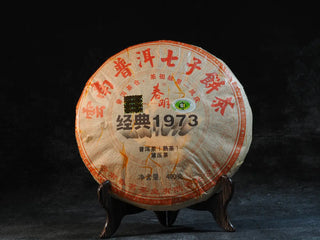
Classic 1973 Large 400g Menghai Cake — from $70.00 for 400g
A tribute to the 1973 development of modern shou pu-erh fermentation, this 400g cake comes in 2019 and 2021 vintages. Dry-stored in Xi'an, with a warmer, woodsier profile than the Spring Ming — dark cacao, maple, cedar — and the same large-cake value proposition.

Imperial Gongting Ripe Pu-erh – Multi-Vintage — from $24.50 per 100g (2021), up to $139.95 per 100g (2002)
The top end of the collection: exclusively fine spring buds (the palace grade), in seven vintages from 2002 to 2021, all Xi'an dry-stored. The younger vintages (2021, 2017) are smooth and chocolatey with good aging potential. The older ones (2007, 2002) have fully shed any fermentation notes and give you deep aged fragrance, dried jujube sweetness, and a mouthfeel that's genuinely exceptional. If you want to understand what long-term dry-stored shou pu-erh tastes like, the 2013 or 2015 at 100g is a good entry point.
Found one that sounds like your cup of tea?
Rather than commit to a full cake, start with a 30g sample — every product in this collection offers one. Five to eight gongfu sessions is enough to decide with confidence.
Browse the Everyday Shou Collection →The Common Question: Will It Taste Musty?
No, if it's been stored correctly. The "damp basement" smell people associate with pu-erh comes from wet storage — high humidity over long periods. That's a deliberate technique some producers use to accelerate aging, but it often leaves a heavy, musty note that takes years to air out.
All of these teas have been dry-stored from production. There's no mustiness to wait out. What you taste is the tea's own character — the origin, the fermentation style, the age — without the storage obscuring it. (That off-note some people call "fishy" is a separate storage issue — read our guide to dui wei vs. cang wei for the full breakdown.)
The easiest way to verify this for yourself: start with a 30g sample. Every product in this collection offers one. That's typically five to eight full gongfu sessions — enough to form a real opinion before committing to a full cake.
Skeptical about the "earthy" tea you've tried before?
Dry storage is the difference. Every shou in this collection is clean, sweet, and free of the musty note that comes from humid warehousing — the same standard we hold for the teas we drink ourselves.
Taste the Difference →Where to Start
If you've read this far and want a concrete recommendation:
- Absolute beginner → 2024 Lincang Tuo or the Mini Bricks
- Want best value for daily drinking → Spring Ming 400g cake
- Want something with more character → Bulang Mountain loose leaf or Mang Fei loose leaf
- Want a gift or something different → Rose Scented Yiwu or Nuo Mi Xiang
- Curious about aged shou → Imperial Gongting 2013 or 2015
Browse the full collection here: Everyday Shou/Ripe Pu-erh →
Every year, thousands of tea lovers visit our tea house to enjoy a peaceful cup of authentic Chinese tea. Now, you can bring that same experience home from Orientaleaf.com.