"Quando seu fogo interior diminui, até a nutrição se torna um fardo."
Principais Pontos
- Deficiência de Qi no baço afeta digestão, energia e clareza mental.
- Chás escuros (Hei Cha) aquecem suavemente e fortalecem a função digestiva.
- Pu-erh maduro, Fu Brick e Liu Bao são as principais opções de suporte.
- Chás refrescantes como chá verde podem piorar os sintomas.
- Adicionar Chen Pi e tâmaras vermelhas aumenta os efeitos terapêuticos.

Você está sempre cansado, inchado após comer ou com a cabeça confusa? Na Medicina Tradicional Chinesa (MTC), esses problemas muitas vezes indicam o que é chamado de deficiência de Qi do Baço.
A MTC oferece maneiras suaves de resolver isso através do que você come e bebe, especialmente com certos chás. Entender seu corpo é o primeiro passo para se sentir melhor. Este guia foca em ajudar um Baço fraco, mas para informações mais completas, confira nosso guia do melhor chá para seu tipo de corpo na MTC.
Aqui você aprenderá o que é a deficiência de Qi do Baço e por que alguns chás ajudam nisso. Você também descobrirá quais chás evitar e como fazer misturas simples de chá em casa para aumentar sua energia.
O Motor Central: O que é a deficiência de Qi do Baço na MTC?
Entender a deficiência de Qi do Baço ajuda você a resolvê-la. Na MTC, esse conceito abrange muito mais do que apenas um órgão que você pode conhecer pela medicina ocidental.
Mais do que um órgão: o papel do baço como sua chama digestiva
O "Baço" (脾, Pí) na Medicina Tradicional Chinesa é um sistema de energia, não apenas uma parte física. Ele funciona como a "chama digestiva" do seu corpo ou o "motor central". O Baço transforma alimentos e bebidas em Qi (energia) e Sangue, que alimentam tudo o que seu corpo faz.
Isso difere completamente de como a medicina ocidental vê o baço. A visão holística do sistema do Baço faz dele um elemento central no processamento de energia e alimentos. Um Baço forte proporciona boa energia, raciocínio claro e digestão adequada.
Quando o Baço está fraco, sua chama digestiva diminui e muitos problemas surgem.
Você está apresentando deficiência de Qi do Baço? Sinais e sintomas comuns
A deficiência de Qi do Baço se manifesta na sua energia, digestão, mente e corpo. Procure por esses sinais:
- Energia: Sentir-se cansado o tempo todo, especialmente após as refeições; sensação de peso nos braços e pernas; vontade de ficar deitado com frequência.
- Digestão: Inchaço após as refeições; apetite fraco; sensação de saciedade rápida; fezes soltas ou presença de alimentos não digeridos.
- Mente: Dificuldade de concentração; pensar demais e se preocupar excessivamente.
- Corpo: Face pálida; membros fracos; desejo por alimentos doces.
O que enfraquece o baço? Vida moderna & Sabedoria antiga
Muitas coisas na vida moderna podem enfraquecer seu Baço. Conhecê-las ajuda você a fazer escolhas melhores.
- Dieta: Muitos alimentos frios, crus, gordurosos ou açucarados prejudicam seu fogo digestivo. Pular refeições ou comer na pressa também prejudica o Baço.
- Estilo de vida: Sentar-se demais bloqueia o fluxo de energia e prejudica o Baço. Mas treinar demais também pode esgotar sua energia e enfraquecer o Baço.
- Emoções: Na Medicina Tradicional Chinesa, cada órgão está ligado a uma emoção. O Baço está relacionado à preocupação e ao excesso de pensamento. Estresse e preocupação constante drenam diretamente a energia do Baço, o que corresponde ao que sabemos sobre a conexão cérebro-intestino.
O Abraço Aconchegante: Por que os Chás Escuros são o Melhor Chá de Baço para a Digestão
Quando seu fogo digestivo está baixo, você precisa de calor para reativá-lo. Os chás escuros, chamados Hei Cha (黑茶) em chinês, são perfeitos para isso. Funcionam melhor como chá de deficiência de qi do baço devido à sua preparação e suas qualidades aquecedoras.
O Poder da Pós-Fermentação: Suave, Quente e Nutritivo
Chás escuros passam por um processo especial chamado pós-fermentação com micro-organismos. Essa etapa fundamental os transforma de neutros ou frios para energizantes e quentinhos.
Esse calor é exatamente o que um Baço fraco precisa. Ajuda a fortalecer seu fogo digestivo e apoia o Baço sem sobrecarregá-lo. Os micro-organismos também criam compostos benéficos que são suaves para o estômago e auxiliam na digestão.
Suas principais opções de chá para deficiência de Qi do Baço
Três tipos de chá escuro funcionam melhor para apoiar o Baço. Cada um tem seus próprios benefícios.
Chá Pu-erh Maduro (Shou)

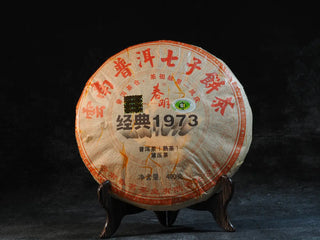
O Pu-erh Maduro pode ser o chá escuro mais famoso. Passa por uma fermentação especial chamada Wo Dui (渥堆), que o torna suave, terroso e equilibrado.
Ele aquece suavemente o estômago e o Baço, ajuda na digestão de gorduras e acalma a mente. É uma escolha diária fácil para uma melhor digestão. Saiba mais em nosso Guia de Chá Pu-erh, e confira benefícios à saúde do chá Pu-erh.
Para um Pu-erh Maduro diário de qualidade, experimente o Pão de Chá Pu-erh Maduro Ming Menghai Primavera 2020. Oferece excelente custo-benefício e sabor clássico. Para algo mais complexo, com aromas doces de envelhecimento cuidadoso, o Pu'erh Maduro Mixiang 2017 é notavelmente suave, com aroma rico.
Chá de Tijolo Fu (茯砖茶)

Chá de Tijolo Fu é especial na Medicina Tradicional Chinesa porque possui "Flores de Ouro" ou Jinhua (金花). Estes são bons probióticos (o fungo) Eurotium cristatum) que crescem durante o processamento.
Essas partículas douradas ajudam a equilibrar as bactérias intestinais e apoiam fortemente o Baço. Este chá é excelente para inchaço e digestão lenta. Saiba mais sobre as Flores Douradas em nosso artigo, Tudo Sobre o Chá de Tijolo de Flor Dourada Fuzhuan.
Para experimentar um chá rico em 'Jin Hua', sugerimos o 'Sobre o Taoismo' Chá de Tijolo de Flor Dourada Jingyang. Feito com folhas premium de Yunnan e cheio de Flores de Ouro, é uma bebida reconfortante e eficaz.
Chá Liu Bao (六堡茶)

Da província de Guangxi, o Liu Bao tem sido usado há séculos para remover a "umidade" (濕), que muitas vezes acompanha deficiência de Qi do Baço e se manifesta como sensação de peso, lentidão e retenção de água.
O Liu Bao aquece seu centro digestivo e elimina a umidade. Com o envelhecimento, seu sabor se aprofunda, frequentemente apresentando notas complexas de betel, cânfora e madeira escura e rica. Oferece uma experiência de conexão.
Saiba mais sobre o chá Liu Bao em nosso artigo, Guia Completo do Chá Liu Bao: Desde as Origens até o Sabor Envelhecido.
Para explorar Liu Bao envelhecido, confira nosso Coleção Premium de Chá Liu Bao Envelhecido.
Chás Escuros em Destaque: Uma Comparação para o Seu Baço
Aqui está uma comparação rápida desses três chás que apoiam o Baço:
| Recurso | Pu-erh Maduro | Chá de Tijolo Fu | Chá Liu Bao |
|---|---|---|---|
| Benefício Principal | Aquecimento Suave, Digestão de Gordura | Suporte Probiótico (Flores de Ouro) | Dispensando a Umidade |
| Perfil de Sabor | Terroso, Suave, Chocolate Escuro | Doce, Suave, Fúngico/Padeiro | Madeira, Noz de Betel, Envelhecido |
| Melhor Para... | Suporte digestivo diário, novos consumidores de chá escuro. | Aqueles com inchaço significativo e flora intestinal pobre. | Aqueles que se sentem pesados, lentos e "úmidos". |
Uma Palavra de Cuidado: Por que o Chá Verde Pode Estar Prejudicando seu Qi do Baço
O chá verde tem muitos benefícios à saúde, mas pode não ajudar na deficiência de Qi do Baço. Entender como os chás afetam sua energia é fundamental para fazer a escolha certa.
A Natureza "Refrescante" do Chá Não Fermentado
Na Medicina Tradicional Chinesa, alimentos e bebidas possuem propriedades térmicas. O chá verde, que não é oxidado nem fermentado, é "refrescante" (凉, liáng).
Usar nossa imagem de "fogo digestivo", bebendo chá refrescante quando seu Baço estiver fraco é como jogar água fria em uma pequena chama. Pode enfraquecer a função do seu Baço e piorar inchaço e fadiga.
Chá verde tem bons antioxidantes, mas para esse problema específico, o calor é o mais importante.
Ouvir seu corpo: Quando escolher calor ao invés de frio
Seu corpo sabe o que é melhor. Preste atenção em como você se sente após beber diferentes chás. Se o chá verde te deixa mais inchado, cansado ou com frio, seu corpo está dizendo que precisa de algo mais quente.
Você não precisa abandonar o chá verde para sempre. Quando seu Baço estiver mais forte e sua digestão melhorar, talvez você possa apreciar o chá verde às vezes, especialmente no verão, sem problemas.
Como fazer Chá de Baço em Casa: Adições Simples que Potencializam o Baço
Você pode facilmente melhorar seu chá escuro para o seu Baço adicionando algumas ervas da Medicina Tradicional Chinesa. Isso transforma sua xícara diária em remédio curativo.
O Poder de Dois: Casca de Tangerina e Datas Vermelhas
Casca de tangerina envelhecida e seca, ou Chen Pi (陈皮), e tâmaras vermelhas, Hong Zao (红枣), são duas ervas comuns e eficazes para o Baço.
Chen Pi é aromático e aquecido. Na Medicina Tradicional Chinesa, regula o Qi, seca a umidade e ajuda o Baço e o Estômago. É ótimo para sensação de plenitude e inchaço, e pesquisas modernas confirmam que ajuda na digestão.
Datas Vermelhas (Da Zao) são doces e aquecedoras. Alimentam diretamente o Qi e o Sangue, nutrindo o Baço. Também equilibram os efeitos de outras ervas e adicionam doçura natural ao chá.
Receita Simples de Chá que Aquece o Baço
Fazer este chá é fácil:
- Comece com sua Base: Use de 5 a 7 gramas de Pu-erh Maduro, Tijolo Fu ou Liu Bao em sua chaleira.
- Adicione seus Potencializadores: Adicione 1-2 pequenos pedaços de casca de tangerina seca (Chen Pi) e 1-2 tâmaras vermelhas fatiadas e sem caroço (Hong Zao).
- Enxágue: Despeje água quente sobre tudo e descarte imediatamente. Essa enxágue rápida desperta o chá e as ervas.
- Infusão: Reabasteça com água recém-fervida e deixe em infusão por 30-45 segundos na primeira preparação.
- Aproveite & Reinfusão: Beba o chá quente e aromático. Esses ingredientes podem ser usados várias vezes. Cada infusão terá um sabor um pouco diferente, e você pode deixar em infusão por mais tempo a cada vez.
O aroma cítrico da casca de tangerina corta a terrosidade do Pu-erh, enquanto as tâmaras vermelhas adicionam uma doçura suave. Você sentirá uma sensação de calor se espalhar pelo seu centro a cada gole.
Uma Jornada para o Equilíbrio: Considerações Finais &⟦0⟧ Aviso
Consertar seu Qi do Baço significa reconectar-se às necessidades do seu corpo. Usar a sabedoria da Medicina Tradicional Chinesa e rituais de chá é uma maneira suave e prazerosa de apoiar esse processo.
Sua Xícara de Bem-Estar
Ouça seu corpo. Opte por chás escuros fermentados e aquecedores, como Pu-erh Maduro, Fu Brick e Liu Bao, para ajudar na sua digestão. Tenha cuidado com chás mais refrescantes, como o chá verde, quando estiver fraco.
Com essas práticas simples, o chá se torna mais do que uma bebida. Torna-se uma ferramenta consciente para criar equilíbrio, energia e bem-estar de dentro para fora.
Aviso Importante de Saúde
As informações neste artigo são apenas para fins educativos e não substituem aconselhamento médico profissional, diagnóstico ou tratamento. Os usos tradicionais do chá na MTC fazem parte de uma abordagem holística de bem-estar. Sempre consulte seu médico ou outro profissional de saúde qualificado com quaisquer dúvidas que possa ter sobre uma condição médica. Não ignore aconselhamento médico profissional ou adie a busca por ele por causa de algo que leu neste site.
Perguntas Frequentes
-
Quais são os principais sintomas de deficiência de Qi do Baço de acordo com a MTC?
Fadiga (especialmente após comer), inchaço, apetite fraco, fezes soltas, dificuldade de concentração, pensamento excessivo, palidez, membros fracos e desejo por alimentos doces. -
Por que os chás escuros são melhores do que os verdes para deficiência de Qi do Baço?
Chás escuros possuem propriedades aquecedoras que fortalecem o "fogo digestivo", enquanto os chás verdes têm propriedades refrescantes que podem enfraquecer ainda mais o Qi do Baço. -
O que torna o Chá de Tijolo de Fu especial para tratar a deficiência de Qi do Baço?
O Chá de Tijolo de Fu contém "Flores de Ouro" (Jinhua), probióticos benéficos que equilibram as bactérias intestinais e apoiam fortemente a função do Baço. -
Posso potencializar a eficácia do chá para deficiência de Qi do Baço com ervas?
Sim, adicionar casca de tangerina envelhecida (Chen Pi) e tâmaras vermelhas (Hong Zao) aos chás escuros cria um remédio poderoso que regula o Qi, seca a umidade e nutre o Baço. -
Quanto tempo leva para observar melhorias ao beber regularmente o chá para deficiência de qi do baço?Os resultados variam de pessoa para pessoa, mas muitas pessoas relatam melhora nos níveis de energia e na digestão dentro de 2 a 3 semanas de consumo regular de chás aquecedores adequados.
Todos os anos, milhares de apreciadores de chá visitam nossa casa de chá para desfrutar de uma xícara de chá autêntico e relaxante. Agora, você pode levar essa mesma experiência para casa. Orientaleaf.com.
Brew Pro, Compre com Inteligência
📖 Leitura complementar
🛍️ Descubra o nosso chá Fu Brick
≡ Navegação Rápida +/−
↑ clique no cabeçalho para recolher
1. Principais pontos 2. O Motor Central: O que é o Qi do Baço... 3. O Abraço Acalmante: Por que os Chás Escuros são t... 4. Uma Palavra de Cuidado: Por que o Chá Verde Pode B... 5. Como Fazer Chá de Baço em Casa: Simples, ... 6. Uma Jornada para o Equilíbrio: Considerações Finais &am... 7. Perguntas Frequentes 8. Brew Pro, Compre de Forma Inteligente