"You have been drinking tea your entire life, yet you have never truly smelled it. The most revealing part of every cup vanishes before you think to look — in the silence after the last sip."
Key Takeaways
- Gua Bei Xiang (挂杯香), the "aroma that hangs on the cup," is the single most reliable indicator of a tea's true quality.
- A tea's fragrance unfolds across three distinct temperature stages — hot, warm, and cool — each revealing a different layer of character.
- The hot aroma delivers a brilliant but fleeting first impression; it alone cannot confirm a tea's depth or quality.
- The warm aroma (40–60°C) is the most honest stage, exposing the tea's true complexity, from ripe fruit to deep florals.
- The cool aroma is the ultimate quality test — only teas rich in aromatic compounds retain a distinct, pleasant scent at room temperature.
- Aroma exists in four key locations: the gaiwan lid, the fairness pitcher, the empty teacup, and the wet spent leaves (ye di).
- Persistent, consistent, and complex aromas signal superior terroir, expert craftsmanship, and high-quality raw materials — your essential buyer's checklist.
- The 7-step gongfu aroma ritual transforms any tea session from passive drinking into a structured, deeply revealing tasting practice.

The tea is gone. Yet something lingers.That fading fragrance clinging to warm porcelain is not an afterthought. It is the tea's most honest confession, spoken only when it believes no one is paying attention.
Most of us are taught to evaluate tea through the sip — the taste, the color, the warmth spreading through the chest. But the greatest Chinese teas reserve their most revealing truths for a different moment entirely: the silence after the cup is empty. Among Chinese dark teas, Liu Bao from Guangxi stands alongside pu-erh as one of the most historically significant varieties.
This is where Gua Bei Xiang (挂杯香) lives. Translated literally as "the aroma that hangs on the cup," it is the lingering fragrance that clings to your gaiwan lid, your pitcher, and your teacup long after the liquid is gone. And it is, without question, the most reliable indicator of a tea's true quality.
Learning to read it is not a matter of having a sensitive nose. It is a matter of knowing where to look, and when.
This guide gives you a precise framework: four locations where aroma reveals itself, and three temperature stages at which every tea tells a different part of its story. By the end, you will not just be smelling your tea. You will be listening to it.
What Is Lingering Aroma (and Why It Matters)?
Let's begin with a key concept. It is a fundamental part of Chinese tea appreciation that is often overlooked in the West: the scent that remains after the liquid is gone.
This idea unlocks a new world of tasting.
The Scent That Stays: Introducing Gua Bei Xiang
The Chinese call this Gua Bei Xiang (挂杯香). This term literally translates to "aroma that hangs on the cup."
It is the fragrance that clings to your teaware. You will find it on the gaiwan lid, the pitcher, and your cup long after the tea is gone.
Think of it as the tea’s echo. This lingering scent tells a story that the liquid alone cannot.
The immediate aroma from the hot steam is just a quick hello. It is a bright and fleeting first impression, but the Gua Bei Xiang, the lingering aroma, is the deep and meaningful conversation that follows.
Why You Should Care: Aroma as a Barometer of Quality
Learning to identify this is more than just a fun exercise. It is one of the most reliable indicators of a tea's quality.
A strong and lasting Gua Bei Xiang is the hallmark of a high-quality tea. This signals excellence in everything from the raw materials to the way it was processed.
Why does this matter? This persistence signals that the leaves are packed with rich substances and aromatic compounds developed through good farming and expert craftsmanship. These are not superficial additions. They are an integral part of the tea's true character.
Science explains this phenomenon. The lingering fragrance comes from heavy, high-boiling-point aromatic compounds that are less volatile than the bright top notes. These molecules are more stable, clinging to the warm porcelain long after the lighter scents have vanished.
The tea is revealing its true depth.
Are you ready to stop just smelling your tea and start listening to what it has to say?
Where to Find the Aroma: A Four-Point Map for Your Senses

A tea's aroma is not found in just one place. It reveals different sides of its personality at several key points during your brewing session.
By systematically exploring these four locations, you can create a complete "aroma map" for any tea. This process turns a confusing cloud of scent into a structured and revealing exploration.
1. The Gaiwan Lid (The Spotlight)
How to smell: Immediately after pouring, lift the gaiwan lid. Turn it over and bring the underside close to your nose. This is the first step in learning how to smell tea from gaiwan lid.
What you'll find: This is the tea's opening statement. The concentrated, hot steam trapped under the lid carries the most brilliant floral bouquets, sharp citrus zests, and fresh grassy scents. The warm, moist vapor feels alive as it delivers this intense fragrance. For a Phoenix Dancong Oolong, this is where you experience that almost perfume-like blast of orchid or honey that makes the varietal famous.
2. The Fairness Cup / Pitcher (The Symphony)
How to smell: Pour all the tea into your fairness cup. Then, take a moment to smell the inside of the now-empty pitcher.
What you'll find: Here, the aroma is more blended and integrated. This is the scent of the tea liquor itself, known as tang xiang (汤香), which is less sharp but often reveals a deeper, rounder sweetness. It is a balanced symphony rather than a solo performance.
3. The Teacup Wall (The Echo)
How to smell: Finish drinking the tea from your cup. Immediately bring the empty, still-warm cup to your nose.
What you'll find: This is where you meet the lingering aroma, the Gua Bei Xiang, in its purest form. This is the test of endurance. The most volatile notes have gone, leaving behind the base notes—the foundation of the tea's fragrance. You might notice persistent sweetness, deep woodiness, or a distinct minerality.
4. The Wet Tea Leaves (The Source Code)
How to smell: After several infusions, lift the gaiwan and smell the wet leaves. You can even tip them onto the saucer to get a closer look and scent.
What you'll find: This is the tea's most primal scent. The ye di (叶底), or "leaf bottom," tells the story of the plant and its processing. Here you will discover foundational vegetal notes or the rich, clean, earthy scent of properly stored aged Pu'er. This is the tea's source code.
The Three Stages of Aroma: A Story Told by Temperature

This next concept will change how you understand tea. A great tea does not have one scent; it has a sequence of scents that are revealed as the teaware cools.
Learning to follow this sequence is the key to unlocking the tea's deepest secrets.
From a Shout to a Whisper: Why Temperature Changes Everything
Think of a fine perfume with its top, middle, and base notes. Tea behaves in the same way, with temperature acting as the catalyst to reveal its layers.
The science is straightforward. A tea's aroma is composed of hundreds of different aromatic compounds that evaporate at different temperatures. What we smell at any given moment is determined by which of these compounds are energetic enough to "take flight" and reach our nose. This process is a blend of both art and science, where volatile compounds are released in distinct stages.
The aromatic profile shifts as the gaiwan lid or cup cools. The initial hot blast gives way to a richer heart, which finally settles into a deep, lingering base.
Reading the Aroma Narrative: Hot, Warm, and Cool
The best way to understand this narrative is to systematically check the aroma of your gaiwan lid. This practice of observing the tea aroma hot warm cool stages will quickly become the most revealing part of your tea session.
Here is a breakdown of what you're smelling at each stage and what it tells you about the tea's quality.
| Stage | Temperature (Approx.) | What You're Smelling | What It Tells You About Quality |
|---|---|---|---|
| Hot Aroma | 80°C+ (175°F+) | The Overture. The most volatile, low-boiling-point compounds. These are bright florals (jasmine, osmanthus), fresh grassy notes, and sharp citrus. They are intense but escape quickly. | The First Impression. A beautiful hot aroma is a good start, but it can be misleading. Lower-quality teas can be processed to smell great only when hot, but this impression is shallow. |
| Warm Aroma | 40-60°C (100-140°F) | The Heart. The most complex and "honest" stage. Medium-boiling-point compounds emerge, revealing the tea's true character. This is where ripe fruits, honey, caramel, cream, and deeper florals appear. | The True Character. This is where a tea proves its worth. A great tea will have a captivating and multi-faceted warm aroma that is both complex and harmonious. This is the core of the tea's story. |
| Cool Aroma | Room Temp | The Foundation. The low-volatility, high-boiling-point compounds. These are the heaviest molecules that remain when all others have dissipated. Scents include wood, spice, resin, minerality, or deep sweetness. | The Mark of Excellence. This is the ultimate test. A high-quality tea will retain a distinct, pleasant aroma even when completely cool. A poor-quality tea will smell like nothing, or worse, stale or sour. |
The "Cool Aroma" stage is particularly telling. The presence of these heavy compounds is directly related to the tea's overall substance. A tea rich in amino acids and soluble sugars will produce a more enduring cool aroma, a concept explored in discussions about the chemistry of tea aroma.
A persistent cool aroma is proof of a tea with deep character.
 |
SMOOTH & GENTLE Three Legendary Leaves Raw Pu-erh Tea Cake | Yunnan Sheng Puerh Blend Rare raw Pu-erh blending three legendary Yunnan cultivars. Dry-stored since 2017. Rich huigan, floral aroma & exceptional aging potential. Limited Stock! |
How Different Teas Express Aroma Differently
Once you understand these locations and stages, you can apply this framework to any tea. Here is how this aroma narrative typically unfolds in a few classic Chinese tea categories.
Wuyi "Rock" Oolong (岩茶)
Profile: A story of fire and flowers.
- Hot: The first scent is often a sharp, mineralic aroma from the charcoal baking process. A fleeting floral or fruity note may try to peek through the heat.
- Warm: This is where the famous "rock rhyme" (岩骨花香, yan gu hua xiang) truly emerges. The aggressive roastiness mellows, allowing a complex bouquet of flowers, ripe fruit, and wet-stone minerality to take center stage.
- Cool: This is the ultimate test for a Rock Oolong. A great one will leave a persistent, sweet, woody aroma on the cool gaiwan lid, which is a key marker of its quality and depth.
Phoenix Dancong Oolong (凤凰单枞)
Profile: An explosion of natural perfume.
- Hot: The aroma is incredibly dramatic and high-pitched. This is where the signature, intense aromas—Honey Orchid, Gardenia, Almond—are at their most powerful and fill the room.
- Warm: As it cools, the aroma often becomes juicier and sweeter. It shifts from a sharp perfume to something more like ripe fruit and nectar.
- Cool: A high-quality Dancong will maintain a clear, sweet, floral trace even on the cool lid. If the spectacular hot aroma disappears completely, it may suggest a more superficial quality.
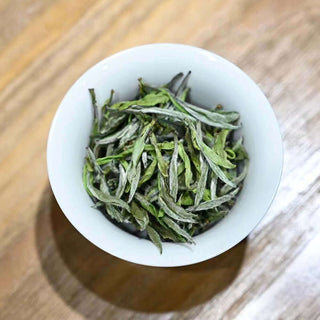
Aged White Tea (老白茶)
Profile: A slow exhale across decades.
White tea is the quietest of the classic Chinese teas — and the most deceptive. Young white tea offers a soft, clean sweetness with a subtle hay-like freshness that is easy to overlook. But age transforms it entirely.
- Hot: The aroma opens with warmth rather than drama. Expect dried flowers, aged hay, and a faint honey-like sweetness. There is no sharp top note demanding your attention — the invitation is gentle, and intentional.
- Warm: This is where aged white tea finds its voice. A pleasant medicinal warmth emerges, reminiscent of aged wood, dried tangerine peel, and a quiet floral depth. The aroma feels unhurried, as though it has learned patience from its years of storage.
- Cool: The cool aroma is the signature of a well-aged white tea. A fine aged white will leave a distinctly sweet, clean, woody scent on the cool cup — one that lingers quietly for many minutes. This endurance is what separates a properly stored aged white tea from one that has merely sat in a bag for a few years.
- Wet Leaves: The ye di of an aged white tea carries the most concentrated version of its story — a deep, sweet, woody earthiness that feels like opening an old cedar chest. The cleaner and sweeter this foundational scent, the better the storage conditions and the higher the quality.
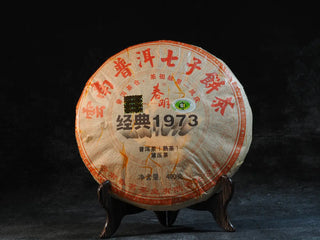
Raw / Sheng Pu'er (生普洱)
Profile: A living thing that never stops changing.
If ripe Pu'er is the earth speaking slowly, raw Pu'er is the mountain speaking all at once — and then evolving for decades. Sheng Pu'er is unique among Chinese teas because its aromatic profile is not fixed. A young sheng and a twenty-year-old sheng are almost unrecognizable as the same category, which makes reading its aroma one of the most intellectually rewarding exercises in the tea world.
- Hot: Young sheng opens with a bold, assertive energy. Expect sharp green notes — fresh camphor, wild herbs, sometimes a distinct smokiness from sun-drying — alongside a vivid floral brightness in higher-quality leaves. This initial aroma can feel almost aggressive in its intensity, which is entirely appropriate. It is a tea still full of unresolved energy.
- Warm: As the lid cools, the sharpness softens and something more interesting emerges. In a quality young sheng, a clean floral sweetness — think white flowers, honey, or even a light stone-fruit note — comes forward beneath the herbaceous base. In an aged sheng, the warm stage is transformative: camphor deepens into a rich, complex spice, and a velvety smoothness replaces the youthful edge.
- Cool: This is where sheng Pu'er most honestly reveals its potential. A young sheng of genuine quality will leave a clean, sweet, faintly floral cool aroma — never sour, never harsh. Any bitterness or unpleasant astringency in the cool scent signals poor raw material or improper storage. For an aged sheng, a truly great example will leave what experienced drinkers call chen yun (陈韵) — an aged resonance that is sweet, camphoraceous, and hauntingly complex. This is the holy grail of aged tea aroma.
- Wet Leaves: The ye di of a sheng Pu'er is exceptionally telling. Young sheng leaves should smell vibrant and clean — a concentrated version of fresh mountain air and green florals. Any sourness or fermented sharpness here points to problem storage. Aged sheng leaves should carry a deep, clean, woody sweetness — camphor and dried fruit with no trace of mustiness.
A note on storage: Unlike most teas, sheng Pu'er's aroma is profoundly shaped by how and where it was stored. The same cake stored in Kunming's dry climate versus Guangzhou's humid warehouses will smell like two entirely different teas at every stage. When you encounter a sheng with an off-putting, "wet storage" note on the cool lid or wet leaves, you are not smelling the tea — you are smelling its history.
Ripe Pu'er (熟普洱)
Profile: The earth, speaking slowly.
Ripe Pu'er is perhaps the most misunderstood aromatic experience in Chinese tea. To the uninitiated, the initial scent can feel unfamiliar — earthy, deep, and dense in a way that has no Western equivalent. This is not a flaw. It is a feature, and it reveals one of the most complex aromatic narratives in the tea world.
- Hot: The first impression is bold and immediate — rich, dark earth, aged wood, and in a well-made ripe Pu'er, a deep sweetness reminiscent of dried dates or dark molasses. Lower-quality versions may carry a sour, musty note here, which is an early warning sign.
- Warm: As the lid cools, the earthiness softens and the sweetness comes forward. A quality ripe Pu'er will reveal notes of dark plum, cocoa, or even a subtle leather warmth at this stage. The aroma should feel round and clean, never sharp or unpleasant.
- Cool: This is the critical checkpoint for ripe Pu'er. A great cake will leave a cool cup with a clean, deeply sweet, almost chocolatey earthiness — what experienced drinkers describe as chen xiang (陈香), or "aged fragrance." Any sourness, fishiness, or swampy note on the cool cup signals poor fermentation or improper storage, and is a clear reason to look elsewhere.
- Wet Leaves: The wet leaves of a ripe Pu'er are especially revealing. Look for a clean, rich, dark-earth scent with an underlying sweetness. An unpleasant or sharp odor from the ye di — even if the liquid tasted acceptable — tells you the raw material or the pile-fermentation process was compromised.
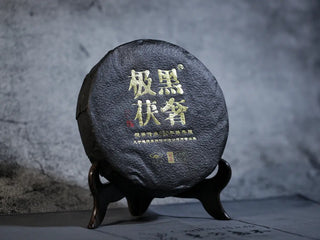
Fu Zhuan Dark Tea / "Brick Tea" (茯砖茶)
Profile: The golden flower that blooms in the dark.
Fu Zhuan is one of the most misunderstood teas in the Chinese canon — and one of the most remarkable aromatic experiences available to any serious tea drinker. Its defining characteristic is unlike anything else in the tea world: a beneficial mold called Eurotium cristatum, known in Chinese as Jin Hua (金花), or "golden flower." These tiny golden spores, visible to the naked eye when you break open a brick, are not a flaw. They are the point. And they transform the aroma of this tea in ways that have no parallel elsewhere.
- Hot: The opening aroma of a well-made Fu Zhuan is immediately distinctive. There is an earthy, fungal warmth — not unpleasant, but unmistakably alive — alongside a clean, almost mushroom-like depth and a surprising floral sweetness that experienced drinkers compare to pine, dried chrysanthemum, or even a light dried fruit note. This combination — earthy and floral simultaneously — is the Jin Hua signature, and it is unlike anything else in Chinese tea.
- Warm: As the lid cools, the earthy notes recede and the sweetness becomes more prominent. A quality Fu Zhuan at the warm stage reveals a rounded, almost caramel-like depth, with a persistent clean mushroom note and sometimes a subtle spice warmth. This is the stage where the tea's craftsmanship shows most clearly: a poorly made Fu Zhuan will smell flat or sour here, while a great one will feel layered and coherent.
- Cool: The cool aroma of Fu Zhuan is its most surprising revelation. Where you might expect the earthy notes to dominate, a fine Fu Zhuan instead leaves a distinctly clean, sweet, faintly floral coolness — the Jin Hua expressing its character most purely when the distracting volatiles have gone. This clean sweetness on the cool lid or empty cup is the definitive quality marker for this category. A musty, sour, or sharp cool aroma indicates either insufficient Jin Hua development, poor fermentation, or damaged storage.
- Wet Leaves: The ye di of a Fu Zhuan tells a dual story. The compressed leaves themselves carry the deep, earthy base of the dark tea, but look closely and you will sometimes find the golden spores still visible among the wet leaves — a reminder that what you are smelling is the product of a living fermentation. A quality Fu Zhuan's wet leaves should smell clean, deep, and sweetly earthy, never acrid or swampy.
The Jin Hua question: Not all Fu Zhuan contains an equal abundance of golden flowers, and the quantity and quality of Jin Hua directly affects the aromatic profile. When evaluating a Fu Zhuan by aroma, a richer, cleaner Jin Hua presence — that distinctive earthy-floral combination in the hot stage that transitions to clean sweetness when cool — is the single most important quality signal this tea category offers.
 |
FLORAL PICK Floral Wuyi Rock Oolong Tea – Jin Guanyin (204 Cultivar) | Orchid & Osmanthus Aroma Floral Wuyi Rock Oolong Jin Guanyin (204 cultivar). Orchid & osmanthus aroma. Hybrid of Tieguanyin & Huangjingui. Spring harvest. |
Step-by-Step: How to Smell Tea Aroma Like a Pro
Let's put this all together into a single ritual. You can use this process in your very next tea session to begin practicing this new language. This is your practical guide on how to smell tea aroma.
Your 7-Step Gongfu Tea Aroma Tasting Guide
- Smell the Dry Leaf: First, warm your gaiwan. Add the dry leaves, give them a gentle shake, and then appreciate the initial "dry aroma" awakened by the warmth.
- The First Pour (Rinse): Perform a quick rinse of the leaves. Discard the water and immediately lift the lid to smell your first Hot Aroma (1) baseline.
- The First Infusion: Steep your first infusion properly. Pour it out completely and bring the underside of the gaiwan lid to your nose for the most potent Hot Aroma (2).
- Wait and Smell Again: Now, set the lid aside on its saucer. Wait 30-60 seconds for it to cool to a warm temperature, then smell it again to experience the Warm Aroma.
- The Final Test: Once the lid is completely cool, smell it one last time. This is your Cool Aroma, the mark of the tea's endurance.
- Smell the Empty Cup: After you finish drinking each infusion, take a moment to appreciate the Lingering Aroma (Gua Bei Xiang). This answers the question of what that lingering aroma in tea cup what does it mean: it means quality.
- Read the Wet Leaves: At the end of your session, examine and smell the ye di. This gives you the final, foundational scent of the tea's raw material.
What a Great Lingering Aroma Tells You About Tea Quality
Learning this system is more than just for pleasure. It is a powerful tool that makes you a more confident and informed tea buyer. When you can read the story of a tea's aroma, you can instantly assess its quality.
From Scent to Sense: Your New Quality Checklist
Before you apply this checklist, there is one principle worth internalizing first — one that most tea drinkers never consider, and that the tea industry rarely advertises.
Intensity is not the same as quality.
A tea can be made to smell powerful. Charcoal roasting, heavy processing, or the addition of scenting agents can all create an impressive aromatic display — especially when the tea is hot. A bold, dramatic hot aroma feels like a mark of excellence. In many cases, it is simply a performance.
What cannot be faked is persistence.
The aromatic compounds that linger through cooling — the heavy, high-boiling-point molecules that cling to a cool gaiwan lid long after the last sip — are a direct product of the raw material itself. They come from the soil the plant grew in, the elevation of the garden, the age of the trees, and the restraint of a processor who trusted the leaf to speak for itself. These cannot be added in. They are either there, or they are not.
This is why two teas can smell equally impressive when hot, yet tell completely different stories ten minutes later. One will leave a cool lid fragrant with sweetness, wood, or minerals. The other will leave nothing — or worse, a faint staleness.
The first tea is telling you about its character. The second is telling you about its performance.
When you shop for tea — whether in a shop or online — this principle becomes your most powerful tool. Ask not how loud the aroma is. Ask how long it stays.
- A Persistent Aroma = Rich Material. A tea whose scent lasts through multiple infusions and lingers sweetly in the cup is full of substance. It means the tea was grown in a good environment and made without cutting corners.
- A Consistent Aroma = Stable Quality. The character of the aroma should be consistent as it evolves from hot to cool. A bright hot floral note that doesn't collapse into a sour or stale cool note indicates masterful and stable processing.
- A Complex Aroma = Superior Terroir & Cultivar. A tea that reveals distinct and pleasing layers at hot, warm, and cool temperatures is not a one-dimensional product. It has a complex story to tell about its unique varietal and the specific place it was grown.
"A tea that only smells beautiful when hot, but fades to nothing when cool, is telling you something important about its quality. It’s a fleeting performance, not a deep-rooted character."
Your Journey Continues
The best way to master this skill is to practice. Take a tea you know well, run it through this 7-step ritual, and then compare it with a new tea. Start taking notes on what you discover.
You have now moved beyond simply tasting tea. You are learning to listen to it. Every gaiwan lid holds a story, and now you have the map to read it.
Ready to put your new skills to the test? Explore our collection of high-aroma Wuyi Oolongs, each one selected for its captivating and persistent fragrance that tells a story from hot to cool.
FAQs
-
Q1: What is Gua Bei Xiang and why does it matter?
Gua Bei Xiang (挂杯香) means "aroma that hangs on the cup." It's the lingering fragrance left on your teaware after the liquid is gone. A strong, lasting Gua Bei Xiang is one of the most reliable indicators of high-quality tea, signaling rich aromatic compounds developed through expert farming and craftsmanship. -
Q2: How to smell tea aroma at different temperature stages?
Check your gaiwan lid at three stages: Hot (80°C+) reveals bright florals and citrus; Warm (40–60°C) exposes the tea's true character with honey, fruit, and deeper florals; Cool (room temperature) shows the foundation—wood, minerality, or deep sweetness. A quality tea maintains a pleasant aroma even when completely cool. -
Q3: Where are the best spots to smell tea aroma during a session?
There are four key locations: the gaiwan lid (intense top notes), the fairness pitcher (blended, rounded sweetness), the empty teacup wall (lingering Gua Bei Xiang), and the wet tea leaves (primal, foundational scent). Each spot reveals a different dimension of the tea's personality. -
Q4: What does a strong lingering aroma in the teacup mean?
A persistent lingering aroma means the tea is rich in stable, high-boiling-point aromatic compounds, amino acids, and soluble sugars. It indicates superior raw materials, good terroir, and careful processing. If the aroma disappears completely when cool, the tea likely lacks depth and substance. -
Q5: How do different Chinese teas express aroma differently?
Each tea has a unique aromatic signature. Wuyi Rock Oolong builds from sharp minerality to complex floral-fruit warmth. Phoenix Dancong explodes with intense natural perfume that softens into juicy sweetness. Aged White Tea and Ripe Pu'er focus on depth—aged wood, dried dates, and an enduring earthy sweetness in the cool cup and wet leaves.
Every year, thousands of tea lovers visit our tea house to enjoy a peaceful cup of authentic white tea. Now, you can bring that same experience home from Orientaleaf.com.
Brew Pro, Buy Smart
≡ Quick Navigation +/−
↑ click header to collapse
1. What Is Lingering Aroma (and Why It Matt... 2. Where to Find the Aroma: A Four-Point Ma... 3. The Three Stages of Aroma: A Story Told ... 4. How Different Teas Express Aroma Differe... 5. Step-by-Step: How to Smell Tea Aroma Lik... 6. What a Great Lingering Aroma Tells You A... 7. FAQs 8. Brew Pro, Buy Smart