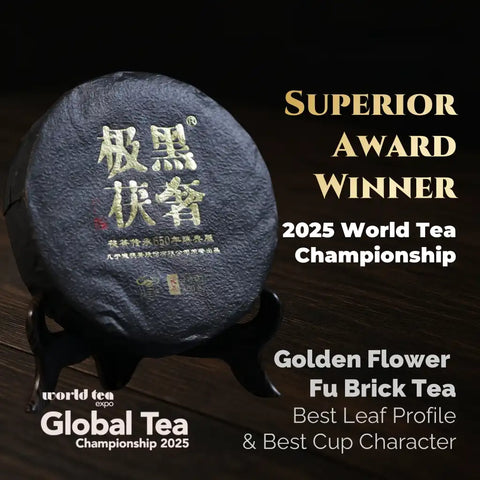
Q: What flavor profile can I expect from this tea?
A: This 15-year vintage delivers a remarkably smooth, complex cup that Western palates often compare to aged spirits or natural wine. Fu Brick Tea tastes earthy, mellow, and remarkably sweet, with little bitterness. Common notes include wet earth, mushrooms, sweet potatoes, and dried fruit sweetness. This particular vintage, with its unique tea-oil process and extended aging, amplifies these characteristics while adding layers of aged wood, Chinese dates, caramel sweetness, and subtle medicinal complexity. The mouthfeel is notably thick and velvety—a direct result of the concentrated tea-oil infusion during production. Expect zero astringency and a profound, lingering sweetness that builds through multiple infusions.
Q: What is the tea-oil infusion process, and how does it affect the taste?
A: The tea-oil process (熬茶油, Áo Chá Yóu) is a traditional Shaanxi technique increasingly rare in modern production. After the black maocha undergoes initial fermentation and processing, it is simmered to create a thick, concentrated tea liquor. This potent "tea oil" is then poured back over the leaves before flowering begins. This extra step effectively doubles the concentration of tea compounds absorbed into the leaves before they're pressed and aged. The practical result is a Fu brick with significantly fuller body, richer color, and more complex flavor development than standard production methods achieve. If you've tried other Fu teas and found them thin or one-dimensional, this tea-oil processed vintage offers a completely different experience.
Q: How does 15 years of aging change Fu Brick Tea compared to younger versions?
A: The transformation is dramatic. Young Fu tea (1-3 years) typically exhibits grassy, hay-like notes with some tobacco character and occasionally rough edges. Many dark teas, such as aged dark tea, improve with time. Each year adds layers of depth—smoother textures, richer aromas, and a mellow sweetness that can only develop through patient aging. At 15 years, this brick has evolved far beyond its youth: the grassiness has transformed into elegant dried fruit sweetness; tobacco notes have mellowed into warm wood and subtle spice; any roughness has become silk. The Golden Flowers, while visually less prominent than in fresh bricks, have done their work—enzymatically transforming the tea's chemistry into something profound and harmonious. This is Fu tea at or near its peak drinking window.
Q: Is the Golden Flower fungus safe? What are the health benefits?
A: The Golden Flower is not only safe but highly desirable in Fu Brick Tea, transforming its flavor and potentially offering probiotic benefits. Golden Flowers, known by scientists as Eurotium cristatum, are what make Fu Brick Tea unique. The tiny, golden-yellow spots you see in the tea brick aren't mold, but a good probiotic fungus that's grown on purpose during processing. Eurotium cristatum is a probiotic that can help your gut health. Research suggests benefits for digestion, metabolism balance, and intestinal flora support—aligning with centuries of traditional use among communities consuming meat-heavy diets. Eurotium cristatum has beneficial biological properties, including enzyme production, antimicrobial properties, immune regulation, antitumor properties, fat reduction abilities, and weight loss benefits. As with any wellness claim, individual results vary and this tea should complement, not replace, a balanced lifestyle.