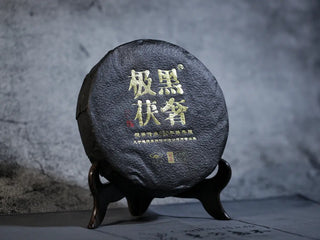
"What if a tea could carry the secrets of ancient roads and living microbes in every brick?"
Key Takeaways
- Fu Brick Tea features unique probiotic “Golden Flowers” that define its flavor and quality.
- It is crafted through a complex microbial fermentation and pressing process.
- Originating in Jingyang, Shaanxi, this tea is now produced in both Shaanxi and Hunan, with each region offering its own distinct flavor profile.
- Golden Flowers contribute to the tea’s mellow sweetness and potential digestive benefits.
- Fu Brick Tea holds deep historical significance linked to ancient trade routes.

Introduction: Your First Encounter with Fu Brick Tea
Fu Brick Tea is a unique post-fermented dark tea from China. It has a special microbial fermentation that makes it different from other teas.
| Type | Origin | Key Features |
|---|---|---|
| Hunan Hei Cha (Anhua Dark Tea) | Anhua, Hunan | Famous types include Fu Brick Tea (with golden flowers), Black Brick Tea, Flower Brick Tea, and Qianliang Tea. Known for microbial fermentation and aging potential. |
| Hubei Lao Qing Tea | Wufeng, Chibi (Hubei) | Traditionally used for compressed brick tea; important for border trade. Strong and coarse taste, suitable for blending. |
| Sichuan Bian Tea | Ya'an, Luzhou (Sichuan) | Used to make Kang Brick Tea, Jin Jian Tea, and Fu Brick Tea. Historically exported to Tibet; strong, smoky, and aging-friendly. |
| Guangxi Liu Bao Tea | Wuzhou, Guangxi | Known for pine-smoked aroma and aged flavor. Uses moist pile fermentation. Often aged in bamboo baskets. |
| Yunnan Ripe Pu-erh | Yunnan Province | Technically a Hei Cha. Uses “wet pile” fermentation. Rich, earthy, mellow taste. Ages well and becomes smoother over time. |
| Shaanxi Fu Brick Tea | Jingyang, Shaanxi | Famous for dense "Golden Flowers" (Eurotium cristatum). Unique northern Hei Cha with sweet, mellow flavor. |
When you break open a brick, you'll discover its most celebrated feature: tiny, glorious flecks known as Golden Flowers.
This tea is not just a drink. It's a piece of living history. Fu Brick Tea was pressed into dense bricks for easy transport along the ancient Silk Road and Tea Horse Road.
This is an image of the ancient Silk Road, which began in Chang’an (present-day Xi’an, Shaanxi) and stretched across the vast regions of Eurasia. Fu Brick Tea was born at this starting point of the Silk Road.

In this guide, we will explore every part of this remarkable tea. We'll look at where it comes from, how it's made, and what makes those "Golden Flowers" so special.
The Soul of Fu Tea: Demystifying the "Golden Flowers"

The most defining element of Fu Brick Tea is the presence of "Golden Flowers," or Jīn Huā. These golden-yellow particles are not flaws or mold.
Scientifically, these specks are a beneficial probiotic fungus called Eurotium cristatum. This microorganism is purposely grown during the tea's production and is completely safe.
In high-quality Fu Brick Tea, the two most important indicators are the even distribution and the richness of the Golden Flowers. The more abundant the growth, the better the fermentation process—and the higher the overall quality.
This probiotic changes the tea's taste. It reduces bitterness while creating a mellow, sweet, and smooth flavor profile.
To sum up what these flecks do:
- Identity: They mark authentic Fu Brick Tea.
- Quality: An abundant bloom shows high-quality processing.
- Flavor: They create the tea's unique sweet taste and smooth texture.
- Health: They are linked to digestive benefits.
The "Golden Flowers" make Fu Brick Tea more than just a simple fermented drink.
Learn more about this unique fungus in our guide: What Is The Golden Flower in Fu Tea?
 |
AGED & MELLOW Jingyang Genshe 2010 Vintage Fu Brick Tea | Golden Flower Dark Tea Rare 2010 vintage Fu Brick Tea handcrafted by heritage master Jia Genshe. 16+ years dry-aged with abundant Golden Flowers. Unique tea-oil process. 468g brick. |
From Leaf to Brick: The Meticulous Craft of Fu Tea Production
Creating Fu Brick Tea requires careful control of time, temperature, humidity, and microbiology. The tea comes from Camellia sinensis leaves that go through a unique microbial fermentation process.
Here is how a fresh leaf becomes a finished, golden-flecked brick:
The Journey of Fu Brick Tea Production
This is the "flowering" process of Fu Brick Tea. In a specially controlled room with constant temperature and humidity, the growth of the golden flower fungus (Eurotium cristatum) is carefully managed. The photo is from 几于道 On Taoism Fu Tea Factory.

-
Harvesting & Withering
The process starts with picking mature tea leaves. Fu Tea uses coarser leaves and stems from later in the season. -
Kill-Green & Rolling
The leaves are heated in a large wok to stop oxidation. They are then rolled to break cell walls, which helps with later fermentation. -
Pile-Fermentation
This is a key step that Fu Tea shares with Shou Puerh. The rolled leaves are piled into heaps, dampened, and covered. -
Steaming & Pressing
Once fermentation is complete, the tea is weighed, steamed, and pressed tightly into large molds to create the brick shape. -
"Fahua" - The Flowering Process
This is the signature stage. The damp bricks are moved to a special "flowering room" with controlled temperature and humidity for several weeks.A tea master carefully manages conditions to encourage Eurotium cristatum spores to grow. Success means a uniform bloom of Golden Flowers throughout the brick.
-
Drying & Aging
After the flowering is complete, the bricks must be thoroughly dried. This stops fungal growth and makes the tea stable for storage.
Tracing Its Roots: A Brief History of Fu Brick Tea
Fu Brick Tea has deep roots in Chinese history. It began during the Ming Dynasty, around 1368, in Jingyang, Shaanxi province.
To mark this rich legacy, a tea factory recently released a commemorative Fu Brick Tea celebrating 650 years since its origin—further confirming its roots in Jingyang, Shaanxi during the Ming Dynasty.

This tea was crucial for trade along the ancient Tea Horse Road. Pressed into dense bricks, it was easy to transport over long distances.
The tea was vital for nomadic peoples of Tibet, Mongolia, and Xinjiang. It provided essential nutrients for people whose diet lacked fresh vegetables.
The name "Fu" (茯) has different possible origins. One theory links it to Fu Tian (伏天), the hottest summer days when the tea was processed.
While it began in Shaanxi, production moved to Hunan province during the mid-20th century. In recent decades, Shaanxi has revived its traditional craft.
Learn more in our article on the History and Culture of Fu Tea in China.
Terroir in a Brick: Comparing Hunan and Shaanxi Fu Tea
The two main production regions—Hunan and Shaanxi—make distinct styles of Fu Brick Tea. Like wine, differences in soil, climate, and local methods create different flavors.
Here are the key distinctions:
| Feature | Hunan Fu Tea (Anhua) | Shaanxi Fu Tea (Jingyang) |
|---|---|---|
| Raw Material | Primarily uses leaf materials from the Anhua region, often finer and smaller leaves. | Uses both local (Qin Ling Mountain) and sourced leaves, which can sometimes be coarser, adhering to historical traditions. |
| Historical Origin | Production developed later but became the dominant force for much of the 20th century. | The original birthplace of Fu Tea, with a recent and powerful revival focusing on its ancestral heritage and craft. |
| Typical Flavor Profile | Tends to be stronger, more robust, and invigorating. Can sometimes carry a subtle, pleasant pine-smoke note from drying. | Typically mellower, softer, and sweeter right from the start. Known for a distinct, comforting red date-like aroma. |
| "Golden Flowers" | Both regions masterfully cultivate Golden Flowers, but the resulting tea's taste profile reflects regional differences. | The bloom is a hallmark of quality in both, but the Shaanxi style often emphasizes a softer sweetness derived from it. |
Hunan Fu Tea has a more "yang" character—it's bold and has a pronounced strength. Shaanxi Fu Tea is more "yin"—gentle and immediately approachable with date-like sweetness.
Neither is better. They are just different expressions of the same craft.
Want to taste the difference yourself?
Our Fu Brick Tea Discovery Box 2.0 lets you compare teas from multiple producers and vintages side by side — 9 samples, 270g total, 50+ Gongfu sessions. The easiest way to build your own benchmark for Golden Flower quality.
Explore Our Fuzhuan Collection →A Snapshot of Fu Brick Tea: Key Characteristics
To appreciate Fu Brick Tea, it helps to understand its core features:
The Flavor Palette
Fu Brick Tea tastes earthy, mellow, and remarkably sweet, with little bitterness. Common notes include wet earth, mushrooms, sweet potatoes, and dried fruit sweetness.
For more details, read our guide to The Unique Taste of Fuzhuan Tea.
How Does It Compare?
The closest comparison is to Shou (ripe) Puerh, as both are post-fermented dark teas. Fu Tea's "flowering" stage gives it a unique sweetness that Shou Puerh lacks.
See our comparison in Fu Brick Tea vs. Other Dark Teas.
Potential Wellness Benefits
Traditionally, Fu Brick Tea was consumed for health benefits, especially for digestion. This is now linked to its probiotic content.
Allergen Note: The Fu Brick Tea we sell, produced in Shaanxi, undergoes natural flowering in a controlled environment with regulated temperature and humidity. Wheat flour is never used in the cultivation of the Golden Flowers, so people with celiac disease can enjoy it without concern.
Learn more in our post on the Health Benefits of Fu Brick Tea.
Preparing and Enjoying Your Tea
To prepare Fu Tea, break off a piece of the brick, rinse the leaves, and steep them in hot water. The basics are simple to learn.
See our guides: How to Choose Fu Brick Tea and How to Brew Fu Brick Tea.
To Age or Not to Age?
Fu Brick Tea evolves over time. Fresh brick has a vibrant aroma from the Golden Flowers.
Aged brick becomes smoother and more complex. Both offer different but wonderful experiences.
Discover more in Aged vs. Fresh Fu Tea.
Ready to try authentic Fu Brick Tea?
We source directly from three award-winning producers in Jingyang, Shaanxi — including our 🏆 World Tea Champion 2025 winner. Over 36 varieties, all gluten-free, shipped worldwide for a flat $9.50.
Browse the Full Fu Brick Tea Collection → |
SMOOTH & GENTLE YXT Jingyang Golden Flower Fu Tea - First Grade - Yellow Can 300g Discover YXT Jingyang Fu Tea in the Classic Yellow Can. First-grade leaves, abundant golden flowers, mellow sweetness. Qinling origin. Shop 300g tin now! |
Conclusion: Your Journey with Fu Brick Tea Begins
We've explored Fu Brick Tea from its identity as a dark tea to its special Golden Flowers. We've seen how it's made and learned about its history on the Silk Road.
Fu Brick Tea is more than just a drink. It shows the skill of ancient tea masters and represents a beautiful relationship between plant and probiotic.
Use this guide as your starting point. Explore the aspects that interest you most. Your journey with this golden-flecked wonder has just begun.

If you're just beginning your Fu brick tea journey, our comprehensive Fu Brick Tea Beginner's Guide covers everything from Golden Flowers to brewing tips and expert picks.
FAQ
-
What are the "Golden Flowers" in Fu Brick Tea?
The golden-yellow particles are a beneficial probiotic fungus called Eurotium cristatum that develops during fermentation, reducing bitterness while creating a mellow, sweet flavor profile. -
How is Fu Brick Tea different from other teas?
Fu Brick Tea undergoes a unique post-fermentation process with the intentional cultivation of beneficial "Golden Flowers," setting it apart from other teas including Shou Puerh. -
What is the history behind Fu Brick Tea?
Originating during the Ming Dynasty (around 1368) in Shaanxi province, Fu Brick Tea was pressed into dense bricks for easy transport along the ancient Tea Horse Road and Silk Road. -
What does Fu Brick Tea taste like?
It has an earthy, mellow and remarkably sweet flavor with little bitterness, featuring notes of wet earth, mushrooms, sweet potatoes, and dried fruit sweetness. -
Does Fu Brick Tea have health benefits?
Traditionally enjoyed for its digestive benefits, Fu Brick Tea is now also valued for the probiotics found in its Golden Flowers. While some producers use wheat flour to cultivate the fungus, the Shaanxi Fu Brick Tea we sell is made without wheat—making it suitable for people with celiac disease.
Each year, we serve thousands of satisfied tea enthusiasts in our tea house, and we're excited to share these exceptional teas with tea lovers worldwide.
Your journey with Fu Brick Tea starts here.
From our 🏆 World Tea Champion 2025 winner (On Taoism) to Master Jia Genshe's minimum 4-year aged bricks, every tea in our collection is sourced directly from Jingyang, Shaanxi. Gluten-free. Flat $9.50 worldwide shipping.
Shop the Full Fu Brick Tea Collection →Brew Pro, Buy Smart
📖 Further Reading
🛍️ Explore Our Fu Brick Tea
≡ Quick Navigation +/−
↑ click header to collapse
1. Introduction: Your First Encounter with ... 2. The Soul of Fu Tea: Demystifying the "Go... 3. From Leaf to Brick: The Meticulous Craft... 4. Tracing Its Roots: A Brief History of Fu... 5. Terroir in a Brick: Comparing Hunan and ... 6. A Snapshot of Fu Brick Tea: Key Characte... 7. Conclusion: Your Journey with Fu Brick T... 8. FAQ 9. Brew Pro, Buy Smart