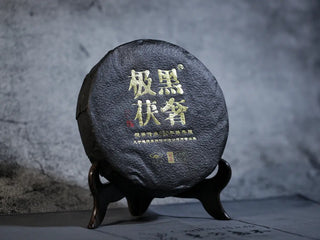
"Beneath the surface of every Fu Brick lies a tale of time, craft, and place."
Key Takeaways
- Great Fu Brick Tea begins with high-quality raw leaves from the right region and harvest time.
- Golden Flowers must be bright, evenly spread to ensure balanced fermentation.
- Smell matters—look for clean, earthy, or sweet notes and avoid musty or sour scents.
- The texture and structure of the brick reflect craftsmanship, storage, and aging potential.
- Proper aging adds depth and smoothness, with aged teas offering richer, more complex notes.
-
Always check packaging details and try samples when possible to make confident purchases.

Introduction: Beyond the Brew, Your Journey to Find the Best Fu Brick Tea
Fu Brick Tea, or Fuzhuan Cha, is quickly becoming popular among tea lovers worldwide. This dark tea has special "Golden Flowers" that give a deep, rich experience unlike other teas.
But with growing interest comes a problem. There are too many choices with different quality, age, and origin, making it hard to choose even if you know a lot about tea. How can you tell if you're buying a great brick?
This is not just a basic guide. This is a deep buying guide to help you choose. We will show you the key steps to pick a Fu Brick Tea you will truly enjoy, building on what we've shared before.
We focus on four main areas: looking at the brick and its Golden Flowers, checking the smell, knowing where it comes from, and understanding what you see in your cup.
If you're new to this dark tea, you might want to start with our basic guide: What is Fu Brick Tea.
The Foundation: The 3 Pillars of Fu Brick Tea Quality
To shop like an expert, you need to know the three things that make Fu Brick Tea good. This simple guide will help you look past marketing and judge the true quality of any brick.
Pillar 1: Terroir (Raw Material is King)
Great Fu Brick Tea begins with great raw material. In Shaanxi, traditional Fu Brick Tea is now commonly made using tea leaves grown in the Qinling or Daba mountain ranges. These mountain-grown leaves form the base of most Fu Brick Teas on the market today.
At the same time, many innovative producers are exploring new directions by using Yunnan’s large-leaf raw teas. This approach brings fresh flavor dimensions to Fu Brick Tea. For example, our award-winning Fu Brick Tea disc is made from whole leaves harvested in Lincang and Fengqing, then fermented and flowered in Shaanxi—resulting in a richer, more layered taste.
It’s also important to note that Fu Brick Tea’s fermentation and golden flower development depend on the natural sugars found in the leaves. Tender buds, while visually appealing, don’t provide enough of these sugars. That’s why traditional Fu Brick Tea often contains more stems—this isn’t a sign of low quality, but a deliberate choice to support proper fermentation and aging.
Pillar 2: Craftsmanship (Craftsmanship is the Soul)
Crafting Fu Brick Tea is more than just pressing leaves into shape—it’s a careful fermentation process centered around a unique step known as fahua (发花), or "flowering." This is when Eurotium cristatum, also known as the “Golden Flower” fungus, is encouraged to grow inside the tea brick.
Traditionally, Fu Tea was made only during the hottest and most humid days of the Chinese lunar calendar—Sanfu Tian (三伏天), or the “dog days” of summer. These natural conditions were ideal for fostering fungal growth. Today, modern tea factories replicate this seasonal environment by precisely controlling temperature and humidity in special fermentation rooms. This climate simulation is critical; even small errors can result in a tea that tastes overly sour, astringent, or flat.
In Jingyang, one of the historic centers of Fu Tea production, many factories produce Fu Brick Tea—but the quality varies widely. We’ve come across teas with harsh, unpleasant flavors, often due to poor process control during the fermentation and flowering stages. On the other hand, excellent tea makers take the same raw material and unlock its full potential. Depending on their unique techniques and the origin of the leaves, their Fu Tea can showcase deeper earthy notes, elegant aromas, or a rounder, richer body.
No two good Fu Teas are exactly alike—but all are the result of skillful craftsmanship and careful environmental control.
The star is the Eurotium cristatum fungus. To learn more about how it makes Fu Tea special, read our article: What is the Golden Flower in Fu Tea.
Pillar 3: Age (Aging Creates the Charm)
Fu Brick Tea belongs to the Hei Cha (dark tea) family, much like ripe Pu-erh or Liu Bao tea. Just like them, it continues to evolve with age. But what makes Fu Tea unique is that both its initial fermentation and its later fahua (Golden Flower) process influence how it matures. A well-crafted Fu Tea, when aged properly, undergoes rich transformations—developing deeper flavors, softer textures, and mellow energy over time.
Younger Fu Teas (1–3 years old) tend to taste brighter and more direct, sometimes with sharper edges. As the tea ages—especially after 5 years—it grows smoother and thicker, with notes that may remind you of aged wood, dried fruit, or even traditional Chinese herbs. In some well-aged teas, the experience can be remarkably close to that of a vintage ripe Pu-erh.
Because aging plays such a vital role, we clearly label the production date of each Fu Brick Tea we sell. This allows you to track the tea’s maturation and choose based on your preference—whether you enjoy the fresh liveliness of a new brick or the deep calm of a well-aged one.
Choosing between fresh and aged tea is a key choice. We compare them in detail here: Aged vs. Fresh Fu Tea: Which is Right for You?
For a detailed guide on how to choose and brew Fu Brick Tea to get the best flavor, see how to choose and brew Fu Brick Tea.
 |
AGED & MELLOW 1958 Premium Golden Flower Fu Brick Tea | 5-Year Aged Yunnan Dark Tea Award-winning 1958 Golden Flower Fu Brick Tea. 5-year aged Yunnan leaves, first-grade quality, rich probiotic Golden Flowers. Premium dark tea experience. |
A Practical Guide to Choosing Fu Tea: Key Factors for Your Consideration
Now that you know the three pillars, you can judge tea with your senses. Whether you're looking at tea in a shop or photos online, here's what to check.
Part 1: Assess the "Golden Flowers" (Jīn Huā) Like an Expert
Here is a close-up of our World Tea Champion 2025 Fu Tea cake. The vibrant golden flowers are dense and bright inside the cake, while the edges show fewer flowers—typical of high-quality Fu Brick Tea.

Golden Flowers are the famous part of Fu Tea, but many people don't understand them. Here's how to tell good from bad.
-
Color: The flowers should be bright yellow-gold. Dull brown or gray-white spots are bad signs. These wrong colors can mean poor fermentation or unhealthy molds.
-
Distribution:A key sign of quality Fu Brick Tea is how the Golden Flowers (Eurotium cristatum) are distributed. The best way to check is to break the brick or cake in half and inspect the cross-section. Genuine, well-fermented Fu Tea will show a consistent spread of flowers throughout the interior. If you only see flowers on the surface, it could be artificially treated—a dishonest shortcut some producers use to make the tea appear high-quality. In fact, traditionally crafted Fu Tea rarely shows many Golden Flowers on the outer surface. That’s because the fungus thrives best inside the dense body of the brick, where humidity and warmth are stable. The inner layers often hold far more Golden Flowers than the outer ones. So don’t be misled by appearances—a rich bloom inside is what truly matters.
-
Density vs. Quality: In general, the more abundant, vibrant, and evenly distributed the Golden Flowers are, the more successful the fahua (flowering) process is considered to be. A healthy bloom reflects good fermentation conditions and skilled craftsmanship.
While the amount and density of Golden Flowers are important indicators of Fu Brick Tea quality, scientific studies on its chemical composition suggest that the key to the tea’s character and taste lies in the complex chemical transformations that occur during fermentation.
Part 2: Look at the Brick Itself
This 2025 World Tea Champion Fu Tea cake is cylindrical—not like a Pu-erh cake. Its deep brown exterior is clean and smooth, with hints of golden leaves.

The brick tells its own story. From our experience with hundreds of bricks, here's what to look for.
The dry leaves should be mostly one color, from dark brown to blackish-brown. Avoid bricks that look gray or patchy, as this may mean poor storage or bad processing.
A good Fu Brick Tea should be firm and compact, but not rock-hard. It should feel dense in the hand, yet you should be able to break off a piece without it crumbling into dust. In fact, an overly compressed brick is often not a sign of high quality. The Golden Flower fungus (Eurotium cristatum) requires airflow to develop properly during fermentation. If the brick is too tightly packed, it limits oxygen penetration, making it difficult for the flowers to grow and for post-fermentation to proceed smoothly. Many modern producers now prefer a slightly looser compression style, or hand-compressed brick. This allows better air circulation, encourages a more successful fahua (flowering) process, and makes it easier for tea drinkers to break off pieces by hand—no tools required.
Check the surface. It should look clean, smooth, and free from dirt. Most importantly, watch for white, green, or black mold. These are not the good golden flowers and show that the tea has gone bad.
Part 3: Smell the Aroma

Your nose helps you pick good tea. Before brewing, hold the dry brick close and breathe in deeply.
Good Fu Brick should smell clean and pleasant. You might smell earthy notes like forest after rain, or woody scents. Well-made bricks can also smell sweet like dried dates, honey, or have light floral scents from the Golden Flowers.
Here's what to avoid. A Fu Brick should NEVER smell:
- Musty or moldy: This means damp, bad storage, not proper fermentation.
- Sour: A sharp, acidic smell can mean errors in the Fahua process.
- Fishy or swampy: This is a clear sign of poor quality leaves or bad processing and should be avoided.
Part 4: Understand the Brewed Tea

If you can taste the tea before buying, or after you buy it, the proof is in the cup.
Look at the color. The brewed tea should be clear and bright. Young teas are orange-red, while aged ones are deep red. Cloudy or murky brown liquid is a bad sign.
The taste should be smooth and mellow. It should feel thick in your mouth. Good Fu Tea has a pleasant sweetness that stays in your throat, called Huigan. It shouldn't be harsh, too bitter, or sour.
The final test is drinking it. To really enjoy what good Fu Brick offers, learn about its flavor: discovering the unique taste of Fuzhuan tea.
Decoding the Origin: A Buyer's Comparison of Shaanxi vs. Hunan Fu Tea
The origin of Fu Brick Tea greatly influences its character. While Shaanxi and Hunan are the two main producing regions, we focus exclusively on offering authentic Fu Tea from Shaanxi. This allows us to ensure quality and highlight the unique flavors that come from this historic tea region.
If you’re curious about the differences between Shaanxi and Hunan Fu Tea, here’s a brief comparison to help you understand what makes Shaanxi Fu Tea special.
| Feature | Shaanxi Fu Tea (e.g., Jingyang) | Hunan Fu Tea (e.g., Anhua) |
|---|---|---|
| Historical Root | Often considered the historical origin, deeply tied to the ancient Tea Horse Road trade. | A major producer with a very long history, which has developed its own unique and diverse styles. |
| Typical Taste | Generally richer, thicker, and sweeter with prominent red date or honey notes. Very smooth. | Can be bolder and more robust, sometimes with a subtle smokiness or more pronounced woody/herbal notes. |
| Golden Flowers | Known for cultivating dense, vibrant, and high-quality golden flowers. This is a key focus of its craft. | Also features golden flowers, but the focus is often on the overall balance of flavor as much as the flowers. |
| Best For... | Drinkers who prefer a smooth, sweet, and comforting brew. Excellent for aging and developing depth. | Drinkers who enjoy a more robust, complex, and sometimes more stimulating dark tea. |
These regional differences make Fu Tea interesting to explore. To compare it with other dark teas like Pu-erh or Liu Bao dark tea, see: Fu Brick Tea vs. Other Dark Teas.
Both regions make great tea. Both are studied for research into its metabolic benefits, so your choice is mostly about what flavors you like.
 |
AGED & MELLOW YXT 500g Traditional Jingyang Fu Brick Tea with Golden Flowers Authentic 2018 Jingyang Fu Brick Tea with golden flowers. Hand-pressed, 5+ years aged. Mellow & smooth. Buy genuine Shaanxi Fu Tea now! |
Your Final Checklist: Price, Practicalities, and Making the Purchase
Now that you know how to judge quality and origin, let's talk about price, packaging, and where to buy.
Understanding Price Tiers
Price often shows quality, but know what you're paying for.
-
Entry-Level: These are usually younger teas (1-3 years), machine-pressed, with standard leaves. They're good for daily drinking and learning Fu Tea's basic taste.
-
Mid-Range: These teas are aged longer (3-7 years), with better leaves and more careful crafting, sometimes finished by hand. They offer more complex flavors and a smoother feel.
-
Premium/Collector's Grade: These include older teas (8+ years), from special regions, made by famous masters, or from good years. These bricks give the most complex, smooth, and deep experience.
Decoding the Wrapper
The paper wrapper tells you a lot about the tea:
- Brand & Producer: Look for known, good makers. Search the producer's name for reviews.
- Production Date: This is very important. It tells you how old the tea is, which affects its character and value.
- Weight: Fu Bricks usually come in 400g and 1kg sizes. But in our store, we offer the best and most popular Fu Teas from China with more choices. Besides traditional sizes, we have smaller cakes (190g, 350g), factory-broken chunks, single-serving packs, and high-quality small square pieces—like little chocolate bars. Plenty of options to fit your needs.
- SC/QS Markings (in China): This is a food safety license number. It doesn't guarantee premium quality but shows the maker meets basic safety standards.
Where to Buy
We strongly suggest buying from tea shops, not general stores. A good tea shop will tell you where the tea comes from, how it tastes, and show clear photos (including inside the brick, if possible).
When you can, buy a small sample before getting a whole brick. This lets you check if you like the taste before spending more.
Buying good Fu Brick Tea is also good for your health. Many choose this tea for the health benefits of Fu Brick Tea, which are stronger in well-made, properly fermented teas.
Conclusion: Your Fu Brick Tea Adventure Begins
You now know how to choose from many mysterious dark bricks. You have the knowledge to make a good choice.
Remember the main lesson: picking the best Fu Brick Tea means looking at everything. Check the Golden Flowers, the look and feel of the brick, its clean smell, and where it comes from.
You can now look past marketing and choose based on real quality signs.
Once you get your perfect brick, the last step is to brew it right to enjoy its rich flavors. Follow our expert tips in How to Brew Fu Brick Tea for the perfect cup. Happy brewing!
FAQ
-
What are "Golden Flowers" and why are they important in Fu Brick Tea?
Golden Flowers (Jin Hua) are a beneficial fungus (Eurotium cristatum) that grows during fermentation, giving Fu Brick Tea its unique flavor and potential health benefits. They should be bright yellow-gold and evenly distributed throughout the brick. -
How can I tell if Fu Brick Tea is high quality before purchasing?
Assess quality by checking for bright yellow-gold flowers (not brown/gray), examining the brick's consistency (firm but not rock-hard), smelling for pleasant earthy/sweet notes (avoiding musty/sour smells), and looking for clear, bright liquid when brewed. -
What's the difference between Shaanxi and Hunan Fu Brick Tea?
Shaanxi Fu Tea is typically richer, sweeter with honey notes and abundant golden flowers, while Hunan Fu Tea tends to be more robust with woody/herbal notes. Shaanxi is smoother; Hunan offers more complexity. -
Does Fu Brick Tea improve with age like wine?
Yes. Young Fu Tea (1-3 years) is brighter with sharper flavors, while aged Fu Tea (5+ years) becomes smoother with deeper complexity, developing notes of aged wood, dark fruit, and medicinal qualities. -
How much should I expect to pay for good Fu Brick Tea in 2025?
Prices vary by age and quality: entry-level (younger, machine-pressed) for daily drinking; mid-range (3-7 years) with better craftsmanship; and premium/collector's grade (8+ years) from special regions or famous masters commanding the highest prices.
Each year, we serve thousands of satisfied tea enthusiasts in our tea house, and we're excited to share these exceptional teas with tea lovers worldwide at Orientaleaf.com.
Try our award-winning Jingyang Fu Brick Tea – authentic taste, crowned World Tea Champion 2025 >>, and don’t forget to Join Us for updates and exclusive offers.
Brew Pro, Buy Smart
📖 Further Reading
- Everything About Golden Flower Fuzhuan Brick Tea — Our Complete Guide
- Best Fu Brick Teas to Try
- Fu Brick Tea Buying Guide: Match Your Taste
🛍️ Explore Our Fu Brick Tea
≡ Quick Navigation +/−
↑ click header to collapse
1. Introduction: Beyond the Brew, Your Jour... 2. The Foundation: The 3 Pillars of Fu Bric... 3. A Practical Guide to Choosing Fu Tea: Ke... 4. Decoding the Origin: A Buyer's Compariso... 5. Your Final Checklist: Price, Practicalit... 6. Conclusion: Your Fu Brick Tea Adventure ... 7. FAQ 8. Brew Pro, Buy Smart