Q1: What flavor profile can I expect from this Dabashan Fu Brick Tea?
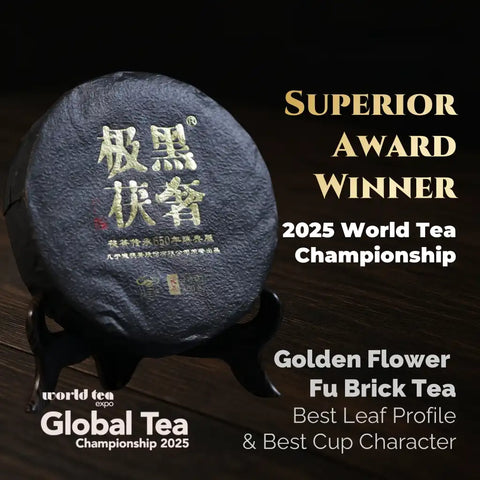
This generously aged brick delivers a taste experience that Western palates often liken to comfort foods: think warm butterscotch pudding, malted milkshakes, or freshly baked oatmeal cookies with hints of dried fruit. The dominant impressions center on toasted grains, caramelized sugars, and gentle nuttiness, with supporting notes of dried fig and subtle dark chocolate undertones. Six-plus years of maturation have eliminated any harshness—you will find zero bitterness, zero astringency, and absolutely no musty or "fishy" off-flavors that sometimes plague poorly processed dark teas. The abundant golden flowers contribute their signature mellow sweetness and rounded warmth. The texture stands out particularly: plush and almost creamy, coating your palate with satisfying body while finishing completely clean. The aftertaste builds slowly with honeyed sweetness that persists for several minutes. Whether you are transitioning from other tea styles or exploring Chinese dark tea for the first time, this brick offers an exceptionally approachable and rewarding introduction to the category.
Q2: What makes Dabashan tea leaves special compared to other origins?
The Daba Mountains (大巴山) represent one of China's most distinctive tea-growing regions, straddling the border where Shaanxi, Sichuan, and Hubei provinces converge. This mountain range serves as the geographic divide between the Sichuan Basin to the south and the Hanzhong Basin to the north, creating remarkable microclimatic conditions. The high elevation—combined with abundant rainfall, persistent mist cover, and dramatic day-night temperature swings—encourages tea bushes to develop slowly, concentrating flavor compounds and natural sweetness within each leaf. The soil composition, rich in minerals from ancient geological formations, contributes additional complexity to the finished tea. YXT established their own gardens in this region specifically to secure consistent access to this distinctive terroir. Unlike blended products sourcing leaves from anonymous suppliers, this brick contains exclusively Dabashan material from YXT's proprietary cultivation areas—ensuring full traceability and authentic regional character. The result is a noticeably sweeter, more refined base leaf that transforms beautifully through Fu Brick processing.
Q3: Why is the 900g format advantageous for collectors and serious enthusiasts?
The generous 900g brick format offers several practical benefits beyond simply providing more tea. First, larger bricks age more gracefully over extended periods because the greater mass maintains more stable internal conditions, buffering against environmental fluctuations that can disrupt smaller pieces. The interior remains protected and continues its slow transformation optimally. Second, the substantial size provides excellent value—cost per gram typically decreases with larger formats, making this an economical choice for regular drinkers who appreciate Fu Brick's health benefits and mellow character. Third, the 900g brick offers versatility: you can break off portions for daily brewing while the majority continues aging undisturbed in your storage. Fourth, this format invites sharing—whether hosting tea sessions with friends or gifting portions to fellow enthusiasts, you have ample quantity to spread the experience. Finally, for serious collectors building a cellar, the 900g brick represents a meaningful acquisition rather than a sample, worthy of documentation and tracking over years or decades. The traditional hand-pressed construction ensures this particular brick will continue developing beautifully for many years ahead.
Q4: How can I identify genuine hand-pressed construction versus machine-pressed bricks?
Authentic artisan-built Fu Bricks (手工筑制, Shougong Zhuzhi) display several telltale characteristics that distinguish them from mechanized production. The most obvious indicator appears when you break into the brick: hand-pressed bricks show distinct horizontal layering or stratification running lengthwise through the tea mass, created as craftsmen tamp each successive portion into the mold from the narrow end. Machine-pressed bricks, compressed from the broad face, lack this visible lamination and appear more uniformly dense throughout. Second, hand-pressed bricks feel slightly less compact overall—the moderate compression allows you to pry off portions without excessive force, whereas machine-pressed bricks often require considerable effort to break. Third, this looser internal structure directly benefits golden flower development: the beneficial Eurotium cristatum fungus requires air circulation to colonize thoroughly, achieving denser and more widespread coverage in hand-pressed bricks than in their tightly machine-compressed counterparts. Examining the cross-section when you break off tea should reveal abundant golden colonies distributed throughout—not just concentrated in pockets. Finally, hand-pressing represents significant additional labor compared to mechanical efficiency, typically reserved for premium products where quality justifies the investment.