Understanding Yunnan White Tea: Varieties, vs. Fujian, and Choosing the Best
"Mountains shape the land, and climate shapes the leaf — in Yunnan, even a simple white tea unfolds a world of its own." Key Takeaways Yunnan white tea has
Read more


Worldwide shipping for just $9.5 on every order. Shipping Policy
14-Day Money-Back Guarantee
Need help? Contact us
Worldwide shipping for just $9.5 on every order. Shipping Policy
14-Day Money-Back Guarantee
Need help? Contact us
Pressed from just twenty sun-dried Qingming cakes out of Guanyang, Fuding — this Bai Mu Dan sits exactly between Silver Needle's crystalline freshness and Shou Mei's honeyed depth, and somehow holds both at once.
A tea that is bright and sweet in the same breath — sun-dried, unhurried, and pressed into just twenty cakes from the heart of Fuding.
White tea begins in Fuding. That is not a slogan — it is history. For centuries, the farmers of Fuding, Fujian have been producing white tea using the same fundamental method: pick the leaf, lay it in the sun, let it dry. No fixation (杀青, Shā Qīng). No rolling (揉捻, Róu Niǎn). No added heat. The process is almost radical in its restraint.
The Bai Mu Dan (白牡丹, Bái Mǔ Dān) — literally "White Peony" — sits at the center of the white tea family. Above it is the Silver Needle (白毫银针, Bái Háo Yín Zhēn), prized for its singular buds and crystalline freshness. Below it is Shou Mei (寿眉, Shòu Méi), broader-leafed and deeply honeyed. Bai Mu Dan is picked as one bud with two young leaves — a structure that gives it range. It carries both the fragrance of the bud and the body of the leaf, and in a well-made batch, neither wins. They balance each other.
This particular cake comes from Guanyang (管阳), one of the core growing townships within the Fuding region. The area sits at altitude, with mineral-rich soil and the kind of mountain air that slows the growth of the leaf and concentrates its character. Harvested in late March 2023, around Qingming Festival — the most prized picking window in the Chinese tea calendar — the leaves were left to wither naturally under the Fujian sun, then compressed into cake form on May 3, 2023.
The pressing pressure was kept deliberately light. Unlike densely compressed iron-disc cakes (铁饼, Tiě Bǐng), this cake retains a loose, open structure — you can see the individual leaves and buds clearly on the surface without effort. This is not an accident of craft. A looser compression means the leaf continues to breathe after pressing, allowing the transformation process (陈化, Chén Huà) to proceed more evenly and cleanly over time. If you choose to age this cake, the structure is already working in your favor.
We named it Silk Ray for two reasons. First, for the sunlight that makes this tea possible — the long, slow drying under open sky that is the defining act of white tea production. And second, for the texture it leaves behind in the cup: smooth, luminous, and lingering, like a ray of light moving through something fine.
After production, the cakes were transported immediately to Xi'an for dry storage (干仓, Gān Cāng) — a naturally dry, low-humidity environment that preserves the tea's clarity and allows for clean, natural aging over time.
Twenty cakes were pressed. No more. If you have been looking for a Fuding Bai Mu Dan that is genuinely traceable, genuinely limited, and genuinely made with care — this is that tea.
Only 20 cakes were ever pressed. Once they are gone, this harvest is gone. If this tea speaks to you, this is the moment to decide.
"Mountains shape the land, and climate shapes the leaf — in Yunnan, even a simple white tea unfolds a world of its own." Key Takeaways Yunnan white tea has
Read more" Discover the art of brewing Yunnan white tea and unlock its health benefits through our detailed guide.
Read moreFrom Fujian’s elegant Silver Needle to Yunnan’s bold Moonlight White, this guide reveals how to choose, brew, and appreciate the best Chinese white tea.
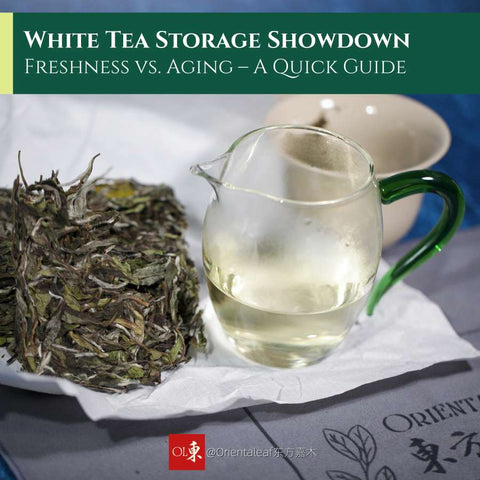
Read moreWhite tea is delicate but powerful. This guide explains how to store it for daily freshness or long-term aging. Includes tips for both loose leaf and pressed tea.
Read more" Discover the unique charm of Yunnan Bai Mu Dan tea, from its distinct varieties and flavors to brewing techniques and purchasing tips.
Read more" Discover the unique charm and rich history of Yunnan Silver Needle Tea, and learn how it compares to its Fujian counterpart.
Read more