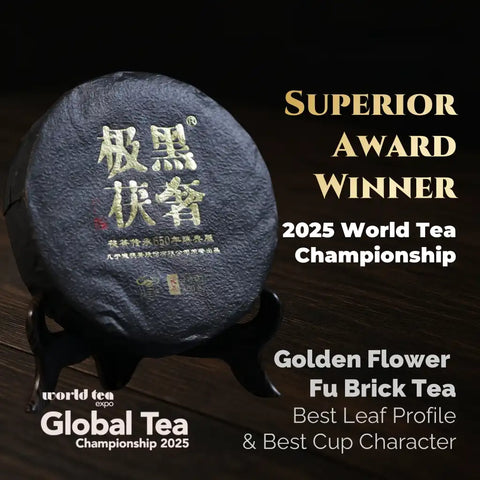
Q: What flavor profile can I expect from this Golden Flower White Tea?
A: This tea delivers a uniquely dual-character experience that bridges white tea elegance with Fu Brick depth. Upon your first sip, you will notice a smooth, velvety mouthfeel with zero bitterness or astringency—remarkably clean and approachable. The flavor opens with honey-like sweetness and dried stone fruit notes (think apricot and longan), which are signatures of the Fuding Shou Mei base. As you continue sipping, you will detect toasted grain, roasted hazelnut, and a gentle earthy undertone contributed by the Golden Flower fermentation. The finish is notably sweet and persistent, leaving your palate refreshed with hints of caramel and a subtle floral-fungal complexity. Western tea drinkers often compare the overall profile to a smooth, naturally sweet oolong crossed with a clean, well-aged Pu-erh—but lighter and more delicate than either. The tea is highly re-steepable, and you will find the flavor evolves across infusions, becoming softer and sweeter as you progress.
Q: Why does this tea contain visible stems, and does that affect quality?
A: The presence of stems is absolutely intentional and essential to this tea's excellence—it is a mark of authenticity, not a flaw. Shou Mei grade white tea naturally includes mature leaves with their stems, and these stems serve multiple critical functions. First, tea stems contain significant concentrations of aromatic compounds; during processing, these volatile substances migrate from stems into leaves, creating a richer, more complex fragrance than leaf-only teas can achieve. Second, stems are rich in tea polysaccharides, lignin, cellulose, and L-theanine—all water-soluble compounds that enhance the tea liquor's body, sweetness, and smooth mouthfeel. Third, and perhaps most importantly for Golden Flower tea, the stems create essential air pockets within the compressed brick. These spaces ensure proper oxygen circulation during the fermentation period (发花, Fā Huā), allowing the beneficial Eurotium cristatum fungi to bloom abundantly and evenly throughout the tea. Without adequate stems, Golden Flower cultivation would be compromised, resulting in inferior fungal development and diminished health benefits.
Q: How is this different from regular Fu Brick Tea or Pu-erh tea?
A: This Golden Flower White Tea represents a groundbreaking innovation in Chinese tea production. Traditional Fu Brick tea (茯砖茶) has been made for centuries using dark tea (黑茶, Hēi Chá) from Shaanxi Province's Qinling Mountains as the base material. On Taoism pioneered the use of premium Fuding white tea (Shou Mei grade) as the base—the first producer to successfully cultivate Golden Flowers on South China white tea leaves. The result is dramatically different from conventional Fu Brick: where traditional versions can taste heavy, strongly earthy, or even slightly harsh, this white tea base delivers inherent sweetness, delicate floral notes, and a lighter, more refined character. Compared to Pu-erh, this tea offers similar probiotic benefits and smooth, aged character, but with a cleaner, sweeter profile and none of the intense earthiness or "wet storage" flavors that some find challenging in Pu-erh. The 1,095-day aging further smooths any rough edges, creating a tea that is exceptionally approachable for Western palates while satisfying experienced aged-tea enthusiasts.
Q: Does Golden Flower White Tea contain caffeine, and when is the best time to drink it?
A: Yes, this tea contains caffeine, as all true teas from the Camellia sinensis plant do. However, the caffeine content is moderated by two factors: the mature Shou Mei leaves naturally contain less caffeine than young buds, and the extended fermentation and aging processes further reduce stimulant effects while increasing calming L-theanine levels. Most drinkers find this tea gentle enough to enjoy from morning through early evening without sleep disruption, though individual sensitivity varies. The tea's probiotic Golden Flowers (Eurotium cristatum) make it particularly beneficial as a digestive aid after meals—a traditional use in China's northwestern regions. Many customers report it provides calm, focused energy rather than the jittery stimulation of coffee or young green tea. For those highly sensitive to caffeine, we recommend enjoying it before 3 PM and using shorter steeping times. The warming, centering sensation aligns beautifully with a mid-afternoon break or post-dinner relaxation ritual.