Storage Recommendations
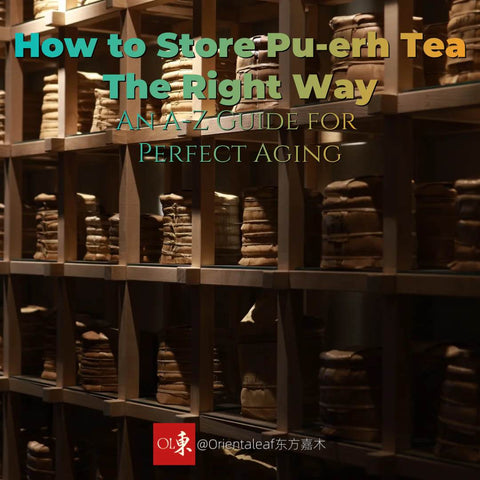
Proper storage is non-negotiable for preserving and developing this tea. Raw Pu-erh's greatest strength is its ability to improve over decades—but only if stored correctly.
The Three Principles (三无原则 Sān Wú Yuánzé)
1. No Odors (无异味 Wú Yì Wèi)
Store tea in an odor-free environment, completely isolated from strong-smelling substances. Tea is a "smell sponge"—it absorbs aromas from everything nearby. Avoid storing near:
- Spices, coffee, or curry (overpowering scents transfer easily)
- Incense, perfume, or essential oils
- Paint, varnish, or chemical cleaners
- Smoking areas or rooms with stale smoke odor
- Refrigerators (which accumulate odors and temperature fluctuations)
Ideal: a dedicated shelf or cabinet in a neutral-smelling room, away from the kitchen.
2. No Moisture (无潮湿 Wú Cháoshī)
Excess moisture invites mold; insufficient moisture can dry out the leaves. Maintain humidity levels between 50-75% relative humidity. If your climate is naturally humid (above 75%), consider:
- Storing tea in sealed glass or ceramic vessels with activated charcoal packets inside
- Using small silica gel desiccant packets (change every 3-6 months)
- Placing the tea storage area in the driest part of your home (high shelves, basement corners away from pipes)
If your climate is arid (below 50%), simply store the tea in its original packaging without special humidity management.
Critical: Never store tea in a refrigerator or freezer. The repeated temperature swings cause condensation inside the packaging, creating pockets of excess moisture that encourage mold growth. Cold also halts the natural aging process—defeating the entire purpose of cellaring Pu-erh.
3. No Direct Sunlight (无阳光直射 Wú Yángguāng Zhíshè)
UV light degrades aromatic compounds and gradually fades the leaves' color. Store your tea in complete darkness or in opaque packaging. A closed closet, cabinet, or shelf away from windows is perfect. Even ambient daylight over years will subtly diminish the tea's qualities.
Practical Storage Setup
Minimal Setup: Leave the tea in its original packaging (usually kraft paper or bamboo leaf wrapping, which provides some breathability and odor protection). Place the wrapped cake inside a cloth tea storage bag or cardboard box. Store in a cool, dry closet or cupboard away from the kitchen.
Moderate Setup: Transfer the wrapped tea cake to an airtight ceramic tea storage jar (紫砂罐 Zǐ Shā Guàn or porcelain equivalent). Add a small pouch of activated charcoal inside the jar to absorb any stray humidity or odors. Store in a cool, dark location. Open the jar and air it out briefly (2-3 minutes) every 2-3 months to allow CO2 exchange.
Serious Collector Setup: Invest in a dedicated tea storage cabinet or large sealed container with climate control (humidity monitor + small dehumidifier for humid climates, or humidifier for very dry climates). Store cakes in their original packaging within breathable cloth bags, then inside the cabinet. Monitor temperature (maintain 15-25°C) and humidity (maintain 55-70%) consistently.
Monitoring Your Tea's Condition
Every 6-12 months, open your storage container and inspect the tea. You should observe:
- No mold or white coating on leaves (sign of excess moisture)
- No dried-out, brittle appearance (sign of insufficient humidity)
- No musty or off-odors (sign of poor storage conditions)
- Gradual darkening of the leaves over years (natural aging, not oxidation)
If any warning signs appear, adjust your storage conditions immediately. Move the tea to a drier or less odorous location, or add/remove humidity control measures.
Long-Term Aging Expectations
As this 2020 Dazhai ages in proper dry storage:
Years 1-3: Bright florals dominant, mineral character clear, chaqi pronounced. Best drunk for its current vitality.
Years 4-7 (you are here now): Sweet notes emerging, mineral profile deepening, body thickening gradually, florals softening subtly.
Years 8-15: Complex mineral and woody undertones developing, hui gan intensifying, body noticeably heavier, overall smoothness increasing.
Years 15-25+: Full maturation. Floral notes nearly gone, replaced by aged wood, leather, and profound mineral complexity. The sweetness becomes honey-like and lingering. Chaqi settles into a warm, encompassing sensation.
This transformation is not guaranteed—only proper storage makes it possible. With care, your 2020 Dazhai will reward patience.