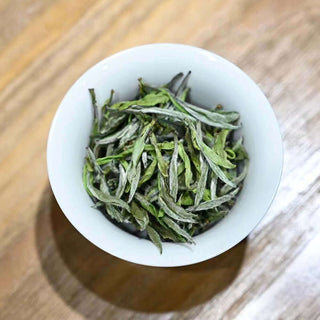
"Every great tea tells a story—Fuding's begins with the land."
Key Takeaways
- Fuding is the officially recognized birthplace of modern white tea.
- Legends like Taimu Niangniang 太姆娘娘 connect white tea to healing and myth.
- Fuding’s climate and soil create ideal conditions for white tea growth.
- Key cultivars like Fuding Da Bai 福鼎大白 define white tea’s signature flavor.
- Traditional craftsmanship ensures tea quality across generations.
- Protected Geographical Indication (PGI) status safeguards authenticity.
- Drinking Fuding white tea means tasting a unique terroir and culture.

Introduction: The Soul of White Tea Resides in Fuding
When one asks about the true source of white tea, the answer is clear: Fuding. This coastal city in China's Fujian province is the widely accepted birthplace of white tea.
Fuding white tea brings together history, unique coastal environment, and a living culture that has nurtured this delicate leaf for centuries.
Over the years of finding and tasting teas, we've seen that the special character of real Fuding white tea cannot be copied elsewhere. Its essence is deeply connected to its homeland.
What makes this specific coastal region in Fujian province the undisputed king of white tea? Let's explore its history, environment, and culture to discover the secrets.
This article goes deep into the origin, but for a complete overview, be sure to read our Fuding White Tea: The Ultimate Guide.
A Tapestry of Time: The History and Legends of Fuding White Tea
To understand Fuding's importance, we must first follow its story through time. The origin of Fuding white tea combines enchanting legends and carefully recorded historical facts.
The Mythical Origins: The Tale of Taimu Niangniang (太姥娘娘)

The One-Tile Temple of Taimu Mountain
The story begins in the mists of Taimu Mountain. Legend tells of a kind-hearted woman named Langu (蓝姑) during the time of the mythical Emperor Yao.
Running from trouble, she found shelter on the mountain and discovered a special tea tree with silvery, fuzzy buds. She called it "Lüxueya" or "Green Snow Bud."
During a terrible measles outbreak that swept through the area, Langu used the leaves of this special tree to make a tea that healed the sick children.
To honor her kindness and this healing gift, the local people made her a goddess called Taimu Niangniang (the Empress of Taimu Mountain). This story forever linked Fuding white forever linked Fuding white tea with health and healing.
While this legend talks about miracle cures, modern research continues to study the many white tea health benefits.
From Ancient Records to Modern Tea: A Historical Timeline
While legends give cultural background, historical records show the birth of white tea as we know it today. The change from a wild plant to a globally valued product is a fascinating journey.
We need to separate early mentions of "white tea" from the modern white tea made in Fuding.
-
Tang & Song Dynasties (618–1279): The famous Tang Dynasty tea expert Lu Yu mentioned "white tea" in his important work, The Classic of Tea (茶经). However, experts think he was talking about a rare, white tea plant type or maybe a certain look of processed tea, not the minimally processed white tea we know today.
-
Qing Dynasty (c. 1796): This is the key era. Historical records confirm that Fuding craftsmen were the first to successfully grow the "Fuding Da Bai" (福鼎大白) tea variety on a larger scale. Around 1796, they began creating the first modern white tea, the beautiful Silver Needle (Bai Hao Yin Zhen), using only the buds of this plant. This crucial event establishes Fuding's claim as the true origin.
-
Republic of China & Export (Early 20th Century - Present): After creating Silver Needle, Fuding developed other types like White Peony (Bai Mudan). The teas quickly gained fame for their delicate elegance and began to be sold abroad, mainly to Europe and Southeast Asia, where they were valued as a rare and sophisticated drink. This period confirmed Fuding's global status.
Scholars agree and historical evidence suggests Fuding is the true birthplace of white tea, a status built on innovation and centuries of refined craftsmanship.
 |
SMOOTH & GENTLE 2023 Jinggu Yunnan Silver Needle White Tea Cake – Bai Hao Yin Zhen (357g) Experience the exquisite 2023 Jinggu Silver Needle White Tea Cake – Bai Hao Yin Zhen. Delicate floral aroma, honeyed sweetness, and silky texture await! |
The Terroir of Excellence: Why Fuding Is a White Tea Paradise
A tea's character comes from its environment. Fuding's leadership is not by chance; it results from a perfect mix of geography, climate, soil, and carefully selected plant genetics.
This special combination of natural factors creates an ideal place for the delicate buds that become world-class white tea.
Geographical Majesty: Where the Mountains Meet the Sea
Fuding sits in northeast Fujian province, a beautiful landscape where rugged mountain ranges, including the famous Taimu Mountains, flow down to meet the East China Sea.
This unique landscape creates its special climate. The nearby ocean provides plenty of moisture and keeps temperatures mild, while the mountains act as a shield, trapping the humid air.
The United Nations Food and Agriculture Organization (FAO), which recognizes the Fuding system, describes it as a unique pattern of land uses shaped by its mountainous and coastal geography. This dynamic relationship between mountain and sea is the first key to Fuding's magic.
The Perfect Climate and Soil for Delicate Buds
The specific environmental conditions in Fuding tea gardens are perfect for producing amino-acid-rich, sweet, and complex white tea. The key is in the details.
We can break down these factors and their direct impact on the tea leaf:
| Terroir Factor | Description | Impact on White Tea |
|---|---|---|
| Climate | A subtropical maritime monsoon climate. It is consistently mild, humid, and receives abundant rainfall. The region is perpetually shrouded in mist and fog. | Plentiful moisture and high humidity are ideal for lush tea bush growth. The diffused sunlight from the constant fog cover reduces the formation of bitter catechins and increases sweet-tasting amino acids, resulting in a fresher, sweeter liquor. |
| Altitude | Prime tea gardens are situated on hilly slopes at elevations between 500 and 800 meters (1,600-2,600 feet). | This moderate altitude creates a significant diurnal temperature range (cool nights, warm days). This slows the growth of the buds, allowing them to accumulate more aromatic compounds and nutrients. |
| Soil | The soil is predominantly acidic red and yellow earth (红壤/黄壤). It is naturally fertile, deep, and rich in organic matter and minerals. | This nutrient-dense, slightly acidic soil provides the perfect foundation for healthy tea bushes, supplying the essential minerals that contribute to the tea's complex taste and thick mouthfeel. |
| Air Quality | The gardens are situated far from heavy industry, benefiting from the clean, fresh air rolling in from the East China Sea. | A pristine growing environment ensures the purity and safety of the final product. The clean air allows the delicate buds to develop without contamination, preserving their natural aroma. |
This remarkable combination of conditions makes the Fuding terroir an irreplaceable asset.
The Champion Cultivars: Fuding Da Bai & Fuding Da Hao

The perfect environment needs the perfect plant. Fuding is home to two nationally recognized, superior tea varieties: Fuding Da Bai (福鼎大白, Fuding Big White) and Fuding Da Hao (福鼎大毫, Fuding Big Sprout).
These varieties are the genetic heart of Fuding white tea. They are celebrated for their distinctive traits: incredibly large, fleshy buds that are covered in a thick layer of silvery-white down (hao). This down is not just for show; it is rich in amino acids, which create the tea's signature umami sweetness (xian 鲜).
These prized varieties are skillfully processed into the various renowned types of Fuding white tea, from the bud-only Silver Needle to the leafy Shou Mei.
In the end, the unique combination of these natural elements directly creates the delicate and complex flavor profiles of Fuding white tea.
 |
COLLECTOR'S PICK Snow Bud Ancient Tree White Tea 2018 | Fengqing Silver Needle Cake 2018 Yunnan Silver Needle from 300-year-old ancient trees. 8 years dry-stored. Pure single buds with honey aroma. Limited Fengqing white tea. |
A Living Heritage: The Cultural Significance of White Tea in Fuding
In Fuding, white tea is more than a farm product; it is the lifeblood of the community and a key part of local culture. To truly understand its origin is to see how it is woven into daily life.
This connection changes the tea from a simple drink into a living, breathing heritage.
More Than a Drink: White Tea as a Way of Life
For the people of Fuding, white tea marks the rhythm of life. It's the first sign of welcome offered to a guest, a staple at family gatherings, and an important part of seasonal festivals.
Beyond social customs, it holds a special place in local wisdom. From our own experiences in Fuding, we've seen families reach for aged white tea as a common remedy. People often brew a strong cup of aged Shou Mei or Gong Mei to ease a sore throat or to cool the body during hot weather.
This belief in tea's healing powers, passed down through generations, echoes the ancient legend of Taimu Niangniang. It is a tradition based on both experience and respect.
The Guardians of Tradition: Heritage and Craftsmanship

Image courtesy of the Food and Agriculture Organization of the United Nations (FAO). Source: FAO GIAHS – Fuding White Tea
The knowledge of how to make exceptional white tea is a legacy, passed from master to student over generations. Fuding is home to celebrated tea masters who are respected as guardians of this tradition.
Their expertise is not written in books but is a deep understanding of the elements. They can tell the perfect withering time by the feel of the leaves, the smell in the air, and the subtle changes in sunlight. This craftsman's skill is the final, essential ingredient.
The wisdom of these masters shows in the careful traditional production methods of Fuding white tea, especially the critical withering process.
This deep-rooted knowledge is even confirmed by modern science. Research has shown that the traditional choice of the 'Fudingdabai' variety is scientifically sound, as its genetic traits make it especially suitable for white tea production. This shows a perfect match between ancestral wisdom and scientific fact.
The Seal of Authenticity: Fuding White Tea as a Protected Geographical Indication (PGI)
In a global market, how is the unique identity of Fuding white tea protected? The answer lies in a strong legal protection: the Protected Geographical Indication (PGI).
This label is not just a tag; it is a guarantee of authenticity and quality, linking the tea directly to its Fuding origin.
What is a Protected Geographical Indication?
A Protected Geographical Indication (PGI), or GI, is a legal system used to protect the names of products that come from a specific region and whose quality, reputation, or other characteristics are essentially due to that geographical origin.
As the FAO defines it, GI products possess unique qualities or a reputation tied to their origin. Think of it like Champagne from France or Parmesan cheese from Italy. The name "Fuding White Tea" is a protected designation.
This means that only white tea grown and processed within the designated areas of Fuding, using the specified local varieties and traditional methods, can legally be called Fuding White Tea.
Why Fuding's PGI Matters to You, the Tea Drinker
This official protection offers real and valuable benefits to you as a consumer. It cuts through the market confusion and provides clear assurances.
-
Guarantee of Origin: The PGI seal is your proof that the tea is genuinely from the core production areas of Fuding, not from another region trying to copy its style.
-
Enforced Quality Standards: To bear the name, producers must follow strict, government-required standards. This covers everything from the approved tea varieties (Fuding Da Bai, Fuding Da Hao) to the specific processing techniques required.
-
Protection from Fakes: It legally protects you from fake products, ensuring that when you pay for the quality and reputation of Fuding white tea, you are getting the real thing.
-
Preservation of Culture: By buying a PGI product, you are directly supporting the local farmers, the traditional farming system, and the cultural heritage of the Fuding region.
The international importance of this status was highlighted when Fuding White Tea was included in the EU-China Landmark Geographical Indications Agreement, giving it protection and recognition across European markets.
Conclusion: Fuding's Enduring Legacy in Every Sip

The origin of Fuding white tea is far more than a spot on a map. It is a story of a legendary discovery, the blessing of a perfect environment, a deeply rooted cultural identity, and a commitment to authenticity protected by law.
The success of Fuding white tea is not an accident. It is the natural result of its unmatched environment, champion varieties, historical precedence, and the living heritage of its people.
When you brew a cup of authentic Fuding white tea, you are tasting more than just leaves and water. You are sipping a piece of history, a reflection of a unique landscape, and a legacy that has been carefully guarded for centuries.
The story of its origin is just the beginning. To continue your exploration, we invite you to discover the full range of its tastes and traditions in our Fuding White Tea: The Ultimate Guide.
FAQ
-
What makes Fuding the authentic birthplace of white tea?
Fuding is historically documented as creating the first modern white tea around 1796 using the native Fuding Da Bai variety, and its unique coastal-mountain terroir creates ideal growing conditions impossible to replicate elsewhere. -
What is the legend behind Fuding white tea's origin?
According to legend, a woman named Langu discovered special tea trees with silvery buds on Taimu Mountain and used their leaves to heal children during a measles outbreak, becoming the goddess Taimu Niangniang. -
Why can't white tea from other regions match Fuding's quality?
Fuding's subtropical maritime climate, moderate altitude (500-800m), mineral-rich acidic soil, and native tea cultivars (Fuding Da Bai and Da Hao) create a perfect environment that directly influences the tea's exceptional flavor profile. -
How is authentic Fuding white tea protected in 2025?
Fuding white tea carries Protected Geographical Indication (PGI) status, similar to Champagne, ensuring only tea grown in designated Fuding areas using specified varieties and traditional methods can legally be called "Fuding White Tea." -
What cultural significance does white tea hold in Fuding?
Beyond being a commercial product, white tea is woven into daily Fuding life—offered as the first sign of welcome to guests, used in traditional medicine, celebrated at festivals, and passed down through generations as living heritage.
Every year, thousands of tea lovers visit our tea house to enjoy a peaceful cup of authentic white tea. Now, you can bring that same experience home from Orientaleaf.com.
Explore our carefully selected Fuding White Tea collection, straight from the source.—Try Silver Needle, White Peony, and more—carefully selected for purity and taste.
Try them for yourself, and don’t forget to join our mailing list for updates, tea stories, and exclusive offers.
Brew Pro, Buy Smart
≡ Quick Navigation +/−
↑ click header to collapse
1. Introduction: The Soul of White Tea Resi... 2. A Tapestry of Time: The History and Lege... 3. The Terroir of Excellence: Why Fuding Is... 4. A Living Heritage: The Cultural Signific... 5. The Seal of Authenticity: Fuding White T... 6. Conclusion: Fuding's Enduring Legacy in ... 7. FAQ 8. Brew Pro, Buy Smart