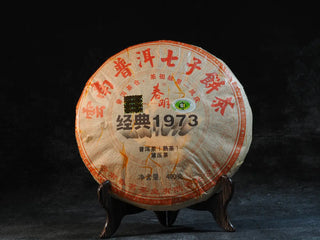
"What some call a factory accident, connoisseurs call a masterpiece of fermentation."
Key Takeaways
- Natural Origins: Lao Cha Tou are naturally occurring nuggets formed from pectin-rich leaves during the intense Wo Dui fermentation process.
- Concentrated Flavor: They offer a richer, sweeter, and more viscous profile than loose-leaf shou Puerh, featuring signature notes of red dates and wood.
- Signature Texture: Look for "Mi Tang Gan" (Rice Soup Feeling)—a thick, velvety mouthfeel that defines premium-grade nuggets.
- Exceptional Endurance: These dense clumps are incredibly durable, often providing over 20 infusions or multiple stove-top boils.
- Brewing Secret: While Gongfu brewing works, simmering or boiling is the "Royal Road" to unlocking their full sweetness and thickness.
- Authenticity Matters: Always choose naturally-formed Lao Cha Tou over machine-pressed, artificially processed "Sui Yin Zi" (Broken Silver).
-
Aging Potential: Dry storage (especially in climates like Xi'an) ensures a clean, pure maturation free from musty odors.

What Are Lao Cha Tou, and Why Are They So Misunderstood?
To understand Lao Cha Tou, you must first understand shou Puerh. This is a type of Puerh tea from Yunnan, China, that undergoes an accelerated, post-fermentation process.
If you are new to pu-erh, our beginner’s guide covers the essentials before you explore this specialty.
Lao Cha Tou (老茶头), or "Old Tea Heads," are a natural by-product of this very process.

Visually, they are small, dense, and irregularly shaped clumps of tea leaves. Many people call them Puerh tea nuggets.
This unique look has created a long-standing debate in the tea world. Are they precious gems of fermentation, or are they merely the leftover scraps from the factory floor?
This guide will end the confusion. We will explore where they come from, how they taste, and why they are valuable, showing why seasoned Puerh drinkers treasure them.
The Birth of a 'Tea Head': From Leaf to Nugget
Lao Cha Tou are not man-made. Their existence is a happy accident, a gift from the unique production method of shou Puerh. The journey from a fresh leaf to a dense nugget shows nature's amazing power to change things.
The Wo Dui (渥堆) Fermentation Pile

The creation of shou Puerh revolves around a process called Wo Dui (渥堆), or "wet piling." Tea leaves are gathered into large piles, moistened, and covered. This creates a warm, humid environment that encourages the complex post-fermentation process, driven by intense heat and microbial activity.
Over several weeks, workers carefully turn these piles to ensure even fermentation and to manage the temperature, which can reach over 60°C (140°F) at the pile's core.
How the 'Heads' Form: A Sticky Situation
During this intense fermentation, the most tender, high-grade leaves begin to release rich, sugary juices. These juices are full of natural pectin, a sticky substance.
The combination of intense heat, the pressure from the pile's own weight, and this sticky pectin causes some of the leaves to bind and clump together. These clumps become the dense, tightly-knit nuggets we know as Lao Cha Tou.
Beyond the physical bonding of pectin, the biological role of mycelium is equally crucial. In the warm, humid environment of wo dui, beneficial microbes flourish. Their thread-like mycelium acts as a natural 'fibrous glue,' interlacing the tender leaves and locking them into dense clusters. This biological 'welding' is not only responsible for the firm structure of Lao Cha Tou but also serves as a healthy indicator of thorough fermentation.
This process happens naturally. After the fermentation is complete, workers sort these nuggets from the loose shou Puerh by hand. They make up only a small fraction of the total batch—typically around 0.8% to 1.5%—making them relatively rare.
Why 'Head'? A Nod to Origin
The name 老茶头 (Lao Cha Tou) translates to "Old Tea Head." This is likely because they are the "heads" of the fermentation pile—the densest, most concentrated parts formed at the heart of the wo dui, where the transformation is most active. They are the core of the entire process.
Scraps or Gems? Debunking the Myths of Lao Cha Tou
The most common question about Lao Cha Tou is whether they have any value. Their clumpy, irregular appearance makes many wonder if they are just a low-grade by-product. The truth is quite different.

The "Scraps" Misconception
In the past, some tea factories did view these nuggets as an unwanted by-product. In a process focused on making uniform loose leaves or perfectly pressed cakes, these odd-shaped clumps were sometimes seen as second-rate material and thrown away.
This old thinking is the root of the "scraps" myth. However, as people learned more about Puerh, this view has completely changed.
Why Seasoned Puerh Drinkers Seek Them Out
We've found that experienced Puerh lovers actively look for high-quality Lao Cha Tou. They are valued not despite their unique formation, but because of it. There are three key reasons for this love.
First is concentrated flavor. Formed in the most active part of the fermentation pile, these nuggets contain a higher concentration of the flavor compounds developed during wo dui.
Second is their unique texture. Lao Cha Tou produce a tea that is distinctively thick, incredibly smooth, and viscous. It has a full-bodied mouthfeel that is hard to get with standard loose-leaf shou Puerh.
Third is their incredible durability. Their dense structure makes them extremely resistant to brewing, delivering many infusions from a small amount of tea. This offers great value and a long, evolving tea session.
The Verdict: A Treasure of Fermentation
When made from high-quality leaf material and sourced from a clean, well-managed fermentation, Lao Cha Tou are not scraps. They are concentrated treasures of the wo dui process, offering a unique and deeply rewarding Puerh experience that tea experts cherish.
| Myth (The "Scrap" Theory) | Reality (The "Gem" Truth) |
|---|---|
| They are leftover factory floor material. | They are a natural, concentrated part of the fermentation pile. |
| They are low-grade tea. | They are formed from pectin-rich, often tender leaves. |
| They are undesirable. | They are highly sought after by connoisseurs for their unique texture and endurance. |
The Flavor Profile: A Symphony of Dates, Woods, and "Mi Tang Gan"

The taste experience of Lao Cha Tou is what truly sets it apart. It's a profile defined by deep sweetness, complex aromatics, and a signature texture that coats the palate.
The Aromatic Journey
The aroma of a high-quality, well-stored Lao Cha Tou is immediately comforting and clean. You will find primary notes of sweet jujube (red date), which gives it a dessert-like character.
Underneath this sweetness lies a clean, earthy/woody character, reminiscent of an old library or a walk in an autumn forest. With proper aging, this can develop into notes of aged medicinal herbs and camphor, a sign of graceful maturation.
The Taste on the Palate
The flavor is dominated by a profound and enduring deep sweetness. Crucially, they exhibit a remarkable lack of bitterness or astringency.
Even if you brew them too long or forget them in your cup, they remain smooth, mellow, and forgiving—a quality that makes them incredibly easy to enjoy.
The Signature "Mi Tang Gan" (米汤感)
This is the hallmark of a premium Lao Cha Tou. The term Mi Tang Gan (米汤感) translates to "rice soup feeling," and it perfectly captures the tea's unique mouthfeel.
It refers to a thick, viscous, velvety, and incredibly smooth texture that coats the tongue and throat. We find that when you take a sip, it doesn't feel thin like water. Instead, it presents a satisfying, full-bodied presence that glides down smoothly, leaving a lubricating and comforting sensation. This is the treasured texture that Puerh lovers seek.
- Aroma: Sweet Red Dates, Aged Wood, Clean Earth, Hint of Medicinal Herbs.
- Taste: Profound Sweetness, Smooth, Mellow.
- Mouthfeel: Thick, Creamy, Viscous (Mi Tang Gan).
The Art of Brewing Lao Cha Tou: Why Boiling is King
Many people who first try Lao Cha Tou complain, "I can't get any flavor out of it." This is a common frustration, but it's not the tea's fault. It is a brewing challenge. Answering the question of "How to brew Lao Cha Tou" is key to unlocking their potential.
The Challenge: A Tightly-Knit Nugget
Lao Cha Tou are stubborn. Their dense, highly compressed nature, sealed by natural pectins, means they are resistant to unfurling. They require more effort than loose leaves to awaken and release their rich, inner substances.
Method 1: The Gongfu Cha Approach (For the Patient)
This traditional method works well, but it demands patience. Here are the steps for brewing in a Gaiwan or Yixing teapot.
1. The Crucial Rinse: This step is non-negotiable. Use boiling (100°C / 212°F) water for two quick rinses. Pour water over the nuggets, let them sit for 5-10 seconds, and immediately discard the water. This "wakes up" the tea, helping the nuggets to open.
2. Brewing: Begin with a slightly longer first infusion of 15-20 seconds. Continue with subsequent steeps, gradually increasing the time. Be prepared for a long session; this method will require many steepings to fully exhaust the leaves.
Method 2: Boiling on the Stove (The Royal Road)
From our extensive experience, boiling is the ultimate method for extracting the full essence of Lao Cha Tou. It is the best way to experience the thickest Mi Tang Gan and deepest sweetness.
Step-by-Step Guide:
- Place 5-8g of Lao Cha Tou into a glass kettle or a non-reactive stove-top pot.
- Rinse the nuggets twice with boiling water, discarding the water each time.
- Add 500-800ml of fresh, cold water to the pot with the rinsed nuggets.
- Bring the water to a gentle boil on the stove.
- Once boiling, reduce the heat to a low simmer for 3-5 minutes. Be careful not to let it boil over.
- Pour the rich, dark liquor into a pitcher or directly into cups and serve.
- Bonus: You can top up the pot with more water and re-boil the same leaves 1-2 more times, extending the session even further.
Boiling fully and gently extracts all the soluble compounds, creating a brew with unparalleled thickness and a sweet, comforting flavor that steeping alone can struggle to match.
The Durability Test: The Truth About 20+ Infusions
The endurance of Lao Cha Tou is legendary. Whether you use the Gongfu method or boil them, they last an exceptionally long time. This is a direct result of their dense structure and the complex microbial ecosystem developed during fermentation.
The flavor changes beautifully. The first few infusions are dark, rich, and robust. From steeps 5 to 15, the tea becomes exceptionally sweet, smooth, and the Mi Tang Gan becomes more prominent. Even after 20 infusions, or after a third boil, a lingering, satisfying sweetness remains on the palate.

PRACTICE THE ART OF BOILING
Feeling inspired to experience the rich, viscous brew of a boiled Lao Cha Tou? Our collection features perfectly aged, dry-stored nuggets that are ideal for this rewarding method. Discover the deep sweetness and incredible endurance for yourself.
As a thank you for reading our guide, enjoy a 15% discount on your first Lao Cha Tou purchase with code HEAD15
|
AGED & MELLOW Dry-Stored Aged Lao Cha Tou Ripe Pu-erh Tea Nuggets Discover dry-stored Lao Cha Tou aged ripe Pu-erh nuggets (2006-2018). Pure, mellow, and incredibly brewable. Choose your vintage. Shop now! |
Lao Cha Tou vs. Sui Yin Zi (Broken Silver): The Ultimate Showdown

As you explore the world of Puerh nuggets, you will undoubtedly encounter another product called Sui Yin Zi (碎银子), or "Broken Silver." They look similar to Lao Cha Tou, leading to significant confusion. Understanding the difference is critical for any discerning tea buyer.
The Apparent Similarity
At first glance, both are small, nugget-like forms of ripe Puerh known for their durability and smooth flavor. This has led many vendors to market them interchangeably, but they are fundamentally different products.
The Critical Difference: Natural vs. Artificial
The distinction comes down to one word: process.
Lao Cha Tou are 100% naturally formed. As we've explained, they are the organic clumps that result from the heat, pressure, and pectins of the wo dui fermentation. Their shape is irregular, lumpy, and each nugget is unique.
Sui Yin Zi, on the other hand, is almost always an artificially processed product. The process often involves grinding ripe Puerh (sometimes low-grade material) into small particles, then re-compressing them using machines into small, uniform shapes. Additives, like rice gluten, are sometimes used to create a shiny, polished "fossil" look. They are then cut into their small, squarish shapes.
Our Expert Recommendation
We are steadfast in our position on this. While a few rare, high-quality Sui Yin Zi made through special techniques might exist, the overwhelming majority found on the market today are a modern marketing invention designed for appearance rather than authentic quality.
For a truly natural, authentic, and superior flavour experience, we wholeheartedly recommend sticking with genuine Lao Cha Tou. They are the pure, unadulterated expression of the Puerh fermentation process.
| Feature | Lao Cha Tou (Old Tea Heads) | Sui Yin Zi (Broken Silver) |
|---|---|---|
| Formation | Natural clumping during fermentation | Often Artificial (re-pressed, cut, polished) |
| Shape | Irregular, organic, varied sizes | More uniform, often has sharp edges or a glossy sheen |
| Essence | A pure expression of fermentation | A re-processed product |
| Verdict | The authentic, recommended choice | Approach with extreme caution; often best avoided |
The Benefits of Aging: How Dry Storage Elevates Lao Cha Tou
Like all high-quality Puerh, Lao Cha Tou have excellent aging potential. Their dense structure allows them to mature gracefully over years, or even decades, developing deeper complexity and a smoother profile. The storage environment, however, is everything.
Can Lao Cha Tou Be Aged?
Yes, absolutely. Their tight compression slows down the oxidation process, allowing for a slow, steady, and elegant transformation. An aged Lao Cha Tou is a prized possession for any Puerh collector.
The Crucial Role of Dry Storage (Gan Cang 干仓)
Storage conditions dramatically impact how a Puerh tea ages. We exclusively use dry storage (Gan Cang 干仓), which we believe produces the cleanest, sweetest, and most desirable flavor profile.
Dry storage refers to aging tea in an environment with relatively low, controlled humidity and good ventilation, away from direct sunlight and foreign odors. This is in contrast to "wet storage," a process that significantly transforms the tea by using high humidity, which can sometimes impart musty or damp cellar notes.
The primary benefit of dry storage is purity. It allows the tea to shed any lingering residual fermentation notes from the wo dui pile. Over time, the tea becomes cleaner, the sweetness more profound, and the aromatics more complex, developing notes of aged wood, traditional medicinal herbs, and even camphor.
The Taste of Time: Our Aged Vintages
This philosophy is why we age our Lao Cha Tou in the clean, arid climate of Xi'an. This environment is perfect for dry storage, allowing the nuggets to mature beautifully.
The taste evolves with time. A younger (3-5 years) Lao Cha Tou will have a brighter, more prominent red date sweetness. An older vintage (10+ years) will be noticeably smoother and thicker, with the fruity sweetness mellowing into deeper, more complex notes of aged wood and gentle herbs. Each vintage tells a different story of time.
TASTE THE EVOLUTION OF TIME
Curious about how dry storage transforms Lao Cha Tou? Our library offers distinct vintages, each showcasing a different stage of maturation in our Xi'an warehouse. Experience the clean, pure, and sweet character that only proper aging can provide.
Select your preferred vintage and unlock 15% off with code HEAD15
 |
AGED & MELLOW Mengku Rongshi Mu Shu Sheng Puerh Vintages (Xi'an Dry Stored) Discover the legendary Mengku Rongshi Mother Tree Sheng Puerh. Dry-stored in Xi'an for a clean, wild flavor with intense Chaqi. Shop aged raw puerh! |
How to Spot Quality: Avoiding Moldy or Poor-Grade Lao Cha Tou
For anyone new to Puerh, the fear of buying a moldy or poorly stored tea is real. Empowering yourself with a few quality markers is the best way to purchase with confidence. Here's what to look for when assessing Lao Cha Tou.
Visual Inspection: What to Look For
- Good Quality: The nuggets should be very hard, dry, and tightly compressed, yet you should still be able to discern the shapes of the leaves that formed them. The color should be a clean, uniform deep brown or dark chocolate.
- Red Flags: Avoid anything that looks mushy or soft. Be wary of discolored spots, especially fuzzy patches of green, blue, or white—these are clear signs of mold. A dull, lifeless, ashy appearance also suggests poor quality material or storage.
The Olfactory Test: Good vs. Bad Smells
Your nose is your best tool. Break a nugget in half if possible and smell it closely.
- Good (Chen Xiang 陈香): A high-quality, well-stored Lao Cha Tou should have a pleasant, clean aroma. Look for comforting smells of sweet dates, dry wood, cocoa, or a faint, clean earthiness. It should smell inviting.
- Bad (Mei Wei 霉味): A sharp, musty, or pungent odor is an immediate deal-breaker. If it smells like a damp basement, wet socks, or pond scum, the tea has been improperly stored and has likely developed mold. Trust your nose and reject it.
The Mycelium Myth: "Golden Flowers" vs. Mold
Sometimes, you may see a fine, web-like white substance on Lao Cha Tou, or even small golden-yellow specks known as "golden flowers" (jin hua). Novices often mistake this for mold.
This is generally harmless residue from the beneficial microbial activity of fermentation. The fine white residue is often mycelium, which acted as a "glue" during the clumping process. It is not mold.
The key difference is appearance and smell. Mold is typically fuzzy, three-dimensional, and often colored (green, blue, black). It will always be accompanied by a strong musty smell. Benign mycelium, by contrast, is very fine, almost like a faint white dust, and carries no offensive odor.
The Ultimate Convenience: Your Go-To Tea for the Office and Travel
Beyond their complex flavor, Lao Cha Tou offer unparalleled practicality, making them a perfect daily companion for modern life. They are an ideal solution for enjoying high-quality tea when a full gongfu setup is not an option.
No Tea Pick, No Mess
Unlike tightly compressed Puerh cakes that require a tea pick and careful prying, Lao Cha Tou are ready to go. Simply grab a few nuggets from your caddy—no tools, no mess, no broken leaf fragments.
Compact and Robust
Their hard, dense shape makes them incredibly durable for transport. You can carry them in a small tin in your bag or suitcase without worrying about them crumbling into dust. They are the perfect tea for a travel thermos or your office desk.
"Grandpa Style" Brewing Perfected
Lao Cha Tou are the ultimate tea for a minimalist "leaf in a mug" brewing method known as "Grandpa Style."
Simply drop one or two nuggets into a large mug or thermos, add boiling water, and sip throughout the day, topping up with more hot water as needed. Because they are nearly impossible to over-steep into bitterness, they provide a consistently smooth and sweet brew for hours.
Your Invitation to a Deeper Puerh Experience
The journey of Lao Cha Tou is a fascinating one—from a misunderstood by-product to a celebrated gem. They are not scraps, but a concentrated expression of the very heart of shou Puerh fermentation.
We have seen that their value lies in their unique virtues: a deep, date-like sweetness, a signature thick and viscous texture, an incredible durability that offers amazing value, and an excellent potential for graceful aging, especially under clean, dry storage conditions.
Exploring Lao Cha Tou is more than just trying a new tea; it's about appreciating a unique creation of the Puerh world. We invite you to discover this hidden gem and experience its comforting, complex, and deeply rewarding brew for yourself.
FAQs:
-
What exactly is Lao Cha Tou and how is it different from regular Puerh tea?
Lao Cha Tou are naturally formed nuggets that develop during shou Puerh fermentation when tender leaves clump together from heat, pressure, and natural pectin. They represent only 0.8-1.5% of a fermentation batch, offering a uniquely sweet, thick texture that regular Puerh doesn't have. -
What does Lao Cha Tou taste like compared to other teas?
Lao Cha Tou has a distinctive profile featuring sweet jujube (red date) notes, clean woody undertones, and remarkable lack of bitterness. Its signature characteristic is "Mi Tang Gan" - a thick, viscous, velvety mouthfeel similar to rice soup that coats the palate. -
What's the best way to brew Lao Cha Tou for maximum flavor?
Boiling is the superior method for Lao Cha Tou. Place 5-8g in a pot with 500-800ml water, bring to a gentle boil, then simmer for 3-5 minutes. This fully extracts the dense nuggets' compounds, creating unparalleled thickness and sweetness that regular steeping struggles to match. -
How can I tell if I'm buying high-quality Lao Cha Tou in 2025?
Quality Lao Cha Tou should be hard, dry, and uniformly deep brown with discernible leaf shapes. The aroma should be pleasantly sweet with notes of dates, wood, or cocoa. Avoid soft nuggets with discolored spots or fuzzy patches, and reject any with musty, damp basement smells. -
How does Lao Cha Tou differ from Sui Yin Zi (Broken Silver)?
While visually similar, Lao Cha Tou forms 100% naturally during fermentation with irregular, unique shapes. In contrast, Sui Yin Zi is typically an artificially processed product where ripe Puerh (sometimes low-grade) is ground, re-compressed with machines, and occasionally enhanced with additives for a uniform appearance.
Every year, thousands of tea lovers visit our tea house to enjoy a peaceful cup of authentic tea. Now, you can bring that same experience home from Orientaleaf.com.
Brew Pro, Buy Smart
≡ Quick Navigation +/−
↑ click header to collapse
1. Key Takeaways 2. What Are Lao Cha Tou, and Why Are They S... 3. The Birth of a 'Tea Head': From Leaf to ... 4. Scraps or Gems? Debunking the Myths of L... 5. The Flavor Profile: A Symphony of Dates,... 6. The Art of Brewing Lao Cha Tou: Why Boil... 7. Lao Cha Tou vs. Sui Yin Zi (Broken Silve... 8. The Benefits of Aging: How Dry Storage E... 9. How to Spot Quality: Avoiding Moldy or P... 10. The Ultimate Convenience: Your Go-To Tea... 11. 12. Your Invitation to a Deeper Puerh Experi... 13. FAQs: 14. Brew Pro, Buy Smart