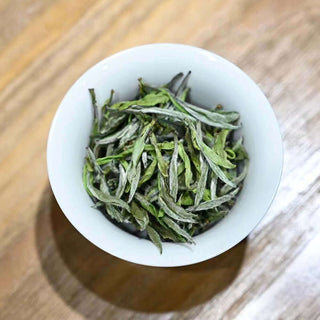
"Paying more doesn’t guarantee good tea, but paying too little almost guarantees bad tea."
Key Takeaways
- Tea grade is the biggest price driver — from Silver Needle to Shou Mei
- Spring harvest and high-altitude origin raise both flavor and cost
- Traditional sun-withering adds value through better aging potential
- Aging transforms flavor and significantly increases tea’s price
- Extremely cheap white tea often hides quality issues
- Best value isn't the cheapest tea, but the one that fits your taste and purpose
-
Always check the harvest date, origin, and leaf appearance before buying

Introduction: Decoding the Price of Fuding's Liquid Gold
Have you ever asked why some Fuding white tea cakes cost $20 while others cost $200? The big range in Fuding white tea price confuses even tea experts. It comes from a mix of where it's grown, how it's made, its grade, and how old it is.
We want to make this clear for you. After years in the tea business, we believe this: good tea often costs more, but if a price seems too low, it probably isn't good tea.
This article will explain every factor that affects the cost. You'll learn how to shop smart and find real value in the market.
Think of this as your guide to finding the best tea for your money.
This price guide is an important part of our Fuding White Tea: The Ultimate Guide.
Why is Fuding White Tea So Expensive? Deconstructing the Price Tag
The price of Fuding white tea isn't random. It directly reflects the materials, work, skill, and time that go into each leaf.
Factor 1: The Grade Hierarchy (Price by Type)
The biggest factor in a new white tea's price is its grade. Grade depends on which part of the tea plant is picked.
Higher grades come from more delicate parts that are only available for a short time. They take more work to harvest, making them cost more.
Here are the four main grades of Fuding white tea:

| Grade | Picking Standard | General Flavor Profile (New Tea) | Typical Price Range (New Tea) |
|---|---|---|---|
| Silver Needle (Bai Hao Yin Zhen) | Single, unopened, downy buds only | Extremely delicate, sweet, floral, notes of melon and cucumber | $$$$ |
| White Peony (Bai Mu Dan) | Bud with one or two tender leaves | Fuller-bodied, floral and fruity, notes of hay and apricot | $$$ |
| Gong Mei | Young leaves with some buds | Robust, sweet, mellow, often with date-like notes | $$ |
| Shou Mei | Mature leaves harvested later in the season | Bold, earthy, sweet, notes of dried herbs and dark fruit | $ |
Each grade offers a different taste experience. No grade is truly "better" - it's about what you prefer. To learn more about these grades, check our guide on the types of Fuding white tea.
Factor 2: Harvest Time & Terroir - The Soul of the Tea
When and where the tea is harvested greatly affects the Fuding white tea price.
Harvest Time: The best tea is "Mingqian" or "Pre-Qingming" tea. It's picked before the Qingming festival in early April. These first leaves have the most nutrients and are the most tender. This harvest lasts only 10-14 days, which limits how much top-grade Silver Needle can be made.
Terroir: Not all Fuding tea is equal. Tea from the main growing areas, especially high places like Dian Tou (点头) and Panxi (磻溪), costs more. According to experts on Fuding's special climate, the soil, height, and fog in these areas create a taste that can't be copied elsewhere. This is the true taste of Fuding.
Factor 3: Craftsmanship - The Unseen Art
White tea processing looks simple, but is very complex. How the leaves are dried makes a big difference in price.
The best method is traditional sun-withering (ri shai). This means carefully laying out the leaves to dry slowly in the sun. This process needs perfect weather, takes days, and requires constant watching. It keeps the tea's natural enzymes, giving it a bright taste and the ability to age well.

In contrast, indoor heated withering is faster and easier to control but can "bake" the leaves at higher heat. While faster, this method can kill the enzymes needed for aging, making a flatter, less interesting tea. This makes the tea cheaper but not as good.

A tea master's skill in drying the leaves is a hidden art that adds great value to the final product.
 |
AGED & MELLOW Gold Brick 2012 Sun-Dried White Peony Fuding 500g Brick 2012 sun-dried Fuding White Peony pressed into a 500g brick. 10+ years aged, deep red-brown liquor, dried-date and medicinal depth. Tea pick needed. |
The Magic of Time: How Much Does Aged Fuding White Tea Cost?
We can't talk about Fuding white tea price without mentioning aging. In China, people say: "一年茶,三年药,七年宝" (One-year tea, three-year medicine, seven-year treasure).

This saying shows why aged white tea is seen as a liquid investment. Unlike green tea, which is best when fresh, white tea, especially sturdy grades like Shou Mei and White Peony, gets better with time.
Our own tastings prove this amazing change. We've tried the same batch of Shou Mei at different ages. A one-year-old Shou Mei is bright and grassy, with hints of fresh hay. By three years, it becomes smoother, with notes of honey and dried fruit.
At seven years, the change is complete. The tea turns a deep amber color. The smell is no longer grassy but has a distinct, comforting medicinal scent (yao xiang), with a surprising sweetness like preserved dates that stays long after each sip. Collectors pay extra for this complex taste.
Generally, you can expect the price to rise with age. A good white tea aged 3-5 years might cost 1.5 to 2 times its original price. After 7-10 years, it could be 3 to 5 times more, or even higher for special batches. This happens because of changes in the tea's compounds during aging, which create new, desirable flavors.
Learning about aging is a journey. Start with our complete guide to aging white tea.
The Smart Buyer's Compass: How to Find the Best Value Fuding White Tea
Now for the most important part: how do you use this knowledge to buy wisely? Finding value isn't just about finding the lowest price.
Value isn't just about paying less. Often, the best value is a mid-priced, real Shou Mei with great aging potential, not a so-so, tasteless Silver Needle.
We've created a framework to help you judge quality and find tea that's worth its price.
The Red Flag: The Pitfall of "Too Cheap" Tea

First, let's talk about the biggest trap. If a Fuding white tea price seems too good to be true, it probably is. Here's what a suspiciously low price often hides:
- Wrong Origin: The tea isn't from the main Fuding growing area. It could be from other parts of China or even other countries, with different soil and processing methods. This can't legally be called "Fuding White Tea".
- Poor Processing: The leaves were likely dried too quickly by machines at high heat. This kills the enzymes needed for aging and complex flavor, leaving you with a flat, dull tea.
- Bad Storage: The tea may have been kept in damp or smelly places, causing mold, mustiness, or loss of its natural smell.
- Wrong Season: It could be summer or fall harvest tea being sold as spring harvest. These later teas are much less complex and aromatic.
In short, a very low price often means you're buying a product that lacks what makes Fuding white tea special.
Your Value-Finding Checklist
To find real value, focus on quality, not just price. Use this checklist when tea shopping.
- Know Your Goal: What do you want? The light, fresh taste of new spring tea (Silver Needle), or the deep, complex comfort of aged tea (Shou Mei)? Your goal decides which grade is best for you.
- Start with White Peony or Shou Mei: For beginners or those wanting the most for their money, these grades are great. They have rich flavor, are easier to brew, and can age wonderfully at a more affordable price.
- Look at the Leaves: Check for whole leaves with bright colors that match the grade. The leaves should smell fresh, clean, and sweet. Avoid anything dusty, very broken, or stale-smelling.
- Ask About Harvest Date & Origin: A good seller will always have this information. Ask for the year, season (spring is best), and the specific area within Fuding if possible.
- Trust Your Taste: When you can, buy a sample first. The best value tea for you is one you truly enjoy drinking. Brew it, taste it, and see if you like it.
This checklist is just the start. For more details, see our full Fuding white tea choosing guide.
 |
AGED & MELLOW 2021 Aged Fuding Shou Mei Tea Cake - Grade 1 Autumn Harvest (150g) 2021 Fuding White Peony Tea Cake (Grade 1). Authentic aged white tea from Fujian. Autumn harvest offers robust flavor with natural sweetness. |
Conclusion: The Price of a Legacy
The price of Fuding white tea tells a story. It's the story of a special place, a brief season, careful crafting, and patient aging.
It directly reflects the tea's grade, its sacred growing place, its artisan processing, and its transformative age. It's not just a drink but an agricultural art form, a living heritage tied to Fuding's official title as the 'home of Chinese white tea'.
We encourage you to see your purchase not just as buying something, but as starting an exploration. You're investing in an experience that changes with every cup and every year that passes.
With Fuding white tea, you truly get what you pay for. The price of Fuding white tea is tied to its rich history. We invite you to learn more about the history and culture of Fuding white tea to appreciate this remarkable heritage fully.
FAQ
-
Why is Fuding white tea so expensive compared to other teas?
Fuding white tea prices reflect limited harvest seasons, specific terroir requirements, meticulous craftsmanship, and valuable aging potential that enhances flavor and medicinal properties over time. -
How much does premium Silver Needle Fuding white tea typically cost in 2025?
Premium Silver Needle (Bai Hao Yin Zhen) from authentic Fuding regions typically costs between $80-200 per 100g in 2025, depending on harvest timing and exact origin. -
Does aged Fuding white tea increase in price over time?
Yes, properly stored Fuding white tea increases in value substantially - a good tea aged 3-5 years might cost 1.5-2x its original price, while 7-10 year aged tea can command 3- 5x or more. -
What's the best value Fuding white tea for beginners?
White Peony (Bai Mu Dan) or Shou Mei offers excellent value for beginners, providing rich flavors and aging potential at more accessible price points than Silver Needle. -
How can I tell if the Fuding white tea price is fair or if I'm being overcharged?
Check that prices align with the tea's grade, harvest season, specific Fuding origin, processing method, and age. Suspiciously cheap tea often indicates poor quality, wrong origin, or improper processing.
Every year, thousands of tea lovers visit our tea house to enjoy a peaceful cup of authentic white tea. Now, you can bring that same experience home from Orientaleaf.com.
Explore our carefully selected Fuding White Tea collection, straight from the source.—Try Silver Needle, White Peony, and more—carefully selected for purity and taste.
Try them for yourself, and don’t forget to join our mailing list for updates, tea stories, and exclusive offers.