"In tea, just like in life, the season you’re in changes everything."
Key Takeaways
- Spring Fuding white tea is prized for its delicate sweetness and floral aroma.
- Autumn harvest tea offers richer flavors and excellent aging potential.
- Summer white tea is more bitter and affordable, often used for blending.
- Harvest season impacts flavor, aroma, and nutritional compounds.
- Choose spring tea for freshness and umami; choose autumn tea for boldness and value.
- Climate and sunlight are the key reasons behind seasonal differences.
-
Understanding harvest timing helps you make smarter tea choices.

Introduction: Does the Harvest Season Truly Matter for Fuding White Tea?
Have you ever wondered why two Fuding white teas, both called "White Peony," can taste so different? The secret often lies in when they were picked.
Harvest season is one of the three main factors—along with the tea plant type and processing methods—that shapes a Fuding white tea's character. It strongly influences the tea's flavor, aroma, and how well it ages.
Spring teas are known for their amazing freshness and gentle taste. The autumn harvest brings a deeper sweetness and strong aroma. Even summer teas, which many people overlook, have their own special qualities.
In this guide, a companion to our Fuding White Tea: The Ultimate Guide, we'll explore what makes each harvest season special.
The Spring Harvest (Chun Cha): The Pinnacle of Freshness and Delicacy

The spring harvest, or Chun Cha (春茶), is the most valued season for Fuding white tea. It runs from late March to early May and gives us teas of the highest quality.
This season has even smaller divisions within it. "Mingqian" (明前) tea comes from buds picked before the Qingming Festival in early April. "Yuqian" (雨前) tea is harvested after Qingming but before the "Grain Rain" period.
Spring tea emerges after a long winter rest
The tea plants lie dormant through the cold months, storing energy. When spring arrives, the first buds grow slowly, resulting in tender leaves full of life and flavor.
These early buds are rich in beneficial compounds

Slow growth in cool weather helps build up amino acids—especially L-theanine, which gives spring Fuding white tea its signature savory sweetness and smooth, fresh taste.
Here's what makes spring Fuding white tea special:
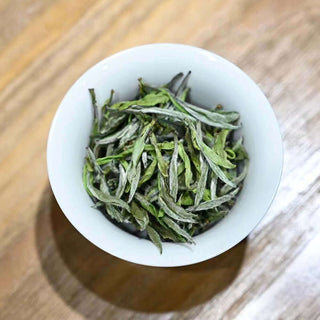
- Appearance: Full, silvery-white buds covered in fine, downy hairs—often called “fuzz,” a key indicator of freshness and quality (learn more here). The leaves look bright and fresh green.
- Aroma: Very fresh and gentle. You'll smell clean, elegant floral notes like orchid, with a light, sweet grassiness.
- Taste: Extremely smooth, gentle, and sweet. A clear umami or "xian" (鲜) freshness stands out, with very little bitterness and a sweet aftertaste that stays with you.
- Liquor: The brewed tea is a pale, bright, clear yellow-green color.
This is when the most famous types of Fuding white tea, like Silver Needle and top-grade White Peony, are picked. Spring tea creates unique Fuding white tea flavor profiles that people love for their subtle qualities.
 |
SMOOTH & GENTLE 2023 Fuding White Peony Tea Brick (Grade 3, Spring Harvest) - 200g Hand-Pressed Fujian White Tea 2023 Fuding White Peony tea brick. Grade 3 spring leaves hand-pressed in 2024. Preserved whole leaves, floral aroma. Free global shipping from Orientaleaf. |
The Autumn Harvest (Gu Hua Cha): A Portrait of Richness and Aroma

Autumn white tea, or Gu Hua Cha (谷花茶), offers a completely different but equally wonderful experience. Many consider it the second-best harvest of the year.
The name means "Grain Flower Tea," as it's picked from September to October when rice fields are full of flowering grain. After summer's heat, tea plants grow again in autumn's milder weather.
As tea experts point out, autumn weather, with moderate temperatures and good sunshine, creates a different but valuable leaf. More sunlight than in spring helps produce more aroma compounds.
This change creates tea that focuses less on delicate freshness and more on rich flavor.

Let's compare autumn tea to spring tea:
- Appearance: The leaves are usually thinner, more mature, and less even in color. You'll see fewer silvery buds and more dark, sometimes bronze-colored leaves.
- Aroma: The smell is much stronger and more developed. Instead of fresh flowers, think of warm scents like dried fruit, honey, or sun-dried hay.
- Taste: The flavor is stronger and fuller. It has a nice mellow sweetness, but with more noticeable astringency that gives it structure.
- Liquor: The tea brews to a deeper golden or light amber color, showing its richer character.
Its strong character makes autumn tea great for long-term storage. Its flavors change beautifully over time, as we explain in our guide to aging white tea.
The Often-Overlooked Summer Harvest (Xia Cha): Characteristics and Uses
Between the popular spring and autumn harvests is the summer harvest, Xia Cha (夏茶), which happens from June to July. Most tea sellers don't think highly of summer tea, but experts understand its specific role.
Summer-picked white tea is not usually considered high quality. The strong heat and sun of a Fujian summer make tea plants grow quickly, almost under stress. This creates more fiber and catechins, which cause bitterness.
Here are typical summer-harvested white tea characteristics:
- Flavor Profile: Often more bitter than teas from other seasons. The taste can be flat and lack the sweetness or complexity of spring and autumn teas.
- Aroma: Less complex and can be sharply grassy.
- Appearance: The leaves are often thin, tough, and can look dull or dark.
Is summer tea worthless? Not at all. Its main value is that it's affordable. Because farmers produce a lot of it at a lower cost, companies often use it for tea bags and bottled tea drinks.
From what we've seen, while summer white tea isn't great for careful brewing, some aged Shou Mei cakes with summer leaves can develop surprisingly mellow, herbal notes after many years of storage. The high level of compounds that make it bitter when fresh also helps it change in interesting ways as it ages.
This big difference in quality explains the huge range in Fuding white tea prices. A spring Silver Needle can cost hundreds of times more than a summer Shou Mei.
 |
AGED & MELLOW 2021 Aged Fuding Shou Mei Tea Cake - Grade 1 Autumn Harvest (150g) 2021 Fuding White Peony Tea Cake (Grade 1). Authentic aged white tea from Fujian. Autumn harvest offers robust flavor with natural sweetness. |
Spring vs. Autumn Fuding White Tea: A Head-to-Head Comparison
To help you choose, here's a direct comparison. This table shows the key differences between the two main "artisan" Fuding white tea harvest seasons, answering the common question about differences between spring and autumn white tea.
| Feature | Spring Harvest (Chun Cha) | Autumn Harvest (Gu Hua Cha) |
|---|---|---|
| Harvest Time | Late March - Early May | September - October |
| Key Flavor Notes | Delicate, sweet, umami, fresh florals | Mellow, full-bodied, honey, dried fruit |
| Aroma | Light, fresh, elegant, subtle | Rich, mature, pronounced, warm |
| Mouthfeel | Smooth, thick, brothy, gentle | Bolder, slightly more astringent, robust |
| Appearance | Plump buds, silvery down, vibrant leaves | Thinner leaves, less down, darker hue |
| Key Nutrient | High in Amino Acids (for freshness) | High in Polyphenols (for body & aroma) |
| Best For | Immediate enjoyment, appreciating delicacy | Aging, seeking bolder flavor, daily drinking |
| Typical Grades | Silver Needle, Premium White Peony | White Peony, Shou Mei |
These seasonal differences aren't new. They come from centuries of farming wisdom and careful observation by tea farmers in Fuding.
Understanding these harvest traditions adds depth to appreciating the history and culture of Fuding white tea. It connects each cup to the changing seasons on Mount Taimu.
You can explore our autumn-harvested white teas here and experience their bold, warming flavors firsthand.
At our store, every tea clearly indicates its harvest season, making it easier for tea lovers to choose based on their taste preferences and brewing goals.
Beyond Flavor: The "Why" Behind Seasonal Differences
Describing each season's flavors is one thing. Understanding why they differ makes you a true tea expert. These differences aren't random; they come directly from how tea plants respond to their environment.
Here's the science in simple terms:
-
Sunlight & Catechins: Sunlight drives change. More intense sun (common in summer and somewhat in autumn) makes tea plants produce more catechins. These compounds create bitterness and astringency but also provide body and potential for aging.
-
Temperature & Amino Acids: Cool weather creates delicacy. Spring's cool, misty mornings slow the plant's growth. This lets it build up L-theanine and other amino acids. These create the savory umami (鲜爽) taste and the lingering sweet aftertaste (huigan).
-
Rainfall & Aromatic Oils: Water affects concentration. The balanced rainfall of spring and autumn creates well-developed leaves. Summer's heavy rains can dilute the flavor compounds, leading to thinner taste.
These patterns face new challenges today. As reports on how climate change is affecting tea regions show, unpredictable weather can shift harvest times and change the leaves' chemical balance, making farmers' skills more important than ever.
The Final Verdict: Which Season's Fuding White Tea is Best For You?
After exploring each season, which harvest should you choose? There is no single "best" tea—only the best tea for your taste and purpose.
We can help you decide by asking: what experience do you want?
Choose Spring Tea if...
- You love delicate, fresh, and light floral notes.
- You want to experience the most prized and subtle expression of Fuding white tea.
- You prefer a smooth, gentle brew with a thick texture and minimal bitterness.
Choose Autumn Tea if...
- You enjoy richer, bolder, and more aromatic flavors with notes of ripe fruit and honey.
- You are interested in aging tea to develop deeper complexity over the years.
- You want a high-quality daily tea that offers great value for its flavor.
The best way to find your preference is to try them side-by-side. Our Fuding white tea choosing guide can help you find specific types from each season to start your own delicious exploration.
FAQ
-
What makes spring Fuding white tea so special compared to other harvest seasons?
Spring harvests (March-May) produce the highest quality Fuding white tea with delicate flavors, fresh floral notes, and high amino acid content due to slower growth in cooler temperatures. -
How does autumn Fuding white tea differ from spring harvest tea?
Autumn Fuding white tea (September-October) offers richer, stronger flavors with honey and dried fruit notes, deeper color, and better aging potential compared to spring's delicate freshness. -
Is summer harvest Fuding white tea worth buying?
Summer harvest (June-July) Fuding white tea is more affordable but typically has stronger bitterness and less complexity, making it better for tea bags or aging rather than premium loose leaf enjoyment. -
Which Fuding white tea harvest season is best for aging?
Autumn harvest Fuding white tea is generally considered best for aging due to its higher polyphenol content and stronger character that transforms beautifully over time. -
How do I choose between spring and autumn Fuding white tea harvests?
Choose spring Fuding white tea for delicate freshness and subtle floral notes; select autumn harvest for richer flavors, better value, and aging potential. Your preference depends on whether you value delicacy or boldness.
Every year, thousands of tea lovers visit our tea house to enjoy a peaceful cup of authentic white tea. Now, you can bring that same experience home from Orientaleaf.com.
Explore our carefully selected Fuding White Tea collection, straight from the source.—Try Silver Needle, White Peony, and more—carefully selected for purity and taste.
Try them for yourself, and don’t forget to join our mailing list for updates, tea stories, and exclusive offers.
Brew Pro, Buy Smart
≡ Quick Navigation +/−
↑ click header to collapse
1. Introduction: Does the Harvest Season Tr... 2. The Spring Harvest (Chun Cha): The Pinna... 3. The Autumn Harvest (Gu Hua Cha): A Portr... 4. The Often-Overlooked Summer Harvest (Xia... 5. Spring vs. Autumn Fuding White Tea: A He... 6. Beyond Flavor: The "Why" Behind Seasonal... 7. The Final Verdict: Which Season's Fuding... 8. Brew Pro, Buy Smart