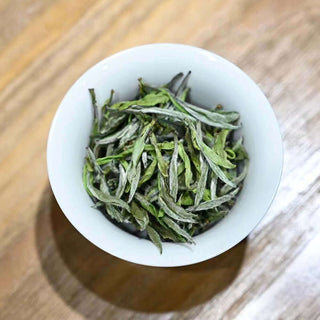
"Summer does not leave all at once. It exhales slowly. And in that long, golden breath — the space between heat and chill — the wisest cup is one that honors both."

The cicadas are quieter now.
The same sun still hangs in the sky, but something has shifted. Mornings carry a new lightness. Evenings hold a faint coolness that was not there a week ago. The air itself seems to pause, as if summer is gathering itself for one final, dignified bow before stepping aside.
This is 处暑 (Chǔshǔ), the End of Heat. And it is one of the most interesting solar terms in the Chinese calendar.
We have moved through the fierce intensity of Major Heat, when our bodies needed the most powerful cooling. We have felt the first whisper of change at the Start of Autumn. Now we arrive at this precise threshold — not fully summer, not yet autumn — where the challenge is no longer just heat, but the art of transition itself.
For this in-between season, ancient wisdom reaches for a tea that is itself a product of transformation. A tea that began its life as a cooling summer remedy and, through years of patient aging, became something entirely different. A tea that, like the season it belongs to, carries the warmth of summer's memory while reaching quietly toward autumn.
That tea is Aged White Tea (老白茶, lǎo bái chá).
In this guide, you will learn:
- The meaning of End of Heat (处暑) and why it stands apart from every other solar term.
- How this transitional season affects your body, according to Traditional Chinese Medicine.
- Why Aged White Tea is the single most intelligent tea choice for this precise moment.
- How to brew it for the deepest, most satisfying experience.
- A simple seasonal ritual to consciously welcome autumn's arrival.
This article is part of our complete guide to Chinese Tea and the 24 Solar Terms. If you are new to jieqi tea culture, we recommend starting there.
Key Takeaways
- End of Heat (处暑) is the 14th solar term, marking the official retreat of summer heat, occurring around August 22nd or 23rd each year.
- The season's defining challenge is a delicate duality: Residual Heat (余热) still lingers while Autumn Dryness (秋燥) quietly begins its arrival — the body is caught between two worlds.
- In Traditional Chinese Medicine (TCM), 处暑 marks the critical handover from summer's peak Yang energy toward rising Yin. The Lung system now becomes the organ of primary concern.
- Aged White Tea (老白茶) is the perfect bridge tea. Years of careful aging transform its energetic nature from cold to neutral-warm, uniquely equipping it to address both lingering heat and emerging dryness.
- Its three core TCM actions — clearing residual heat (清余热), nourishing Yin fluids (养阴生津), and moistening the Lungs (润肺止燥) — address the exact challenges this season presents.
- Modern science supports this ancient wisdom: aged white tea contains a rich concentration of polyphenols, theabrubins, and polysaccharides that develop during aging, offering enhanced anti-inflammatory, immune-supporting, and digestive benefits.
- The ideal brew for 处暑 is a gentle gongfu session with 90-95°C water, or a slow-simmered pot — a method traditionally called 煮茶 (zhǔ chá) — that coaxes deep, warming complexity from aged leaves.
- Drinking aged white tea during End of Heat is an act of conscious seasonal surrender — letting go of summer's fire and beginning, one quiet cup at a time, to receive autumn.
What Is End of Heat (处暑 Chǔshǔ)?
The Meaning Behind the Name
Two simple characters carry an entire seasonal philosophy.
- 处 (chǔ): To stop / to end / to withdraw
- 暑 (shǔ): Heat / Hot Weather
- Astronomical Marker: When the sun reaches the celestial longitude of 150°.
- Annual Date: Occurs around August 22nd or 23rd each year.
Together, 处暑 means: the heat is now withdrawing. Not gone — withdrawing. This distinction is everything. Unlike the sudden conceptual arrival of 立秋 (Start of Autumn), 处暑 describes something you can actually feel: the slow, tangible recession of summer's intensity from the world and from your body.
It is the 14th of the 24 Solar Terms, and it belongs to that fascinating category of jieqi that do not announce a new beginning so much as acknowledge a graceful ending.
What Happens in Nature
Step outside during 处暑 and the world offers quiet but unmistakable signals.
- The Light Changes: Sunlight in late August has a different quality. It is still warm, still golden — but it sits lower in the sky. Shadows grow longer earlier in the afternoon. The harshness of midday has softened into something almost amber.
- Mornings Carry Dew: Cool overnight temperatures cause moisture to condense on grass and leaves. This is the first hint of 白露 (White Dew), the solar term that follows. The earth is beginning to breathe out.
- Cicadas Grow Quieter: The constant chorus of summer gradually fades. Crickets begin to take over the evenings, their sound lower and more meditative than the urgent buzz of summer.
- Skies Open Up: The oppressive humidity of Major Heat begins to lift. Days that were once a grey-white haze slowly give way to the deep, clear blue that defines a Chinese autumn sky.
- The Tea Garden Prepares: In Fujian, Yunnan, and across China's great tea regions, farmers are watching. The summer flush of white tea is now drying slowly in the shade. Some of this harvest will be pressed and stored — beginning the very aging process that produces the tea we celebrate in this season.
A Note from Ancient China
"处暑无三日,新凉直万金"
(Chǔshǔ wú sān rì, xīn liáng zhí wànjīn)
— Ancient Chinese Proverb
"End of Heat lasts not three full days before the new coolness arrives — and that coolness is worth ten thousand pieces of gold."
This beloved proverb reveals how deeply the ancient Chinese treasured this moment. After months of relentless heat, the arrival of true coolness was not just physical comfort. It was a form of wealth. A gift from the natural world. A reminder that all things — even the most intense summer — eventually yield.
Ancient scholars and poets wrote extensively about 处暑. They described going out at dawn to feel the cool air on their skin, drinking tea slowly on stone verandas, watching swallows begin to gather before their southward migration. This was not laziness. It was a deliberate practice of attuning oneself to the season's energy — the essence of Yangsheng (养生).
Your Body During End of Heat: A TCM Perspective
If Major Heat demanded that we defend against overwhelming external attack, 处暑 asks something more subtle and more difficult: navigate a transition.
Your body, wise as it is, can handle extremes. What it finds genuinely challenging is the space between — when two opposing energies exist simultaneously and the body must carefully recalibrate without tipping too far in either direction.
The Energy Shift: From Peak Yang Toward Rising Yin
Summer is the season of maximum Yang energy — outward, expansive, hot, bright. Autumn is the season of rising Yin — inward, contracting, cooling, reflective. 处暑 is the precise moment when Yang has peaked and begins its long, steady descent, while Yin energy takes its first tentative steps forward.
In practical terms, this means the body is simultaneously:
- Still processing residual Heat accumulated over months of summer
- Beginning to experience the first effects of Autumn Dryness (秋燥)
This dual burden is what makes 处暑 uniquely challenging — and uniquely interesting from a wellness perspective.
The Organ of the Season: The Lungs Awaken
Summer belonged to the Heart. Autumn belongs to the Lung system (肺, fèi).
In TCM, the Lung system governs far more than respiration. It oversees the distribution of fluids throughout the body, manages the skin's ability to open and close pores, and is deeply connected to the emotion of grief and the capacity for letting go. When we speak of the Lungs in autumn, we are speaking of the body's ability to release what summer has built up and to receive what autumn is offering.
The Lungs have one great vulnerability: dryness. And as the humid air of summer begins to pull back, the first whispers of Autumn Dryness (秋燥) can begin to affect the Lung system even this early.
The Double Challenge: Residual Heat Meets Autumn Dryness
Here is the precise situation your body faces during 处暑:
Residual Summer Heat (余热 yú rè) does not vanish overnight. It lingers in the body the way warmth lingers in a stone wall after the sun has set. You may still experience:
- Occasional feelings of being too warm, especially in the afternoons
- Continued thirst and a tendency to feel slightly dehydrated
- Mild skin breakouts, as the body works to clear accumulated summer Heat
- Restless sleep, as the Heart system has not yet fully handed over to autumn's quieter energy
Emerging Autumn Dryness (秋燥 qiū zào) begins its work at the same time:
- A dry or slightly scratchy throat, particularly in the morning
- Dry skin that feels tighter than it did in humid summer
- A subtle change in mood — a faint wistfulness or introspective quality that was absent in summer's outward energy
- Dry nasal passages and a new sensitivity to dust and dry air
The art of navigating 处暑 lies in addressing both of these conditions simultaneously. This is precisely why the tea we choose at this moment matters so much.
Note: The wellness principles in this guide are rooted in Traditional Chinese Medicine philosophy and are intended for general informational purposes only. They are not a substitute for professional medical advice. Please consult a qualified healthcare provider or TCM practitioner for any health concerns.
The Tea of End of Heat: Aged White Tea (老白茶)
What Is Aged White Tea?
You may already know white tea as the cooling, delicate tea of summer — the one we celebrated during Major Heat. Silver Needle and White Peony, in their fresh form, are powerfully Yin, making them ideal for the peak of summer's Yang intensity.
But aged white tea is an entirely different creature. Same leaves. Transformed nature.
The process of becoming old white tea begins simply: fresh white tea — typically Silver Needle (白毫银针) or White Peony (白牡丹) — is dried and then stored in clean, temperature-stable conditions. No additives. No artificial acceleration. Just time, air, and patience.
Year by year, a quiet biological transformation unfolds within the leaves:
- The cool, green notes of fresh white tea gradually mellow and deepen
- Grassy freshness evolves into rich notes of dried dates, aged wood, honey, and rice cakes (糯米香)
- The tea's energetic property in TCM shifts from cold (寒性) through neutral (平性) toward gently warm (温性)
- The liquor, once pale gold, deepens into amber, then a rich dark copper
Traditionally, aged white tea is valued in three-year intervals:
| Age | Character | TCM Nature |
|---|---|---|
| 1–3 years | Floral, light, cooling | Cold to Neutral |
| 3–7 years | Honey, dried fruit, balanced | Neutral |
| 7+ years | Deep, woody, date-like warmth | Neutral to Gently Warm |
"一年茶,三年药,七年宝"
"One year: tea. Three years: medicine. Seven years: treasure."
For 处暑, we recommend a tea of at least three years of aging — old enough to have shed its cooling intensity and entered its balanced, medicinal phase, yet still carrying the floral, delicate heritage of its white tea origins.
Ready to taste aged white tea done right?
We source directly from Fuding farmers and dry-store every cake in our Xi'an facility. No musty notes — just clean, sweet, date-like aged complexity.
Explore Our White Tea Collection →Why This Tea Belongs to End of Heat
The connection between aged white tea and 处暑 is not casual — it is a near-perfect alignment of tea character and seasonal challenge.
Let us revisit the body's two simultaneous needs at this time:
1. Still needs to clear residual Summer Heat
Fresh white tea does this powerfully, but its coldness can now become a liability. As temperatures drop and the body begins to conserve energy for autumn, an overly cooling tea can suppress the digestive fire (Spleen Yang) and leave you feeling cold and sluggish. Aged white tea retains enough of its original clearing action to address residual heat, but its transformed, neutral-warm nature means it does so gently and safely.
2. Beginning to need Lung nourishment and fluid production
This is where aged white tea becomes truly remarkable. The aging process concentrates polysaccharides and develops unique compounds that make the tea profoundly nourishing to the Yin fluids of the body — precisely what the Lungs require to resist autumn dryness. It generates fluids (生津) deeply and durably.
This is also the point where it diverges from what we recommended during Major Heat. Fresh white tea cleared Heat through its cold nature. Aged white tea nourishes and moistens through its depth — through the complexity built over years of patient transformation.
In TCM terms, aged white tea performs three simultaneous actions that are tailor-made for 处暑:
- ✦ Clears Residual Heat (清余热): Still gently clears the accumulated heat of summer without over-cooling the body now that the season is turning.
- ✦ Nourishes Yin and Generates Fluids (养阴生津): Deeply replenishes the body's moisture reserves, preparing the Lungs for the dry months ahead.
- ✦ Moistens the Lungs (润肺止燥): Directly supports the organ of the season, easing dry throat, soothing respiratory passages, and building resilience against autumn dryness.
No other tea in the Chinese canon addresses all three of these needs with such precision.
The Health Benefits
Modern science is beginning to illuminate what Chinese tea culture has known intuitively for centuries. The aging process does not diminish white tea — it enriches it at a molecular level.
- ✦ Dramatically Elevated Polysaccharides: Aging significantly increases the concentration of tea polysaccharides — complex carbohydrates shown in research to support immune function, moderate blood sugar, and enhance digestive health. This is the scientific foundation behind the "three years: medicine" tradition.
- ✦ Unique Aging Compounds: During storage, new compounds including theabrubins and oxidized polyphenols develop. These are associated with gentle anti-inflammatory effects and the characteristic smooth, warming quality that distinguishes aged from fresh white tea.
- ✦ Continued L-Theanine Presence: Even after years of aging, white tea retains meaningful levels of L-theanine, the amino acid that promotes calm, focused relaxation — a perfect match for the reflective, inward energy of early autumn.
- ✦ Gentle on the Digestive System: Unlike aged pu-erh, which can be intense for sensitive stomachs, well-aged white tea maintains a gentle profile. As the body's digestion begins the seasonal adjustment away from summer's demands, this gentleness is a meaningful virtue.
- ✦ Deep Cellular Antioxidant Activity: Years of oxidation do not destroy white tea's antioxidant capacity — instead, they transform it. Studies suggest aged white tea's polyphenol profile may offer a different and complementary type of antioxidant activity compared to fresh white tea.
Want to start your own aged white tea journey?
Every aged white tea begins as a fresh leaf. Silver Needle and White Peony are the classic starting points — we select only the cleanest, most characterful lots for aging.
Discover Silver Needle White Tea → |
AGED & MELLOW 2021 Aged Fuding Shou Mei Tea Cake - Grade 1 Autumn Harvest (150g) 2021 Fuding White Peony Tea Cake (Grade 1). Authentic aged white tea from Fujian. Autumn harvest offers robust flavor with natural sweetness. |
How to Brew Aged White Tea Perfectly
Aged white tea rewards patience — in its making, and in its brewing. The two most authentic methods for 处暑 are the gongfu session and the ancient art of simmering (煮茶).
Method One: Gongfu Brewing
The gongfu method allows you to experience the full arc of aged white tea's character — watching it shift and deepen across multiple infusions, from early floral clarity to late-session warmth and depth.
| Parameter | Recommendation |
|---|---|
| ☕ Water Temperature | 90–95°C / 194–203°F |
| 🍃 Tea Amount | 5g per 100ml |
| ⏱️ First Steep Time | 20 seconds (rinse first — see below) |
| 🔁 Number of Steeps | 8–12 steeps |
| 🫖 Recommended Vessel | Gaiwan, or a small Yixing clay pot (老白茶 pairs beautifully with aged clay) |
| 💧 Water Quality | Spring water or filtered water; avoid distilled water |
Step-by-Step Brewing Guide:
- Warm your vessel thoroughly. Pour near-boiling water into your gaiwan or teapot, swirl, and discard. Aged white tea, unlike fresh white, benefits from a consistently warm environment.
- Measure and inspect your tea. Place 5g of aged white tea in your vessel. Take a moment to notice the leaves: a mix of darkened, silvery-white buds and aged, earthy-brown leaves, carrying the compressed memory of years.
- The ritual rinse (醒茶, xǐng chá — "awakening the tea"). Unlike fresh yellow or white tea, aged white tea benefits from a quick rinse. Pour 90–95°C water over the leaves, wait 5 seconds, and discard. This does not waste good tea — it gently rehydrates the leaves, releases surface dust from years of storage, and begins to awaken the tea's dormant fragrance. Smell the wet leaves after this rinse: you may already detect notes of aged wood, dried dates, or sweet rice.
- First infusion. Pour water steadily, filling the vessel. Steep for 20 seconds. Pour completely into a fair cup (公道杯) and then distribute into tasting cups.
- Taste slowly. The first steep is often the most surprising — complex, deep, and nothing like fresh white tea. Notice the texture: aged white tea produces a notably thick, coating, almost satiny liquor.
- Add time gradually. Increase each subsequent steep by 10–15 seconds. The character will evolve beautifully. Early steeps are more floral and clear; middle steeps often reveal the full depth of dates and honey; late steeps settle into a gentle, warm sweetness.
- Do not rush. A fine aged white tea can offer 10 or more meaningful steeps. The experience, like 处暑 itself, is about staying with the transition, not hurrying past it.
Brewing aged white tea and want the right vessel?
A proper gaiwan makes all the difference. Ours are selected for thin walls and a clean pour — perfect for coaxing depth from aged leaves.
Shop Our Gaiwan Collection →Method Two: Simmering (煮茶 Zhǔ Chá) — The Ancient Method for Autumn
There is a reason this method comes back to life in autumn: it produces something gongfu brewing simply cannot — a deep, medicinal warmth that spreads through the body like the last sunlight of a September afternoon.
Simmering is perhaps the oldest way to make tea. Ancient scholars practiced it as a form of meditation — watching the leaves slowly unfurl in bubbling water, filling the room with fragrance that itself felt like medicine.
How to Simmer Aged White Tea:
- Use a small clay or glass simmering pot (煮茶壶). Place 5–6g of aged white tea cake pieces inside.
- Add 400–500ml of spring water. Place over low heat.
- Bring slowly to a gentle boil. Do not use high heat — you want a patient, quiet simmer, not a vigorous boil.
- Once simmering gently, reduce heat further and allow to simmer for 2–3 minutes.
- Pour through a strainer into a warmed pitcher, then into cups.
- The resulting liquor will be a deep amber or reddish-brown. The flavor: rich, warming, with notes of red dates, pine resin, and a long, sweet finish. The texture will be rounder and fuller than gongfu brewing.
- You can re-simmer the same leaves 2–3 times, adding water each time.
Simmered aged white tea is particularly recommended for the cooler mornings of 处暑 — those moments when you step outside and feel the new coolness for the first time and think: autumn is finally coming.
 |
SMOOTH & GENTLE 2022 Bailu Fuding White Tea 2022 Late Autumn Tea Explore the exquisite flavors and health benefits of 2022 Bailu Fuding White Tea, a unique experience from the heart of China's tea culture. |
A 处暑 Tea Ritual: The Art of Conscious Transition
处暑 is the solar term of letting go.
Not dramatically — not the tearful kind. But the quiet, daily act of releasing what summer built: the late nights, the outward social energy, the constant heat that kept the body in a state of vigilance and constant cooling. Now, that vigilance can soften.
This simple ritual is designed for that softening. It takes ten minutes. It requires nothing more than aged white tea, a quiet space, and a willingness to notice what is changing.
Your 处暑 (Chǔshǔ) Ritual:
- When: Early morning — that time just after dawn when the air is already carrying the new coolness. Or in the early evening, as the light begins its new amber quality.
- Where: Somewhere you can see the sky, or at least the light. A window, a balcony, a garden step.
- What to do:
- Simmer or brew your aged white tea using the methods above. Let the fragrance fill your space before you pour a single cup.
- Sit with both hands around the cup. Feel the warmth. After months of reaching for cooling, this warmth is new. Notice it.
- Take a slow sip. Before you analyze the flavors, simply ask: "What has summer taught me?" Let the answer rise without effort.
- Watch the light. If you are outside, look at how the shadows fall at this hour. 处暑 light is unlike any other — golden, slightly heavy, deeply beautiful. Ancient Chinese called it 金秋 (golden autumn). This is where that gold begins.
- With a second sip, let yourself look forward. What is one thing you would like to cultivate in the cooler, quieter months ahead?
- Finish your cup without rushing. When it is empty, simply sit for one more breath.
This is not ceremony for its own sake. It is the practice of 顺天饮茶 — drinking tea in harmony with nature — applied to the one thing nature always asks of us and we most resist: the willingness to change.
What Comes Next: A Preview of White Dew (白露)
As 处暑 fades and we move toward 白露 (Báilù) — White Dew — the transition deepens. Mornings will bring visible dew on the grass, and the coolness will no longer be a whisper but a statement. The Lung's need for moisture and nourishment will intensify.
The tea journey continues.
For now, let 处暑 be what it is. A pause. A golden breath between two seasons. A cup of aged white tea warming your palms as the cicadas quietly hand the world back to the crickets.
Continue Your Seasonal Tea Journey
This guide is part of the OrientaLeaf series on Chinese Tea and the 24 Solar Terms. Each article explores one solar term, its seasonal energy, its TCM wisdom, and the single tea best suited to that moment in the year.
| ← Previous | You Are Here | Next → |
|---|---|---|
| Start of Autumn (立秋) | End of Heat (处暑) | White Dew (白露) |
← Back to the Complete 24 Solar Terms Tea Guide
Every year, thousands of tea lovers visit our tea house to enjoy a peaceful cup of authentic Chinese tea. Now, you can bring that same experience home from Orientaleaf.com.