





Why Fuding?
White tea as a defined category — minimal processing, no fixation, no rolling, no roasting — was codified in Fuding. The two cultivars the region developed in the 19th century, Fuding Dabai (福鼎大白) and Fuding Dahao (福鼎大毫), produce buds and leaves dense in amino acids and natural sugars. Those compounds are what give young Fuding white tea its signature sweetness and what drive its transformation over years of aging.
The county sits where the Taimu Mountain range meets the coast of northeastern Fujian — cool, humid, foggy mornings, well-drained granite soils. The environment is mild enough that the plants grow slowly, which concentrates flavor. It is a geography that produces tea suited to both immediate drinking and long-term storage.
All teas in this collection are sourced from Fuding and the villages surrounding it — principally Guanyang Town (管阳镇), where many of our Shou Mei and Bai Mu Dan cakes originate. After sourcing, everything is dry-stored in Xi'an before shipping. See how we store it →
Fuding holds the designation of "China's White Tea Town" (中国白茶之乡) — the only county-level origin recognized nationally for this category. The national standard for white tea (GB/T 22291–2017) was drafted with Fuding as its primary reference point.
Three Grades, One Origin
Every tea in this collection comes from the same Fuding cultivars and the same minimal processing. What separates the grades is when the shoot is picked and how much of it is included — bud only, bud with young leaves, or mature leaves with stems. That single variable determines flavor, body, aging trajectory, and price.
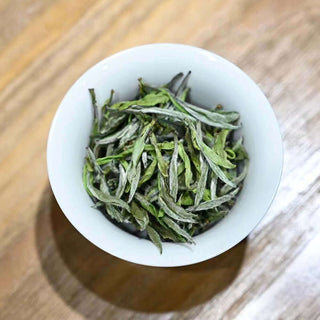
Unopened buds only, harvested in a narrow window in early spring before any leaves unfurl. The densely silvered surface comes from thousands of fine trichomes — the same ones that concentrate the tea's sweetness and give the infusion its signature softness. Delicate, clear, refined. Best for attentive drinking and gifting.
Browse Silver Needle →One bud with one or two young leaves — picked just after Silver Needle season ends. Fuller body than Silver Needle, more expressive flavor: floral, sweet soy-milk notes when young; dried apricot and honey warmth as it ages. The most balanced grade, and the natural entry point for newcomers to Fuding white tea.
Browse White Peony →Mature leaves and stems from late spring or autumn harvests. Bolder, more herbaceous when young — and richer in the polysaccharides and natural sugars that transform, over years, into dried date sweetness, honeyed warmth, and eventual medicinal depth (药香). The grade most commonly pressed into cakes for long-term storage.
Browse Shou Mei →Grade Comparison at a Glance
| Grade | Plucking Standard | Young Flavor | Aged Flavor | Water Temp | Best For |
|---|---|---|---|---|---|
| Silver Needle | Unopened buds only | Delicate, sweet, melon, fresh hay, cooling finish | Honeyed, deepened floral, soft complexity | 85–88 °C | Special occasions, gifting, focused tasting |
| Bai Mu Dan | Bud + 1–2 young leaves | Floral, sweet soy-milk, fuller body | Dried apricot, honey, herbal warmth | 88–92 °C | Daily drinking, newcomers, versatile use |
| Gong Mei (not listed separately) | Bud + more mature leaves | Fruity-sweet, bold, hay-like | Date sweetness, rich amber cup | 90–95 °C | Daily drinking, transitional grade |
| Shou Mei | Mature leaves + stems | Herbaceous, earthy-sweet, robust body | Dried dates, 药香 depth, woody warmth | 95–100 °C | Aging, collecting, robust daily use |
Spring Harvest vs. Autumn Harvest
Both seasons appear across this collection, and the difference is real.
Spring Harvest (March – May)
- First flush after winter dormancy
- Buds are denser, richer in amino acids
- Brighter, sweeter, more distinctly floral
- Standard choice for Silver Needle and premium Bai Mu Dan
- More expressive when young; rewarding to drink immediately
Autumn Harvest (August – October)
- Longer growing season, slower development
- Rounder, warmer, more mellow profile
- Less intensely floral, more naturally sweet
- Well-suited for Shou Mei cakes and long-term aging
- Often preferred by experienced drinkers for daily use
Each product listing in this collection specifies the harvest season. For Silver Needle, spring is almost always the right choice. For Shou Mei pressed into cakes for aging, autumn harvests have a long tradition and a structural advantage.
How to Choose
Further Reading
The full map — Taimu Mountain terroir, the cultivar story, national grade standards, flavor profiles across harvests and years, and how to approach brewing each style.
Buying GuideA purpose-driven framework: beginner, daily drinker, collector, gift-giver. Four sensory pillars for judging quality. What marketing language to ignore and what to actually look for.
Grade GuideSilver Needle, White Peony, Gong Mei, Shou Mei — how plucking standard defines each grade and what that means for taste, body, and long-term aging potential.
Grade ComparisonA direct comparison of the two most common Fuding white tea grades — flavor, body, oxidation, caffeine, and which suits different drinking habits and storage goals.
Deep DiveOrigins of the "Longevity Eyebrow" name, how the flavor transforms across the aging arc from fresh to 10+ years, and practical brewing parameters for cakes and loose leaf.
StorageThe five storage enemies, right containers for each goal, why the fridge usually isn't the answer, and the specific conditions that allow Shou Mei to age cleanly at home.