Q1: Why is this tea called "Courtyard-Grade" (Gong Ting 宫廷), and why does that justify the premium price?
The term "Courtyard-Grade" carries centuries of Chinese imperial heritage. Historically, only the finest leaves selected for the imperial court earned this designation—a standard so exacting that fewer than five percent of a tea garden's annual yield qualified. In modern usage, Courtyard-Grade refers specifically to leaves meeting this historical threshold: single buds paired with the first true leaf (一芽一叶), harvested at the precise moment of peak nutrient density (typically before the Qingming festival), and processed with meticulous attention to preserve their inherent quality.
This designation isn't marketing hyperbole; it's a measurable botanical and organoleptic standard. Leaves at this grade possess higher concentrations of amino acids (particularly L-theanine, which contributes to umami sweetness and chaqi), polyphenols (which age more gracefully), and natural sugars. When fermented via Wo Dui (渥堆), these premium leaves develop superior aromatic complexity, smoother mouthfeel, and greater longevity across multiple infusions compared to lower-grade leaves. The price premium reflects the cost of selective harvesting (labor-intensive), the yield loss (85% of material doesn't qualify), and the provable sensory and aging superiority. A 357g Courtyard-Grade cake from an eight-year verified dry-storage condition is not a commodity product—it's a documented expression of botanical excellence and stewardship.
Q2: What does "dry storage" mean, and how does it differ from other storage methods? Why does Spring Tea specifically emphasize this?
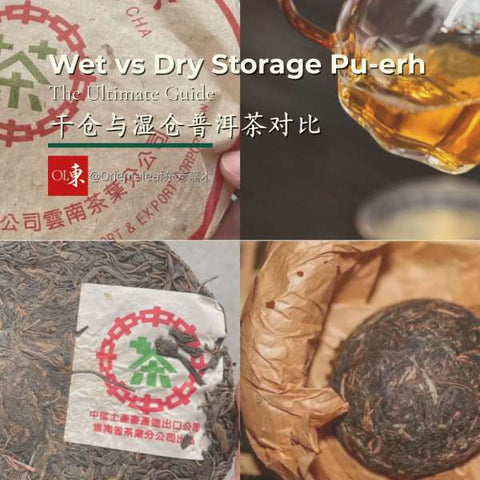
Dry storage (Gan Can 干仓 Gān Cāng) maintains Pu-erh tea in an environment of controlled, low humidity (typically 60–65% relative humidity), stable temperature, darkness, and odor isolation. This contrasts sharply with two common alternatives: wet storage (Shi Can 湿仓 Shī Cāng), which accelerates aging through high humidity and heat, and natural climate storage, which exposes tea to seasonal humidity fluctuations and environmental contamination.
Dry storage is the "purist" approach. It allows Pu-erh to age at its natural pace—a slower but more graceful transformation where fermented compounds slowly oxidize and repolymerize, developing complexity without forcing artificial flavors or introducing mold-derived off-notes. Xi'an, Shaanxi's capital, is legendary for dry storage because its plateau climate (naturally low humidity, stable temperatures year-round) creates ideal conditions with minimal active management.
Spring Tea's emphasis on dry storage isn't just marketing—it's a provenance guarantee. This 2018 cake has never experienced the heavy humidity and accelerated (sometimes excessive) microbial activity of wet storage. The result: zero mustiness, zero mold residue, zero off-flavors. The tea's authentic character—clean aromatics, pure sweetness, refined chaqi—has been preserved intact. For consumers comparing Ripe Pu-erh options, dry storage is the difference between purchasing a predictable, timeless tea and potentially acquiring one with hidden storage defects that will frustrate you upon opening.
Q3: I'm new to aged Ripe Pu-erh. Will this tea be enjoyable now, or should I wait longer? What's the optimal drinking window?
At eight years old, this 2018 Courtyard-Grade Ripe Pu-erh has entered its genuine drinking window—what connoisseurs call "early-to-mid maturity." After the initial Wo Dui fermentation (45–60 days), Ripe Pu-erh typically spends 2–3 years shedding its "fermentation taste"—that raw, yeasty edge that can dominate young Ripe Pu-erh. By year 5–6, most quality Ripe Pu-erh becomes genuinely approachable and rewarding. At 8 years, especially under dry storage, this tea has crossed into premium territory: fermentation character has fully mellowed, aromatic complexity has blossomed, and mouthfeel has achieved that silken, oily texture that distinguishes aged expressions.
You can absolutely enjoy this tea immediately—it will deliver immediate pleasure and satisfaction. However, it's also investment-grade: with continued proper dry storage, expect another 10–15 years of graceful evolution. The aromatics will deepen further; subtle new layers may emerge; the chaqi may intensify slightly. Neither approach is "wrong." Drink it now if you value present enjoyment; lay it down if you're interested in the long-term appreciation and the meditative act of opening a 15-year-old cake years from now. This flexibility—approachable now, yet capable of graceful aging—is precisely why Courtyard-Grade Ripe Pu-erh from verified dry storage commands respect among serious collectors.
Q4: What's the sensory difference between this imperial-grade fermented tea and a standard commercial Ripe Pu-erh? What will I actually taste?
Most commercial Ripe Pu-erh uses lower-grade leaves (buds and fragments mixed with mature leaves, sometimes even dust). These leaves ferment adequately but lack the inherent sweetness and mineral complexity of premium material. The result is often a one-dimensional cup: a bit of earth, a bit of sweetness, minimal layering, and a thin mouthfeel that tastes vaguely like "aged tea" without distinctive personality.
This 2018 Courtyard-Grade expression tastes fundamentally different. The first infusion hits your palate with immediate caramel and dark chocolate sweetness—not subtle, but clean and integrated. By infusion 3–5, you'll detect deeper woody notes (sandalwood, aged cedar), a creeping vanilla-honey complexity, and an oily, almost creamy texture that commercial-grade Ripe Pu-erh simply cannot achieve. The hui gan (return of sweetness) will be pronounced and persistent—a secondary wave of sweetness that blooms 3–5 minutes after swallowing, a sensation absent in lower-grade teas. Across 10+ infusions, this cake continues to reward you; the aromatics evolve and layer; the tea doesn't collapse into flatness. The chaqi (body sensation) is noticeably stronger—many drinkers report gentle internal warmth and mental clarity lasting hours post-session. In short: a commercial-grade Ripe Pu-erh tastes "fine." This Courtyard-Grade cake tastes like a genuine beverage with depth, character, and staying power.