





The collection, in depth
Ratgeber für reifen Pu-Erh-Tee: Trockenlagerung, Produktlinien & Zubereitung
Compare ripe pu-erh by flavor, format, production and storage history. Explore everyday selections, stored examples and producer releases, with practical starting points for brewing and keeping the tea.
Read the full guide Close the guide
Natural Dry Storage in Xi’an
Natural Dry Storage in Xi’an
We store our teas in Xi’an under naturally occurring ambient humidity. We do not artificially control humidity. Conditions follow the seasons rather than a fixed humidity target; we keep the tea protected from moisture, direct sunlight and strong odors.
We select these teas for a clean, enjoyable cup. That preference should not be confused with a guarantee that any storage location or climate makes spoilage impossible. Damp, fishy or sour notes can relate to fermentation, material, handling or storage; a city name cannot diagnose the cause.
Dry and more humid storage can lead to different styles. Our choice is natural dry storage, with no artificial humidity control. For a particular tea, use its own production and storage information rather than treating all previous years as time in one warehouse.
Three Product Lines, One Standard
Every ripe pu-erh we sell goes through the same Xi'an dry storage and the same quality screening. What differs is the starting leaf, the aging time, and the intended use. Here are our three product lines and how to choose between them.
Everyday Shou — Teas You'll Actually Finish
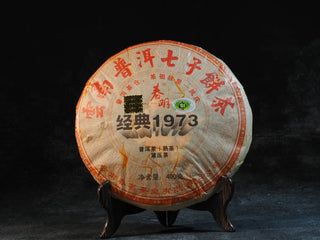
Our entry line, designed for the daily drinker who wants good ripe pu-erh without overthinking it. These are honest, fully fermented teas from established Menghai and Lincang gardens — large 400g cakes for the thermos, loose leaf for the teapot, mini bricks for single cups, and tuo tea for convenience. You'll also find flavored options here: sticky rice scent (Nuo Mi Xiang), rose-scented Yiwu, and other aromatic styles as currently listed. The flavor profile is straightforward — smooth, earthy, clean sweetness, generally low bitterness when brewed to taste. These teas are forgiving in brewing: large pot, long steep, no precision required. If you drink ripe pu-erh every day or are trying it for the first time, this is where to start.
→ Explore the Everyday Shou collection
Dry-Stored Aged Shou — Aged in the Northwest
This is where dry storage becomes the story. These teas have spent years in our Xi'an facility, and you can taste the difference: the fermentation notes have faded, the sweetness has deepened, and the aromatic layers have opened up in ways that fresh-fermented tea simply can't match. The line includes Gold Bud grade (Misty Gold Bud from Menghai first-spring tips), Gongting grade (2017 Lincang imperial buds), ancient tree material (Bulang Mountain and Fengshan gushu), and naturally curled Lao Cha Tou fermentation nuggets. These teas reward gongfu brewing — small pot, multiple short steeps — where you can track how the flavor shifts across 10+ infusions. Dry storage is especially important at this tier: the delicate bud and ancient tree aromatics are the first thing wet storage destroys. If you want to taste what patient, natural aging does to ripe pu-erh, this is the line.
→ Explore the Dry-Stored Aged Shou collection
Collector's Shou — Selected for the Serious Drinker
With suitable storage, flavor may continue to develop. Try the tea periodically and keep it because you enjoy its direction, rather than assuming that more years will always improve it.
→ Explore the Collector's Shou collection
All three lines are selected for drinking quality. Leaf source, fermentation, vintage and format vary; not every tea is single-origin or unflavored. Read those details on the product you choose.
Where the Leaf Comes From — Yunnan Terroir
Where the Leaf Comes From — Yunnan Terroir
Ripe pu-erh flavor starts with where the tea grows. Our collection draws from four of Yunnan's most respected tea regions:
Menghai (勐海) — The birthplace of ripe pu-erh. The wo dui fermentation technique was developed here in the 1970s, and Menghai's tea factories still set the standard. Menghai leaf produces a bold, thick-bodied ripe pu-erh with classic earthy depth and a lasting sweet aftertaste. If you want the "standard" ripe pu-erh flavor profile, Menghai is it.
Lincang (临沧) — High-altitude tea gardens with naturally sweet, smooth leaf. Lincang ripe pu-erh tends to be softer and more floral than Menghai's, with a cleaner mouthfeel. Our Gongting-grade cakes and ancient tree bricks often come from Lincang's old gardens.
Bulang Mountain (布朗山) — One of Yunnan's most famous ancient tea territories, home to some of the oldest cultivated tea trees in the world. Bulang leaf is powerful and complex, with a bitterness that fermentation transforms into rich, layered sweetness.
Fengshan (凤山) — Fengqing county's tribute tea heritage. Fengshan teas are elegant and refined, with a natural fragrance that survives fermentation beautifully. Our Qilin Hao Gushu cake honors this region's history as a tea pioneer.
Brewing Ripe Pu-erh
Ripe pu-erh is one of the most forgiving teas to brew — but a few basics make a big difference.
Gongfu brewing (recommended for Dry-Stored Aged and Collector's lines):
- Water temperature: 100°C (boiling — ripe pu-erh needs heat)
- Tea-to-water ratio: 5g tea per 80–100ml water
- Rinse: 2 times, 5 seconds each. This is essential for ripe pu-erh — it clears fermentation dust and "wakes up" the compressed leaf. Skip this and your first cup will taste flat.
- First 3 steeps: 10–15 seconds
- Steeps 4–8: 15–25 seconds
- Steeps 9+: 30–60 seconds, or simmer briefly
- A good cake yields 8–15 infusions; Gongting grade can go beyond 15
Western brewing (for Everyday Shou daily drinking):
- 5g tea in a 500ml pot, 100°C water
- Optional rinse: a brief pour, about 5 seconds, then discard. Keep this separate from the first full drinking infusion.
- Second brew onwards: 3–5 minutes per steep
- Yields 3–4 large cups
Loose leaf often opens quickly, while tightly knotted Lao Cha Tou can release flavor more slowly. Start with short steeps and adjust to the actual compression and cup strength.
New to pu-erh brewing? Our complete beginner's guide walks through the full process with photos.
→ Read: Pu-erh Tea for Beginners — The Complete Guide to Choosing, Brewing & Loving Your First Cup
Explore Ripe Pu-erh in More Detail
Explore Ripe Pu-erh in More Detail
Raw versus ripe, reading a product and preparing a first cup.
BrewingBrewing Pu-erhRatios, water and timing to adjust to the leaf in front of you.
StorageUnderstanding Pu-erh StorageBackground on storage conditions and the limits of broad claims.
AromaFermentation and Storage NotesA starting point for describing aromas without using one smell to diagnose every tea.
To compare the broader family, browse raw pu-erh.