





المجموعة بالتفصيل
White tea: origins, styles & brewing
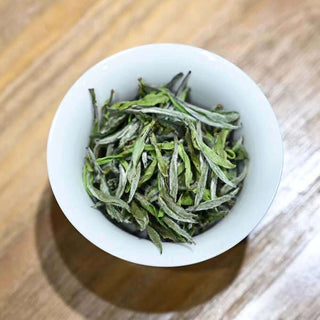
Explore white tea by type, origin and the actual leaf in the cup. Silver Needle, White Peony, Gongmei and Shou Mei are product types with their own grades; withering and drying allow some oxidation without the deliberate full oxidation of black tea.
اقرأ الدليل الكامل أغلق الدليل
Where less is more, and a single bud — dried by sun and time — becomes one of China's most elegant teas.
White tea (白茶) is China's oldest and least processed tea: a bud or bud-and-leaf that is withered and dried, with nothing added and nothing taken away. This guide covers everything worth knowing about the white teas in this collection — how they are made, the main types, the two great origins, fresh versus aged, and how to brew and choose.
"The more you drink it, the more you notice: white tea does so little — and gives so much."
Browse the White Tea CollectionWhat Is White Tea?
What Is White Tea?
White tea is primarily made by withering and drying, without the fixation used for green tea or the rolling used to promote oxidation in black tea. Oxidation still occurs during withering; it is not deliberately driven to the extensive oxidation associated with black tea. Compressed white tea may also be softened with steam before pressing and dried again.
- 1PluckingBy hand each spring — a single bud for Silver Needle, bud-and-leaf for White Peony, or mature leaves for Shou Mei.
- 2Sun witheringLeaves are spread thin and left to wither for hours or days. This slow moisture loss is where the flavour is really born.
- 3Gentle dryingA low-temperature bake or continued air-drying stops the process and locks in the downy aroma.
- 4AgingStored dry and undisturbed, some white teas transform over time — the story we turn to below.
"White tea is made by doing almost nothing — and that is precisely the point."
For the full origin story, craft, and brewing notes, read The Ultimate Guide to Fuding White Tea.
The Main White Tea Types
Silver Needle, White Peony, Gongmei and Shou Mei are white tea product types, not grades one through four. Each type can have its own quality grades. White Peony is made from a bud with one or two leaves; cultivar and raw-material requirements also matter, particularly when distinguishing Gongmei from Shou Mei.

Bud Only · Silver Needle
Silver Needle
Single, fully down-covered buds. A bud-only style, often described in floral or honeyed directions; it has its own product grades. Best drunk fresh.
Explore this tea
Bud + 1–2 Leaves · White Peony
White Peony
Bud and adjacent leaves picked together. A balanced, everyday white tea with floral and gently sweet notes that also rewards light aging.
Explore this tea
Mature Leaf · Shou Mei
Shou Mei
Fuller, older leaves. Bolder and more forgiving — and a mature-leaf style that some drinkers enjoy with further development. Gongmei is its lighter, younger sibling.
Explore this teaWant to see how they compare side by side? Start with The Complete Guide to the Types of Fuding White Tea, then Bai Mu Dan vs Bai Hao Yin Zhen.
Two Origins, Two Characters
The main white tea selections come from Fuding in Fujian and from Yunnan. The range also includes white-tea-based products with further fermentation, which should be read according to their own process rather than treated as ordinary withered white tea.
Fujian · Fuding
The Birthplace
The historical home of white tea, centred on the Fuding Da Bai tea plant. Small leaves, sunny withering, a clear and elegant style with pronounced downy aroma and honeyed sweetness.
Explore Fuding white teaYunnan · Jinggu, Fengqing
The Bold Sibling
Large-leaf and ancient-tree material, including the classic yue guang bai (Moonlight White). Richer, fruitier, more full-bodied in the mouth — and a strong candidate for aging.
Explore Yunnan white teaCompare them directly: How Does Fuding Silver Needle Differ from Yunnan Silver Needle? and Understanding Yunnan White Tea.
Fresh vs Aged
White tea has one of the most celebrated aging traditions in Chinese tea. The folk saying runs "one year a tea, three years a medicine, seven years a treasure" — and while we let the flavour speak for itself, the guiding idea is simple: the further a leaf moves from fresh, the deeper and smoother it becomes.
Fresh
Suit Silver Needle & White Peony
Bright, floral, and honeyed. Best enjoyed within the first year or two, when the downy aroma and clean sweetness are at their peak.
Aged
Suit Shou Mei & Mature Leaf
Over time the cup turns mellow, woody, and date-like. Stored dry and cool — a practice we follow in our own warehouses — these reward patience.
Dig deeper into how time transforms the leaf: From Simple Leaf to Prized Treasure and Freshness vs Aging: White Tea Storage.
We store our teas in Xi’an under naturally occurring ambient humidity. We do not artificially control humidity. Conditions follow the seasons rather than a fixed humidity target; the tea is protected from moisture, direct sunlight and strong odors.
Brewing White Tea
Brewing White Tea
White tea is forgiving, but a little attention goes a long way. The key variables are leaf amount, water temperature and time.
- Use temperature as a starting point for flavor, rather than a test of authenticity. Try 85–95°C for a delicate bud-heavy tea; a tightly pressed or aged tea may benefit from hotter water and shorter steeps. Adjust the leaf amount and time together. Hot water does not automatically spoil Silver Needle.
- White Peony — 90–95°C for a balanced, aromatic cup.
- Shou Mei — 100°C works well and the leaf can even be boiled, especially when aged.
- Gongfu style — roughly 5 g per 100 ml, 20–30 seconds for the first infusion, then increasing with each round.
In cooler months, an aged Shou Mei boiled on the stove makes a warming, mellow brew that suits long sessions by the fire — a favourite autumn and winter ritual. For the full step-by-step, see How to Brew White Tea Perfectly Every Time and the Gongfu Silver Needle guide. For a winter classic, read White Tea and Tangerine Peel.
Caffeine & Health
A common question about white tea. The honest answer: white tea does contain caffeine — how much depends on bud density, leaf age, and how you brew it. Silver Needle is almost entirely buds, which tend to carry more caffeine; mature-leaf Shou Mei generally less. Using cooler water and shorter infusions extracts it more slowly, so you can shape the cup to your comfort.
Many people enjoy white tea for its aroma and range of flavor. Research on tea compounds is not a product-specific health guarantee; the practical reasons to choose here are taste, format and the history of the tea.
For the details, read The Truth About White Tea Caffeine and White Tea Benefits.
How to Choose
Start from what you already drink. Prefer something light and elegant? Begin with Silver Needle or White Peony. Enjoy a fuller, longer-lasting tea and like the idea of aging it? Shou Mei is your natural starting point. New to white tea entirely? Both discovery boxes are built to let you compare grades and origins in one sitting.
 Fuding Discovery Box10 varieties across the gradesExplore this tea
 Yunnan Discovery BoxSilver Needle, White Peony & Shou MeiExplore this tea
 Jinggu Silver Needle CakeYunnan buds, a richer read on the classicExplore this tea
 Fuding White Peony BrickSpring 2023, whole-leaf compressedExplore this tea
2017 Shou Mei BrickAn aged, mellow cupExplore this tea
 Baicha FuzhuanWhite tea fu brick with golden flowersExplore this tea
For a deeper decision path, read How to Choose Fuding White Tea, or see how white tea compares with other teas: White Tea vs Green Tea.
Read Further
Read Further
The Yunnan branch and a comparison with Fujian selections.
ChoosingGetting to Know White PeonyA closer look at the bud-and-leaf style.
StorageKeeping White TeaPackaging and moisture protection for the tea you drink now or keep longer.
BrewingBrewing Silver NeedleA practical starting point for adjusting a bud-led tea.