


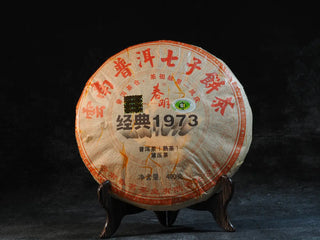


Guide du thé Pu-erh mûr : Stockage à sec, Gammes de produits et Infusion
Entreposage à sec à Xi'an — Pourquoi notre Pu-erh affiné a un goût différent
La plupart des pu-erh mûrs sur le marché sont stockés en milieu humide – conservés dans des entrepôts à forte humidité au Guangdong ou en Asie du Sud-Est pour accélérer le vieillissement. Le résultat est un thé qui sent le moisi, le poisson ou l'humidité. Ce n'est pas le goût que le pu-erh mûr est censé avoir.
Nous adoptons une approche différente. Après la fermentation et le pressage au Yunnan, chaque pu-erh mûr de cette collection est transféré dans notre installation de stockage à Xi'an, dans le nord-ouest de la Chine. Le climat de Xi'an est fondamentalement différent de celui du Guangdong : l'humidité relative se situe entre 50 et 65 % la majeure partie de l'année (contre 75 et 90 % à Guangzhou), les températures restent modérées avec quatre saisons distinctes, et la ventilation naturelle est constante. C'est ce que les professionnels du thé appellent le stockage à sec (干仓).
Ce que le stockage à sec fait au pu-erh mûr :
- Élimine l'odeur de wo dui (渥堆). La fermentation en tas produit une "odeur de fermentation" caractéristique – terreuse, parfois à la limite du poisson. En stockage à sec, celle-ci se dissipe progressivement au fil des mois et des années plutôt que d'être emprisonnée par l'humidité.
- Préserve la complexité aromatique. Le stockage humide accélère l'activité microbienne mais aplatit le profil de saveur. Le stockage à sec est plus lent, mais le thé conserve son caractère stratifié – caramel, jujube séché, cacao, camphre – au lieu de s'effondrer en une seule note boueuse.
- Développe la douceur naturellement. Sans excès d'humidité forçant le processus, les sucres naturels du thé se développent à leur propre rythme. Le résultat est une tasse plus propre et plus douce qui n'a pas besoin d'années de vieillissement à domicile pour avoir bon goût.
C'est pourquoi notre pu-erh mûr fraîchement fermenté est déjà propre et buvable – le stockage à sec a fait le travail que la plupart des thés nécessitent des années de vieillissement à domicile pour accomplir. C'est aussi pourquoi nos millésimes plus anciens ont un goût remarquablement vivant pour leur âge : le stockage à sec préserve plutôt qu'il n'érode.
Vous voulez la science derrière tout ça ? Notre article de recherche sur le stockage décompose les études évaluées par des pairs sur la teneur en humidité, la dégradation des composés aromatiques, et pourquoi le pu-erh stocké à sec surpasse constamment le thé stocké en humide lors de dégustations à l'aveugle.
→ Lire : La science du stockage du Pu-erh : arôme, humidité et ce que la recherche révèle
→ Lire : Pourquoi votre Pu-erh sent le poisson — Dui Wei vs Cang Wei expliqué
Trois gammes de produits, une seule norme
Chaque pu-erh mûr que nous vendons passe par le même stockage à sec à Xi'an et le même contrôle qualité. Ce qui diffère, c'est la feuille de départ, le temps de vieillissement et l'utilisation prévue. Voici nos trois gammes de produits et comment choisir entre elles.
Shou Quotidien — Des thés que vous finirez réellement
Notre gamme d'entrée de gamme, conçue pour le buveur quotidien qui veut un bon pu-erh mûr sans trop y penser. Ce sont des thés honnêtes, entièrement fermentés, provenant de jardins établis de Menghai et Lincang — de grandes galettes de 400g pour le thermos, des feuilles en vrac pour la théière, des mini-briques pour des tasses individuelles et du thé Tuo pour plus de commodité. Vous y trouverez également des options aromatisées : arôme de riz gluant (Nuo Mi Xiang), Yiwu parfumé à la rose et Xiao Qing Gan (pu-erh mûr farci dans une mandarine verte). Le profil de saveur est simple : doux, terreux, une douceur propre, sans amertume. Ces thés sont indulgents lors de l'infusion : grande théière, longue infusion, aucune précision requise. Si vous buvez du pu-erh mûr tous les jours ou si vous l'essayez pour la première fois, c'est ici qu'il faut commencer.
→ Explorez la collection Shou Quotidien
Shou Vieilli Stocké à Sec — Vieilli dans le Nord-Ouest
C'est là que le stockage à sec prend tout son sens. Ces thés ont passé des années dans notre installation de Xi'an, et vous pouvez en goûter la différence : les notes de fermentation se sont estompées, la douceur s'est approfondie et les couches aromatiques se sont ouvertes d'une manière que le thé fraîchement fermenté ne peut tout simplement pas égaler. La gamme comprend le grade Gold Bud (Misty Gold Bud provenant des premières pousses de printemps de Menghai), le grade Gongting (bourgeons impériaux de Lincang 2017), du matériel d'arbres anciens (Bulang Mountain et Fengshan gushu) et des pépites de fermentation naturellement bouclées de Lao Cha Tou. Ces thés récompensent l'infusion gongfu — petite théière, multiples infusions courtes — où vous pouvez suivre comment la saveur évolue sur plus de 10 infusions. Le stockage à sec est particulièrement important à ce niveau : les délicats arômes de bourgeons et d'arbres anciens sont la première chose que le stockage humide détruit. Si vous voulez goûter ce que le vieillissement patient et naturel fait au pu-erh mûr, c'est cette gamme.
→ Explorez la collection Shou Vieilli Stocké à Sec
Shou de Collectionneur — Sélectionné pour le Buveur Sérieux
Notre gamme la plus élevée, basée sur la rareté : matière d'arbres anciens de 300 ans, feuille impériale de qualité cour, une brique vintage Lincang 2006, et Da Hong Gan vieilli 10 ans en stockage à sec (pu-erh mûr dans de l'écorce d'agrumes vieillie). Ce sont des thés avec une provenance et un âge — le genre que vous infusez délibérément, dans un ensemble gongfu, en faisant attention à la température de l'eau et au timing. Une seule galette du Chunming 300 ans Ancien Arbre 2019 peut donner plus de 15 infusions, avec la saveur évoluant de épaisse et sirupeuse à délicate et douce au cours de la séance. La brique Lincang 2006 montre ce que deux décennies de stockage à sec peuvent accomplir : une richesse d'huile de noix que seul le temps produit. Ce sont les thés pour les occasions spéciales, les cadeaux et la collection à long terme — et ce sont ceux qui continueront à s'améliorer si vous les vieillissez davantage chez vous.
→ Explorez la collection Shou de Collectionneur
Ce qui est identique pour les trois gammes : chaque thé est un thé de grande feuille du Yunnan d'origine unique, entièrement fermenté, stocké à sec à Xi'an, et vérifié pour un goût propre. La différence est le grade des feuilles, le temps de vieillissement et la profondeur de la complexité — pas la norme de qualité.
D'où vient la feuille de thé — Terroir du Yunnan
La saveur du pu-erh fermenté dépend de l'endroit où le thé est cultivé. Notre collection provient de quatre des régions productrices de thé les plus respectées du Yunnan :
Menghai (勐海) — Le lieu de naissance du pu-erh fermenté. La technique de fermentation en tas (wo dui) a été développée ici dans les années 1970, et les usines de thé de Menghai établissent toujours la norme. Les feuilles de Menghai produisent un pu-erh fermenté audacieux, corsé, avec une profondeur terreuse classique et un arrière-goût doux persistant. Si vous recherchez le profil de saveur "standard" du pu-erh fermenté, Menghai est la bonne option.
Lincang (临沧) — Jardins de thé d'altitude avec des feuilles naturellement douces et lisses. Le pu-erh fermenté de Lincang a tendance à être plus doux et plus floral que celui de Menghai, avec une sensation en bouche plus nette. Nos galettes de grade Gongting et nos briques d'arbres anciens proviennent souvent des vieux jardins de Lincang.
Montagne Bulang (布朗山) — L'un des territoires de thé ancien les plus célèbres du Yunnan, abritant certains des plus vieux théiers cultivés au monde. Les feuilles de Bulang sont puissantes et complexes, avec une amertume que la fermentation transforme en une douceur riche et stratifiée.
Fengshan (凤山) — L'héritage du thé hommage du comté de Fengqing. Les thés Fengshan sont élégants et raffinés, avec un parfum naturel qui survit magnifiquement à la fermentation. Notre galette Qilin Hao Gushu honore l'histoire de cette région en tant que pionnière du thé.
Préparer le Pu-erh mûr
Le pu-erh fermenté est l'un des thés les plus faciles à infuser – mais quelques bases peuvent faire une grande différence.
Infusion Gongfu (recommandée pour les gammes Vieilli à Sec et Collectionneur) :
- Température de l'eau : 100°C (à ébullition — le pu-erh fermenté a besoin de chaleur)
- Rapport thé/eau : 5g de thé pour 80-100ml d'eau
- Rinçage : 2 fois, 5 secondes chacune. C'est essentiel pour le pu-erh fermenté — cela élimine la poussière de fermentation et "réveille" la feuille compressée. Si vous sautez cette étape, votre première tasse aura un goût fade.
- Les 3 premières infusions : 10-15 secondes
- Infusions 4-8 : 15-25 secondes
- Infusions 9+ : 30-60 secondes, ou laisser mijoter brièvement
- Une bonne galette donne 8-15 infusions ; le grade Gongting peut dépasser 15
Infusion occidentale (pour le Shou de tous les jours) :
- 5g de thé dans une théière de 500ml, eau à 100°C
- Première infusion : 2 minutes, à jeter (rinçage)
- À partir de la deuxième infusion : 3-5 minutes par infusion
- Donne 3-4 grandes tasses
Un conseil : les feuilles en vrac et le Lao Cha Tou (pépites de fermentation naturellement roulées) libèrent leur saveur plus rapidement que les galettes compressées — commencez par des infusions plus courtes et ajustez. Les bourgeons de grade Gongting sont délicats malgré la fermentation — gardez les infusions courtes pour préserver la douceur superposée plutôt que d'extraire tout d'un coup.
Nouveau dans l'infusion du pu-erh ? Notre guide complet du débutant explique tout le processus avec des photos.
Foire Aux Questions Sur le Thé Pu-erh Mûr/Shou
Approfondissez vos connaissances sur le Pu-erh
Vous voulez en savoir plus ? Ces articles décortiquent la science, l'histoire et l'art de chaque thé de cette collection :
-
La science du stockage du Pu-erh : arôme, humidité et ce que la recherche révèle — La recherche évaluée par des pairs qui explique pourquoi le stockage à sec produit un pu-erh plus propre et plus complexe que le stockage humide. Une lecture essentielle si vous voulez comprendre ce que signifie réellement "stocké à sec".
🔗 https://orientaleaf.com/blogs/tea-101/pu-erh-tea-storage-science -
Pourquoi votre Pu-erh sent le poisson — Dui Wei vs Cang Wei expliqués — Cette odeur de poisson n'est pas normale. Ce guide explique la différence entre l'odeur de fermentation (dui wei), l'odeur de stockage (cang wei) et ce à quoi un pu-erh mûr et propre devrait réellement ressembler.
🔗 https://orientaleaf.com/blogs/tea-101/why-puerh-smells-fishy-dui-wei-vs-cang-wei-storage-guide -
Le thé Pu-erh pour les débutants : Le guide complet — Nouveau au pu-erh ? Ce guide couvre tout, du choix de votre première galette à la préparation de votre première tasse, sans jargon.
🔗 https://orientaleaf.com/blogs/tea-101/pu-erh-tea-for-beginners -
Le Puerh est-il un goût acquis ? Comment distinguer le bon du mauvais — Le Pu-erh a une réputation injuste d'être terreux ou amer. Voici comment faire la différence entre un thé imparfait et un excellent thé.
🔗 https://orientaleaf.com/blogs/tea-101/is-puerh-an-acquired-taste-bad-puerh-taste-explained -
Puerh Mûr Da Hong Gan Vieilli pour Estomac Sensible — La science derrière pourquoi le pu-erh mûr aux agrumes vieillis est l'un des meilleurs thés pour la digestion.
🔗 https://orientaleaf.com/blogs/tea-101/da-hong-gan-puerh-sensitive-stomach -
Caféine du thé Pu-erh : Contrôlez votre énergie — La quantité exacte de caféine dans votre tasse et comment l'ajuster.
🔗 https://orientaleaf.com/blogs/tea-101/pu-erh-tea-caffeine -
Le thé Pu-erh est-il bon pour l'été ? — Pourquoi le heicha chaud et fermenté est une boisson estivale plus intelligente que le thé glacé, selon la MTC et la science moderne.
🔗 https://orientaleaf.com/blogs/tea-101/is-puerh-tea-good-for-summer-dark-tea-heicha-guide -
Fraude au thé Gushu : Pourquoi le vrai thé n'a pas besoin de script — Comment repérer les faux pu-erh d'arbres anciens — et pourquoi l'authentification est importante lorsque vous payez pour une qualité supérieure.
🔗 https://orientaleaf.com/blogs/tea-101/gushu-tea-fraud-livestream-scam-sensory-evaluation-integrity
Explorez également notre collection de pu-erh cru (sheng) pour voir comment la même feuille du Yunnan a un goût sans fermentation →