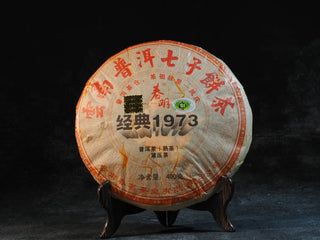
“Fermented tea is not a style of processing — it is a living one. Real microbes, not leaf enzymes, redraw the chemistry of the cup.”
Key Takeaways
- Real fermentation needs outside microbes — post-fermented tea starts only after kill-green heat destroys the leaf's own enzymes, letting molds, yeasts and bacteria move in.
- Oxidation is not fermentation — the English “fermented black tea” label is a translation slip — Chinese fājìao covers oxidation, but the chemistry is entirely different.
- Ripe pu-erh is the fastest route — the wo dui pile method, standardized at Kunming Tea Factory in 1973, compresses years of aging into roughly 50 days.
- Each region has its own dominant microbe — Aspergillus luchuensis drives pu-erh, Eurotium cristatum builds golden flowers in Fu brick, Aspergillus spp. shapes Liu Bao.
- Kombucha ferments liquid, not leaves — it uses brewed sweet tea as microbe food — a different process from anything done to a tea leaf.
- Theabrownins do the real work — microbial enzymes convert bitter catechins into dark pigments, which is why fermented tea tastes smooth rather than sharp.
- Storage decides the final cup — aim for roughly 60% RH and 20–28°C; anything above 75% RH invites the mold that no amount of aging can fix.

Fermented tea comes from leaves that undergo real microbial changes after basic processing. Newcomers often use the broad label fermented tea when exploring these drinks. In traditional Chinese tea studies, experts classify this exact group as post-fermented tea. Knowing this difference helps you explore the wide world of Chinese dark tea. You can read a complete guide to Chinese dark tea to build a solid base for the ideas below.
The Translation Trap: Fermentation vs. Oxidation

Tea drinkers online often buy black tea marked as fermented, but they get confused when it tastes sweet and malty instead of earthy. This confusion started with an old translation mix-up between Chinese and English words. Western markets use black tea to describe fully oxidized leaves. In contrast, the Chinese word for oxidation is fājìao, which translates literally to fermentation. Because of this shared word, shops in the West often label oxidized teas as fermented teas by mistake.
Their chemical reactions are completely different. Oxidation is an internal process driven by plant enzymes. Bruising or rolling the tea leaf breaks its cell walls. This damage lets natural polyphenol oxidase inside the leaf mix with oxygen in the air. The resulting reaction turns bitter catechins into theaflavins and thearubigins, giving black tea its brisk taste and rich color. It requires no outside living organisms. If you want to see how these enzymes shape flavor, check out the facts on black tea fermentation vs oxidation.
| Parameter | Specification | Meaning for Reader |
|---|---|---|
| Pile fermentation introduction | 1973 | Marks the origin of the "wo dui" processing technique developed at Kunming Tea Factory. |
| Accelerated fermentation cycle | 50 days | Defines the total duration required to complete the microbial ripening phase. |
| Dominant Pu-erh mold | Aspergillus luchuensis | Identifies the primary microbe driving fermentation, disproving earlier classifications. |
| Co-occurring Pu-erh fungus | Penicillium chrysogenum | Indicates the presence of secondary fungal colonizers active in the microbial profile. |
| Primary Fuzhuan brick fungus | Eurotium cristatum | Identifies the specific organism responsible for developing characteristic "golden flowers." |
| Dominant Liupao flora | Aspergillus spp. | Signifies the required fungal genus facilitating post-fermentation in basket-aged profiles. |
| Recommended aging humidity | 60% RH | Provides the baseline relative humidity target for domestic storage environments. |
| Kombucha active bacteria | Gluconacetobacter xylinus | Pinpoints the primary bacterial species forming the symbiotic culture in liquid tea ferments. |
| Kombucha alcohol threshold | <0.5% ABV | Establishes the standard legal limit to maintain commercial classification as non-alcoholic. |
| Kombucha global market | US$1.7 billion | Establishes the verified commercial scale of fermented tea beverages reached by 2019. |
| USDA Organic ingredient rule | 95% minimum | Sets the required certified organic composition threshold for clean-label packaged teas. |
True fermentation relies on outside microbes. It starts only after workers apply intense heat during the kill-green step, which shuts down the leaf's own polyphenol oxidase permanently. With internal plant enzymes gone, outside molds, yeasts, and bacteria can move in. These tiny organisms release special enzymes that break down and reshape the leaf's chemical build. This living activity defines post-fermented tea and separates it from regular oxidized tea. See our comparison of dark tea vs black tea for a side-by-side look.
How Does Tea Fermentation Work?

Solid-state tea fermentation needs tight control over moisture, heat, and microbial growth. Workers take raw green leaves, pile them high, and set up an environment where helpful molds and bacteria thrive. The microclimate inside these big mounds decides which strains take over.
Living microbes spread across the leaves and release enzymes like cellulases, proteases, and pectinases. These biological tools weaken the tough leaf fibers. They break long polysaccharides down into simple, dissolved sugars that give the brewed drink its thick, creamy body. Meanwhile, proteins split into free amino acids that boost natural sweetness and rich savory notes.
- The "wo dui" pile-fermentation technique was established at Kunming Tea Factory in 1973 to standardize accelerated dark tea processing.
- Accelerated pile fermentation runs for a target duration of 50 days to complete enzymic leaf restructuring.
- Penicillium chrysogenum acts as a dominant fungal strain driving the enzymatic breakdown of ripened pu-erh tea leaves.
- Eurotium cristatum serves as the dominant fungal organism responsible for colonizing Hunan and Jingyang Fuzhuan brick teas.
- Aspergillus spp. fungi dominate the specialized aging piles during the processing of Guangxi Liupao tea.
- Storing finished pu-erh tea requires maintaining a relative humidity threshold near 60% RH to prevent excessive drying or unwanted spoilage.
- Commercial kombucha fermentation utilizes the bacterium Gluconacetobacter xylinus to metabolize sweetened tea liquors.
- Commercial kombucha brews must maintain an alcohol by volume limit under <0.5% ABV to avoid alcoholic beverage regulatory thresholds.
Polyphenols undergo the biggest change of all. Microbial enzymes digest sharp, bitter catechins and link them into dark pigments called theabrownins. These theabrownins turn the tea liquid an opaque dark red while wiping out bitterness completely. This living transformation also creates unique scent molecules absent in green or black teas, giving every cup its classic aroma of aged wood, soil, and clean forest floor.
What About Kombucha? (Liquid vs. Leaf Fermentation)
Kombucha works very differently from solid leaf fermentation. Instead of fermenting damp leaves, it relies on a liquid mix of brewed sweet tea and a living colony of bacteria and yeast. The main bacterium at work in this liquid brew is Gluconacetobacter xylinus.
The yeast eats added sugar and makes ethanol. Next, the bacteria consume that alcohol and turn it into sharp acetic acid. This reaction leaves you with a fizzy, sour drink. Because of how yeast works, store-bought kombucha keeps a small trace alcohol level under <0.5% by volume. The drink has exploded in popularity, pushing the global kombucha market to US$1.7 billion in 2019. Kombucha uses tea liquid as food for microbes, but nobody ferments the actual tea leaves here.
Different types of tea fermented around the world
China remains the original home of post-fermented tea, but other cultures make their own unique versions. In Japan, workers make Awabancha through an air-free curing step. They boil fresh leaves, press them tightly into barrels to shut out air, and let natural lactic acid bacteria take over. This yields a sour, bright brew unlike any Chinese dark tea.
In Myanmar, people turn fermented tea into a popular food called Lahpet. Workers steam the leaves and pack them tight inside deep pits or thick bamboo tubes. Lactic acid bacteria ferment the wet leaves in these airless spaces. People eat the finished product as a seasoned pickled vegetable instead of drinking it from a cup. These regional styles show how versatile tea leaves can be, even though they rely on souring bacteria rather than the classic molds of China.
Chinese dark teas produced through fermentation
Chinese fermented teas, known as heicha or dark tea, form the most diverse family of microbially aged teas. The taste, scent, and look of each brick or cake depend on the region where it was made and the local microbes in the air.
Ripe Pu-erh (Shou Pu-erh)
Ripe pu-erh is the most famous fermented tea in the world, and every authentic batch comes from Yunnan province. Makers speed up its curing through a method called the wo dui technique, which Kunming Tea Factory invented back in 1973. It was created to mimic the smooth taste of naturally aged raw pu-erh in just weeks.

The wo dui method starts by piling tons of raw pu-erh leaves into large mounds, damping them with water, and sealing them under heavy cloth covers. Trapped heat builds fast as microbes multiply. This rapid process lasts for about 50 days, requiring workers to turn the hot piles regularly to balance temperatures and distribute microbes evenly.
Lab tests show that Aspergillus luchuensis is the primary organism driving this rapid chemical shift. At the same time, Penicillium chrysogenum grows as another major fungal partner. This intense microbial action produces a thick, inky brew that coats your mouth, offering deep aromas of wet earth, petrichor, and old wood. Read our detailed puer tea guide to learn more, or browse real batches in our ripe pu-erh tea collection.
Reading this and thinking about trying ripe pu-erh?
Our Xi'an dry-stored shou pu-erh is picked for clean fermentation and no fishy notes — cakes we drink ourselves, from daily drinkers to aged collector batches.
Browse Ripe Pu-erh Collection →Fu Brick Tea (Fuzhuan)
Fu brick tea comes from Shaanxi province, its historical home and our primary focus. Its most famous feature is a bright yellow fungus cultivated directly inside the dense tea bricks.

Makers place the pressed bricks in rooms with exact heat and moisture controls to encourage Eurotium cristatum, the dominant mold in Fuzhuan tea. This fungus spreads throughout the brick's interior as tiny yellow dots called golden flowers.

The fungus softens harsh notes and creates light, fruity aromatic esters. When brewed, Fu brick tea produces a glowing amber cup with gentle sweetness, a round body, and a sweet, floral-fungal aroma you cannot find in any other tea style. You can learn about how these spores grow in our article covering everything about golden flower fuzhuan brick tea, or check out our authentic fu brick tea selection.
Curious about the golden flowers in Fu brick tea?
We source directly from Jingyang and Hunan producers and independently test every brick for golden flower quality. Award-winning batches, cleanly stored.
Explore Our Fu Brick Collection →Liu Bao Tea
Liu Bao tea comes from Guangxi province. It shares a long history with Chinese workers across Southeast Asia, especially Malaysian tin miners who drank it daily to stay hydrated in blistering heat.
Producers make Liu Bao using a two-step fermentation, finishing the leaves in giant woven bamboo baskets. The air in these storehouses is filled with Aspergillus spp., the primary fungus at work here. This environment and the bamboo containers give the tea its unmistakable betel nut aroma. The tea pours a clear, dark ruby color, feeling cool and soothing in your throat while tasting of aged wood. You can find traditional batches in our premium aged liu bao dark tea collection.
Still deciding between the two dark teas? We compared them head-to-head in Liu Bao tea vs pu-erh.
Health perks of drinking fermented tea
Microbial aging creates new compounds that treat your digestive system far more gently than fresh green teas do. The rich theabrownins created as catechins break down are soothing to your stomach lining. Green tea can irritate an empty stomach because it contains high levels of fresh polyphenols, but fermented tea feels mild and calming.
These fungal compounds also help break down dietary fats in heavy food. That matches how people have consumed these teas for centuries. Under traditional Chinese medicine health benefits, practitioners view fermented teas as warm drinks that cut grease and ease sluggish digestion after rich meals. We break down the real science behind this in our guide on whether puerh tea can improve digestion.
How to choose the best fermented tea
Fermented tea suits your personal taste when its earthy flavors match your palate and you avoid bad processing. If you want a thick brew that tastes like damp woods and rich soil, choose ripe pu-erh. If you like sweet, lighter drinks with soft floral and fungal notes, try Fu brick tea. Drinkers who want a cooling throat feel and dry cedar-like notes should pick Liu Bao.
Scent tells you everything about quality. A clean fermented tea smells like dried autumn leaves, warm antique wood, or old books. Bad tea smells like pond water, rotting fish, or sour mildew. Those bad smells mean someone mismanaged moisture in the pile, and no amount of aging will fix them. When shopping for certified organic products, check the label; the USDA Organic standard requires at least 95% organic ingredients by weight.
If a tea ever smells off, our guide on why pu-erh smells fishy shows you how to tell clean aging from bad storage.
Pu-erh Tea Aging Timeline and Flavor Development
Post-fermented teas change as long as you keep them in rooms with clean air, gentle humidity. Here is how a well-stored tea evolves over time.
| Aging Stage | Flavor Profile | Liquor Color | Astringency Level |
|---|---|---|---|
| 1 to 3 Years | Fresh earthy notes, slight woody sharpness, distinct fermentation aroma | Dark red with slight cloudiness | Noticeable but fading rapidly |
| 5 to 10 Years | Deep wood, camphor, fading fermentation aroma, increasing sweetness | Clear, deep burgundy | Barely detectable |
| 15+ Years | Pure aged wood, medicinal notes, thick viscous texture, complete integration | Brilliant, translucent dark amber | Completely absent |
Polyphenols continue bonding together over decades. This slow chemical change strips away roughness, turning a sharp young tea into a soothing, broth-thick drink.
Want a basket-aged Liu Bao with real betel-nut aroma?
Only three batches made the cut — clean dry storage, no musty edge, that cooling throat feel Liu Bao drinkers look for.
Shop Aged Liu Bao Tea →For the complete walkthrough of how each aging stage develops, see our pu-erh tea aging guide.
Dark Tea Storage: The Magic of Xi'an Dry Storage
Your storage room shapes how an aged tea will taste decades down the road. Wet rooms speed up aging, but they bring a serious risk of bad mold and swampy flavors. Clean aging requires stable, controlled air.
Most experienced collectors target 60% RH to keep leaves aging steadily without feeding harmful surface mold. Follow these four basic rules to age tea safely at home:
- Maintain ambient temperatures between 20°C and 28°C to support slow chemical conversion.
- Monitor humidity strictly; environments exceeding 75% RH require immediate dehumidification.
- Isolate the tea entirely from kitchen odors, incense, or strong-smelling woods, as the porous leaves will permanently absorb airborne volatile compounds.
- Provide minimal, passive ventilation to prevent stagnant air without drying the leaves out completely.

The dry, inland air of Xi'an fits these needs naturally. Mild humidity and seasonal shifts allow dark tea to age slowly and cleanly, avoiding the musty smells common in humid southern storehouses. Using these exact climate rules at home brings you the advantages of Xi'an dry storage, helping your tea build a sweet, clean, and mellow profile over the years.
For the full home-storage setup, see our pu-erh tea storage guide.
Every year, thousands of tea lovers visit our tea house to enjoy a peaceful cup of authentic Chinese tea. Now, you can bring that same experience home from Orientaleaf.com.
Brew Pro, Buy Smart
≡ Quick Navigation +/−
↑ click header to collapse
1. The Translation Trap: Fermentation vs.… 2. How Does Tea Fermentation Work? 3. What About Kombucha? (Liquid vs. Leaf … 4. Different types of tea fermented aroun… 5. Chinese dark teas produced through fer… 6. Health perks of drinking kombucha and … 7. How to choose the best kombucha and pu… 8. Pu-erh Tea Aging Timeline and Flavor D… 9. Dark Tea Storage: The Magic of Xi'an D…